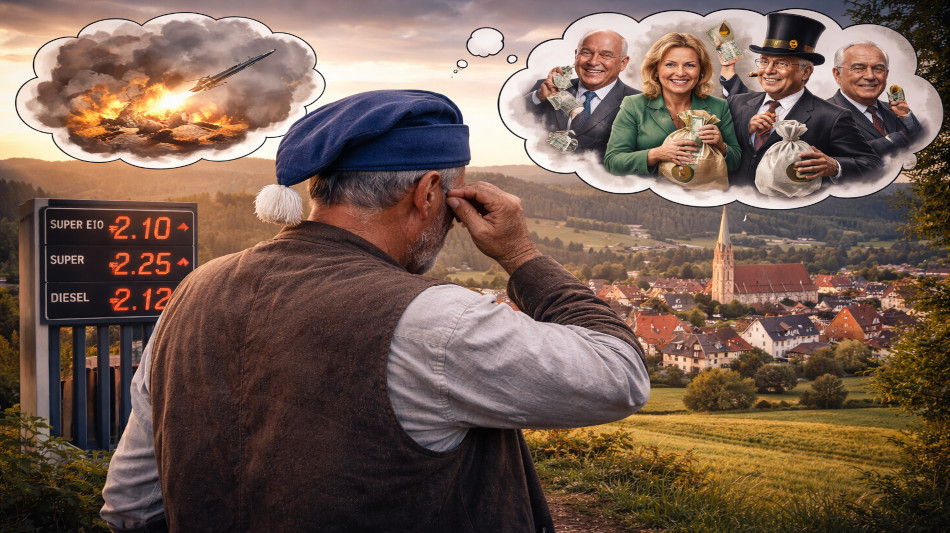
Germany: Fuel rage and the 2026 election year

 Kennedy Center: future unclear for iconic Washington arts hub

 Trump claims 'infinite' Greenland security deal with Denmark

 Helicopters battle wildfire threatening Ecuador's capital

 Brentford batter Chelsea to undo Alonso's promising start

 Kane hits Bundesliga century as Bayern rout Union

 Trump says CNN, MS NOW, Politico banned from White House

 Hushing and hedging: US companies retreat on climate

 Springboks to face Fiji before 2027 Rugby World Cup

 Nigeria miners struggled to breathe in cell before 37 died: survivors

 McIlroy on the charge at PGA Championship as Reed withdraws

 McIlroy on the charge at PGA Championship

 Crisis-wracked Volkswagen warns of 10-bn-euro hit to profits

 Costa Rica's Grynspan tops third informal poll for UN chief: diplomat

 Stock markets retreat after central bank rate hikes

 Russia labels director of Cannes Grand Prix winner a 'foreign agent'

 Macron warns of Russian 'hybrid' threat after meeting presidential hopefuls

 UN holds third informal poll for new chief

 Kulusevski return can spark Spurs: De Zerbi

 Shakira to cap off world tour with Madrid 12-gig run

 Isolated Syrian-Druze city blames Damascus for shortages

 Isolated Syrian-Druze city shortages

 Dutch drop Depay for Germany match in Xavi's first pick

 Ronaldo named in Portugal squad for Nations League

 Stock markets diverge after central bank rate hikes

 Anti-Assad music star makes triumphant return to Syria
The war in Iran and the escalation in the Gulf region are no longer just foreign policy news from afar for Germany. They are having a major impact on people's everyday lives – and in the place where many feel the economic reality most directly: at the petrol pump. As soon as production volumes, transport routes and security situations in the Middle East start to slide, the price of oil jumps, traders factor in risk premiums, and ultimately the geopolitical turmoil ends up in motorists' wallets. That is exactly what is happening at the moment. What is a strategic crisis for governments, stock exchanges and commodity markets becomes a very real cost burden for commuters, families, tradespeople, delivery services and small businesses within hours.
What is particularly explosive is not only the size of the price increases, but also their speed. Just a few days ago, fuel prices in Germany were already high enough for many people. But then a new dynamic set in: within a very short time, petrol and diesel prices shot up, with diesel even exceeding the two-pound-per-litre mark at times and, in some phases, exceeding the price of petrol. This picture alone reveals the nervousness of the market. Because when diesel – despite lower energy taxes – suddenly becomes more expensive than Super E10, it shows how strongly crisis fears, expectations of shortages and market mechanisms are influencing pricing.
For millions of people, this is not a theoretical debate. Those who live in rural areas, work shifts, care for relatives, drive to construction sites, deliver goods or work in the field cannot replace mobility with Sunday speeches. In many regions of Germany, the car is not a convenient additional option, but a prerequisite for work, supplies and everyday life. If the price per litre rises by double-digit cents in a few days, this not only eats into purchasing power, but also directly impacts monthly budgets that are already under pressure. Those who have to fill up three times a week feel the difference not in abstract terms, but as a real additional burden. And those who drive commercially will sooner or later pass on these costs – to customers, to consumers, to the entire price chain.
This is precisely where the political explosiveness begins. Public anger is not only fuelled by the global market, but also by the question of whether the international crisis will possibly worsen at German petrol stations because an already difficult market opens up additional scope for high margins. It is no coincidence that suspicion quickly falls on ‘rip-offs’. The fuel market in Germany has long been considered structurally problematic. Regional dependencies, limited alternatives in wholesale, few relevant suppliers in individual areas and an extreme rhythm of price changes create an environment in which consumers hardly feel that they are being treated fairly and transparently. When prices fluctuate constantly throughout the day, uncertainty quickly turns into mistrust.
This mistrust is compounded by a situation in which even politicians are now reacting with alarm. When the ministers responsible announce that price jumps will be investigated under antitrust law and openly warn that the situation should not be abused for excessive mark-ups, this is more than just crisis rhetoric. It is an admission that even the state is well aware of how thin the line between market-driven price increases and the public perception of exploitation has become. Ultimately, what matters to citizens is not whether a surcharge is the result of logistics, risk, anticipation or market psychology. They see the price at the pump – and they wonder why such massive profits are being made in Germany within such a short period of time.
In addition, the new wave of fuel price increases is hitting an already sensitive economic situation. Germany has been struggling with a weak economy for some time, with many companies complaining about high costs and private households about dwindling financial leeway. In such a situation, sharply rising energy prices act as an additional brake. Higher transport costs make supply chains more expensive, put pressure on logistics, squeeze margins in small and medium-sized businesses and increase the risk that price pressure will spread to other areas of everyday life. What starts at the petrol station rarely stays there. It finds its way into bills, services, goods prices and, ultimately, the mood of a country that, after years of crisis, sees yet another burden not as an exception, but as the continuation of a permanent state of affairs.
That is why it is not enough to simply dismiss the outrage as exaggerated. Those who depend on their cars every day do not experience the situation as a geopolitical spectacle, but as a chain of constant impositions. First, the general cost of living rises, then mobility and energy become more expensive again, and at the same time, politicians declare that the development must first be observed, examined and analysed. It is precisely this gap between the government's response and the burden on private individuals that is costing trust. People do not expect miracles in such a situation. But they do expect crises not to be reflexively passed on to those at the top, while relief always arrives later, in smaller amounts or not at all.
The debate about a possible fuel price cap, stricter market supervision or intervention against excessive crisis profits already shows how tense the political situation has become. Because one thing is clear to all those responsible: energy prices in Germany are never just an economic issue. They are a mood issue, a justice issue and, ultimately, an election issue. If citizens get the impression that international conflicts are always passed on to consumers first in this country, while corporations, wholesalers and intermediaries at least raise suspicions of doing good business with fear, then this will not remain without consequences. The anger at the petrol pump then turns into a basic political stance: against the establishment, against those in power, against a system that quickly cashes in during a crisis but is slow to protect.
It remains to be seen how long the new escalation in the Middle East will last and how long the oil and transport markets will remain under pressure. It is also unclear whether some of the recent price jumps will subside once the situation on the trade routes becomes more predictable. But it is already clear that the damage will have far-reaching political consequences. Every fuel receipt that is suddenly noticeably higher serves as a reminder of how vulnerable everyday life, prosperity and trust have become. And every citizen who feels at the petrol pump that they are once again the ones who end up paying for everything will remember who was responsible during this phase.
Motorists are footing the bill at the moment. Politicians could end up paying the price later. Because economic overload, feelings of powerlessness and the suspicion that they will once again be asked to foot the bill in a crisis do not simply disappear. They accumulate. And when they build up, they rarely vent their anger where the price per litre is displayed – but rather where citizens can effectively make their displeasure felt.