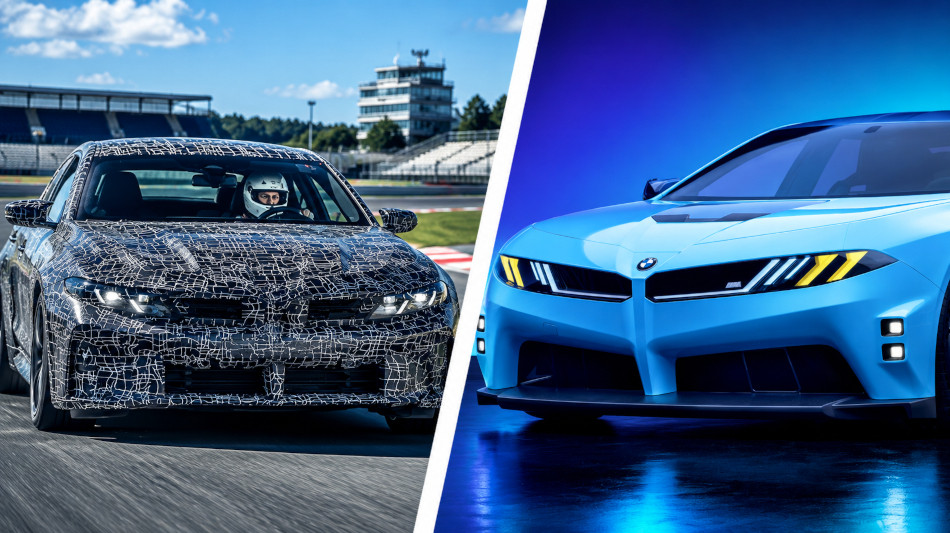
BMW’s next chapter accelerates with New Class rollout

 Vollering wins Tour de France Femmes after war of nerves
 BMW’s next chapter accelerates with New Class rollout

 Five dead in new Russia, Ukraine strikes

 PSG sign France full-back Digne from Villa
 Sinner withdraws from Cincinnati Open with knee injury

 Fernandez's 'perfect' race earns him British MotoGP Grand Prix win

 Iran Guards say won't reopen Hormuz without US meeting Tehran's demands
 Hogh's hat-trick inspires Celtic to 5-1 victory over Kilmarnock
 London grants first licences for supervised Uber robotaxis

 Erasmus hopeful Kolisi hamstring injury not 'too bad'
 Luxury car buyers trade prestige for mainstream value

 Students, teachers mourn girl killed in Thailand school shooting
 Jacobson to lead New Zealand for first time against Sharks
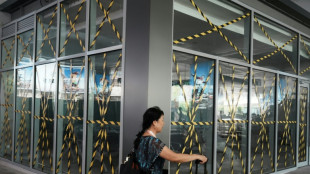 Typhoon Dolphin makes landfall in China after flight cancellations, evacuations

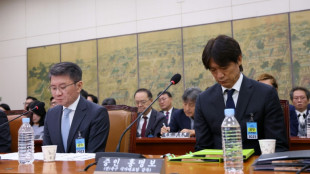 South Korea FA apologises after sex scandal adds to controversies

 Indonesia closes national park as wildfire spreads

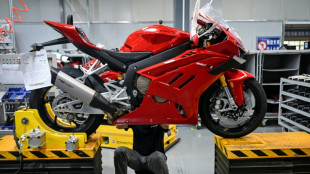 ZXMoto leads China's charge to dominate the global motorbike market

 Top-ranked Sabalenka, Pegula stunned in Toronto fourth round

 Japan nuclear debate unnerves proponents of pacifism

 Spanish teen Jodar ousts eighth seed Lehecka at Montreal

 Angers mounts in US over vast network of car license plate cams

 Darderi to face Nakashima in Montreal quarter-finals
 Espresso power fires Darderi past Borges in Montreal

 Shnaider upsets Pegula to book Toronto quarter-final with Swiatek

 Mount injury overshadows Man Utd draw with Paris Saint-Germain

BMW is entering one of the most consequential product transitions in its modern history. What is now taking shape is not merely a routine sequence of facelifts and derivative launches, but a broad industrial and technological reset designed to carry the brand through the remainder of the decade.
At the centre of that effort stands Neue Klasse, the platform and development philosophy that is increasingly becoming the organising principle for BMW’s next generation of vehicles. The company’s aim is clear: to sharpen design identity, accelerate software-led functionality, improve battery and charging performance, and modernise production at the same time.
In that sense, BMW’s forthcoming models are not isolated product stories, but chapters in a wider strategic transformation.
Neue Klasse moves from promise to product
The strongest evidence of that shift is the new BMW i3, the second production model of the Neue Klasse era and arguably one of the most important cars the company has unveiled in years. More than a simple electric companion to the 3 Series, the i3 is being positioned as a statement of intent for the brand’s future in the core executive segment. BMW has equipped it with sixth-generation eDrive technology, an 800-volt architecture, new round battery cells, the Panoramic iDrive interface and the Heart of Joy control computer.
In i3 50 xDrive form it delivers 345 kW and 645 Nm, while BMW says range can reach as much as 900 kilometres under the WLTP cycle. Fast charging can add enough energy for up to 400 kilometres in ten minutes. Production is due to begin in Munich in August 2026, with first customer deliveries scheduled for the autumn. That matters not only because of the car itself, but because Plant Munich is being turned into an all-electric manufacturing site from 2027, making the i3 a symbol of both product and production change.
The i3 does not stand alone. BMW has already established the first pillar of Neue Klasse with the new iX3, a model that serves as the opening act for the brand’s new generation. The iX3 offers up to 805 kilometres of range, charging rates of up to 400 kW and a new software and electronics architecture built around four high-performance computers. More importantly from a market perspective, BMW has reported well over 50,000 new orders for the iX3, while more than half of all BMW X3 orders are now for the fully electric version.
That early demand suggests the company’s electric repositioning is no longer theoretical. It is beginning to show measurable commercial traction in a premium market that has become increasingly unforgiving and increasingly crowded.
Luxury, scale and technology diversity
BMW’s renewal programme also extends well beyond the mid-sized electric saloon segment. The new 7 Series demonstrates how the company intends to carry Neue Klasse technologies into the uppermost reaches of its portfolio. Unveiled in April 2026 and launched globally from July, the updated flagship combines progressive luxury with the next wave of BMW digital systems. This is significant because it shows BMW is not confining innovation to new electric nameplates alone.
Instead, it is distributing its latest technology across the line-up, reinforcing the idea that digital architecture and user experience are now as central to premium positioning as materials, comfort and performance. In the luxury segment, where differentiation is becoming harder to sustain, that broader technological integration could prove decisive. The next X5 reveals a second and equally important strand of BMW’s thinking. While many carmakers are narrowing their bets, BMW continues to defend a technology-open strategy. The new X5 family will be offered with petrol, diesel, plug-in hybrid and fully electric powertrains, with hydrogen set to follow later. Production begins in Spartanburg in August 2026, while the electric iX5 enters production in December.
BMW says the iX5 60 xDrive is expected to offer between 645 and 845 kilometres of range, with charging rates of up to 460 kW. Later, the iX5 Hydrogen is intended to bring fuel-cell propulsion into series production, targeting a range of up to 750 kilometres. This breadth is more than a technical exercise. It is BMW’s answer to a market in which infrastructure, regulation and customer behaviour still vary sharply by region. Rather than committing the brand to a single path, BMW is attempting to preserve flexibility while still accelerating electrification at pace.
Why this model offensive matters
The wider commercial backdrop makes this product offensive especially important. BMW reported that battery-electric vehicle orders in Europe rose by around 40 per cent in the first quarter of 2026. The group also sold 2.46 million passenger vehicles during 2025, underlining the scale at which its transformation must operate.
This is the central test facing BMW now. It is no longer enough to prove that the company can build desirable electric vehicles or credible digital platforms. The real challenge is whether it can industrialise those advances across high volumes, preserve profitability and maintain the brand character that has historically set BMW apart in the premium market. The first wave of evidence is encouraging, but the decisive verdict will depend on execution over the next several model cycles.
Outlook
Taken together, the iX3, i3, 7 Series and X5 point to a company trying to manage two transitions at once. One is technological, as BMW pushes into a more software-defined, battery-focused and digitally integrated era. The other is strategic, as it attempts to balance rapid electric expansion with a continued commitment to plug-in hybrid, combustion and hydrogen solutions where market conditions still justify them.
That is a more demanding route than a single-track strategy, but it may also prove more resilient. Should BMW deliver on timing, quality and scale, its next chapter will not simply refresh the range. It could redefine the brand’s competitive standing for the rest of the decade.
A.Lochmann