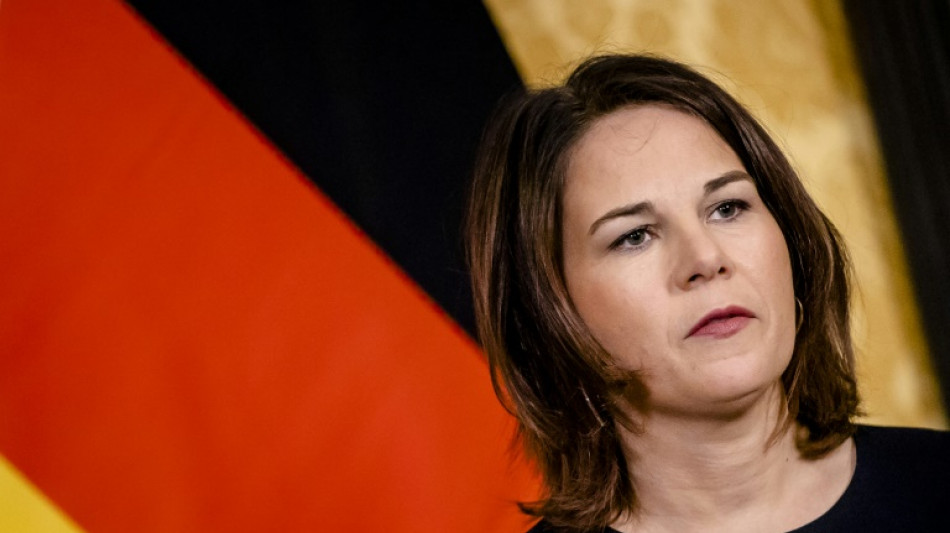
Will a special Ukraine tribunal really happen? / Photo: Sem van der Wal - ANP/AFP

 Typhoon Dujuan leaves four dead in Japan, 45,000 houses without power
 G7 leaders condemn Houthi strikes on Saudi Arabia
 Google data centre sparks protests in Austria
 Shin Ohashi: Junk food-loving teen and Japan's next big swimming hope
 Stocks rise on AI buzz, drop in oil prices
 China's robot dancers limber up for America's Got Talent final
 Despite military might, Saudi struggles to crush the Houthis
 Trump to tout deals, defend Iran war in UN speech
 Sri Lanka to issue verdict in landmark Easter attack trial
 No green light to lift EU sanctions on Russian oligarchs, talks to resume
 UK agrees support for Saudi in struggle with Houthis: reports

 EU foreign policy chief calls for continued sanctions on Russia

 Flights scrapped, evacuations urged as Typhoon Dujuan wallops Japan
 Fonseca to take break from tennis
 A Cuban zoo, and its animals, in epic battle for survival
 Infantino proposes consulting federations to reform FIFA
 El Nino weather pattern enters record territory: scientist
 OpenAI calls for US to lead global effort on AI standards
 South African ostriches plucked alive for luxury fashion: report
 US networks halt Trump coverage in revolt over White House ban
 Paramount settles with US states to clear Warner Bros. mega-merger
 Climate crisis a job for world leaders, not just activists: UK FM
 US networks halt Trump coverage over White House ban
 French singer accuses Miley Cyrus of plagiarism
 EU fines Google 403 mn euros for location data breach
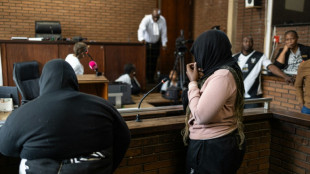
Could Russian President Vladimir Putin one day stand in the dock in The Hague? The prospect seemed to move closer after Germany backed a special court for the invasion of Ukraine.
German Foreign Minister Anna Baerbock called on Monday for a tribunal to get around the fact that the International Criminal Court (ICC) cannot prosecute Russia for the "leadership" crime of aggression.
But there are major hurdles before any such court could even be created, let alone put Russian leaders on trial.
- Why a special tribunal? -
Germany's Baerbock said a special tribunal would fill a "severe gap" in international law.
The Hague-based ICC launched an investigation in February into war crimes and crimes against humanity in Ukraine.
It was able to do so because Kyiv accepted its jurisdiction, even though neither Russia nor Ukraine are members of the court, which was set up in 2002.
But while changes to the ICC's governing Rome Statute gave it powers to prosecute aggression from 2018, it still cannot do so for non-member states.
The only way it can is by a referral by the UN Security Council -- but Russia, with its permanent seat, would automatically veto that.
- What's the German plan? -
Baerbock proposed a "new format" of court based in The Hague, to be set up in the near future if possible.
The court could "derive its jurisdiction from Ukrainian criminal law" but have international prosecutors and judges and foreign funding, she said.
That would be different to tribunals under international law, such as those for the 1990s wars in the former Yugoslavia.
And while tribunals for Cambodia and Kosovo have used local laws, they were not able to try aggression between one state and another.
At the same time, Baerbock proposed changing the ICC's rules in the long term so that it can prosecute non-member states for aggression.
- Who would it target? -
A special tribunal would target Russia's civilian and military leadership for ordering and overseeing the invasion of Ukraine, Baerbock said.
While the ICC could charge Russian soldiers and commanders on the ground, Baerbock said it was "important that the Russian leadership cannot claim immunity."
Aggression was the "original crime that enabled all the other terrible crimes".
- What does the ICC think? -
ICC prosecutor Karim Khan, who held talks with Baerbock on Monday, has opposed a special tribunal for Ukraine.
He said in December he should not be "set up to fail" by the creation of a special tribunal and urged the international community to focus on supporting his own investigation.
Baerbock said it was crucial to keep supporting the ICC and insisted that a tribunal would not undermine it.
- What are the hurdles? -
To exist in the first place the court needs international support -- and that could be hard.
Much of the West seems to be on board, with European Commission president Ursula von der Leyen calling for a special court in December and the Netherlands offering to host it.
But the rest of the world would likely be less keen.
"I hear those critics voicing concerns that such a path would show we care about a war because it happens in Europe, and I share that concern, so it's important that we talk to partners from other regions," Baerbock acknowledged.
But the biggest problem could be bringing any suspects to justice.
Russia has said any Ukraine tribunal would lack legitimacy, and would refuse to extradite suspects.
Ukraine could extradite captured Russians but that would leave high-level figures unscathed.
"Unless there is a regime change in Russia, Putin and other very high-level leaders would have to leave Russia in order be subject to arrest," said Cecily Rose, assistant professor of public international law at Leiden University.
Ferreira--PC