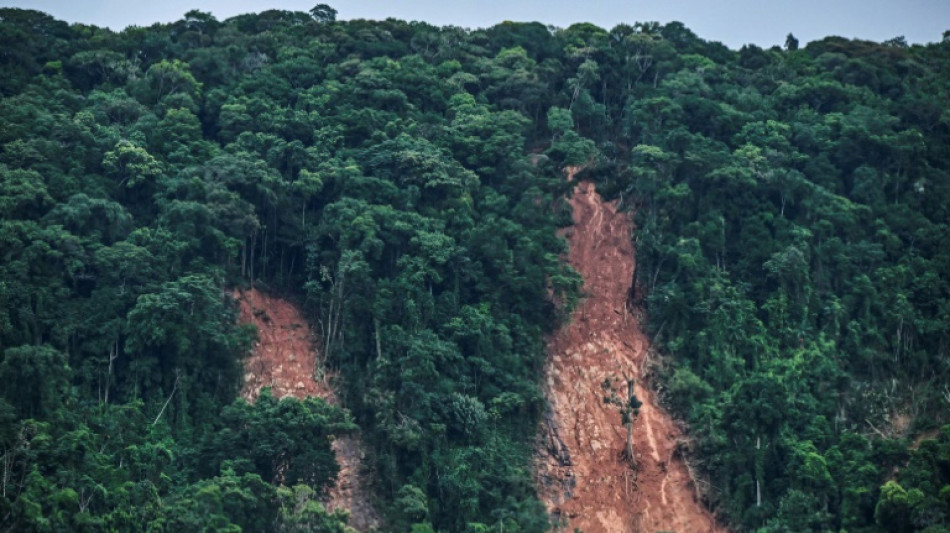
Climate change, rampant urbanization fuel Brazil storm disasters / Photo: Nelson ALMEIDA - AFP

 ALIX LASERS shareholders remove Michael Sobitsch as managing director in view of the circumstances

 Elon Musk Promises Steering-Wheel-Free Tesla Model Y Amid Cybercab Sales Launch

 Tosca's 2026 Sustainability Report Makes the Case for Packaging as Critical Supply Chain Infrastructure

 Eisai's Dayvigo Shows Year-Long Efficacy Without Tolerance Ahead of Korean Launch

 Ozlo Sleepbuds Drop $40 Ahead of Black Friday for Noise-Masking Sleep Aid

Climate change and unchecked construction in flood- and landslide-prone areas are making disasters like the violent storm that killed at least 48 people in southeastern Brazil ever more frequent, according to a leading expert.
Francis Lacerda, a researcher at Brazil's IPA Climate Change Laboratory, spoke with AFP about the forces driving disasters like the one that hit the coast of Sao Paulo state last weekend, and what can be done to stop them.
What is causing so many tragedies like this in Brazil?
"It's a consequence of global warning, which has generated more extreme weather events not just in Brazil, but across South America and the entire planet.
"There has actually been a decrease in the total amount of rain in Brazil in the southeast, central-west, north and northeast in the past 30 or 40 years, even as these extreme episodes have increased.
"The large amount of heat in greenhouse gases is being absorbed by our oceans, which is changing ocean currents. That's causing changes in the way heat is distributed at Earth's poles and the equator, and the atmosphere responds with these extreme weather events.
"So total precipitation has decreased, but the distribution has become more intense, with an entire year's worth of rain falling in a few hours in some cases."
Is entire country at risk?
"Yes, although mountainous areas are at higher risk.
"On the Sao Paulo coast, for example, the phenomenon was intensified by the mountain range and the arrival of a cold front with high-speed coastal winds. But rain like that can also occur in coastal areas without mountains."
Could deaths have been avoided?
"It was a tragedy foretold. A day before the storm, meteorological models started indicating a high probability of a phenomenon like this. It would have been possible to get enough information to emergency officials to evacuate these areas and save lives.
"Governments at the city, state and federal levels are unprepared for climate change. We need adaptation and mitigation plans."
Millions face such danger. How does Brazil address it?
"Real-estate speculation has basically pushed poor people on the urban periphery into these high-risk areas. They have no other option.
"It's not enough to just say, 'Get those people out of there.' We need to fundamentally reexamine our cities with a view to reformulating urban public policies.
"There are a lot of things that can be done, including fixing the lack of decent housing."
F.Carias--PC