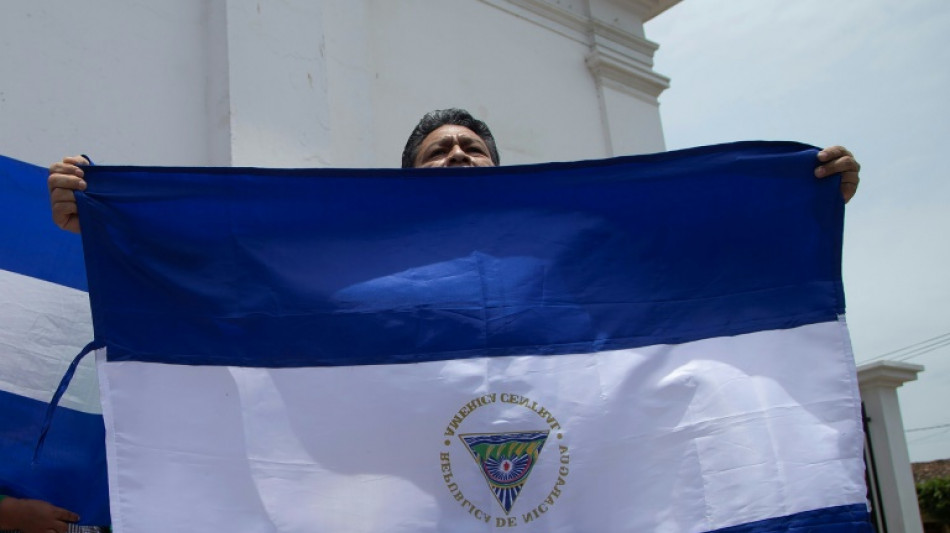
Nicaragua a political headache for Latin American left / Photo: Maynor VALENZUELA - AFP

 Trump renames AI "super intelligence," rejects international oversight
 Trump rejects international regulation of AI
 How is the EU approaching record fuel prices?

 Sri Lanka's Colombage strikes on debut as England dismissed for 265 in first ODI
 Hurricane Polo strengthens to top category 5 off Mexico

 11 hurt as teen opens fire outside school in western Turkey

 UN chief says 'Big Oil' treats atmosphere as open sewer
 Tunisia says 2026 summer hottest on record
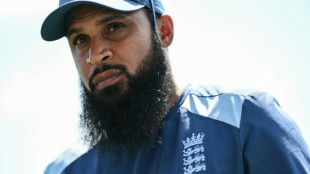 England's Rashid out of Sri Lanka ODIs with hand injury

 Houthis accuse Saudi Arabia of deadly strikes as thousands flee

 Stocks climb as oil slides, AI buzz returns

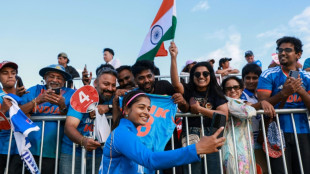 India cricketers win in style as Afghan savours 'special' Games silver

 La Liga president hits out at Real Madrid refereeing 'conspiracy' claims

 MEXC Launches “Real Stocks, Real Friends” with Rewards for Bringing Friends to Wall Street

 Mbappe continues media push for Ballon d'Or recognition
 Stocks rise on AI buzz, oil prices cool
 India narrowly survive huge scare against minnows Japan

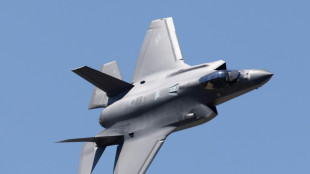 Missing F-35 fighter parts 'not sensitive', says Australia minister
 Cambodia showcases scams crackdown with global conference
 Afghan cyclist who disguised herself as man wins Asian Games silver

 Typhoon Dujuan leaves four dead in Japan, 45,000 houses without power

 G7 leaders condemn Houthi strikes on Saudi Arabia
 Google data centre sparks protests in Austria

 Shin Ohashi: Junk food-loving teen and Japan's next big swimming hope
 Stocks rise on AI buzz, drop in oil prices
Nicaraguan President Daniel Ortega's move to strip more than 300 critics and political opponents of citizenship, and Chile's forceful condemnation, have shone a spotlight on a deep ideological divide between leftist Latin American leaders.
Spread as they are across the leftist spectrum -- from European-style social democracy on one end to heavy-handed, one-party rule on the other -- Latin American governments have failed to come up with a cohesive response to an act condemned by the UN.
Chile's Gabriel Boric is alone in the region, so far, in overtly denouncing Ortega's actions, branding him a "dictator."
Argentina, Colombia and Mexico waited a few days, then offered solidarity, asylum, even nationality to now stateless dissidents. But without any harsh words for Ortega.
Brazil, where Luiz Inacio Lula da Silva took over on January 1, is still silent.
For most leftist Latin American presidents, "ideology weighs more heavily than reality," Michael Shifter of the Inter-American Dialogue think-tank in Washington told AFP.
"For their more radical bases, condemning Ortega could be interpreted as an alignment with Washington," he added -- "still a sensitive question" after decades of US interference in the affairs of Latin American countries, especially ones governed by the left.
On February 9, Ortega's government expelled 222 political prisoners -- including jailed opposition leaders -- to the United States, and stripped them of their citizenship.
A few days later, a court yanked citizenship from another 94 exiled dissidents and declared them "traitors to the fatherland."
Spain was quick to offer the dissenters a passport.
Closer to home, Boric was the first to react in Latin America. Chile's youngest-ever president called Ortega a "dictator" in a tweet offering a "fraternal hug" to those targeted.
Boric's "forcefulness" put his peers in a difficult position, analysts told AFP.
- Lula silent -
Lula's victory over far-right ex-president Jair Bolsonaro in elections last year, cemented what some have called a new "pink tide" of leftist governments taking over in the region.
Boric won in a tight runoff against a far-right rival in 2021, while Colombia got its first-ever leftist president in Gustavo Petro last year.
Honduras, Bolivia, Peru and Argentina are other countries to have recently rejected the right in elections.
But the current crop of leftist Latin American leaders seem to have less in common than those -- including Lula -- who came in on the region's first "pink tide" of the 1990s and early 2000s, analysts say.
Three leftist governments in Latin America -- Cuba, Nicaragua and Venezuela -- are under US sanctions accused of rights abuses and authoritarian leanings.
On the other end of the spectrum, Chile's Boric points to Europe as the inspiration for the "social welfare" state he wants to create.
While Boric came out guns blazing on February 18, others dithered.
Three days later, this Tuesday, Argentina's center-left government said it was "in a position to give citizenship" to denaturalized Nicaraguans.
On Wednesday, Mexico's populist left wing President Andres Manuel Lopez Obrador as well as the government of Colombia's Petro, made similar offers.
Lopez Obrador insisted, though, that Nicaragua solve its problems through dialogue.
Through all of it, Brazil's Lula -- often described as an icon of the left -- has remained silent.
"Lula faces a dilemma, because part of his (governing) coalition would like a condemnation, but a wing of (his) Workers Party has no interest... Silence is the best strategy" for political survival, said Oliver Stuenkel, international relations professor at the Getulio Vargas Foundation in Sao Paulo.
Venezuela's President Nicolas Maduro, meanwhile, is a devout Ortega defender.
In December, after Boric condemned Nicaragua's jailing of "political prisoners," Maduro lashed out at a "cowardly left" taking aim at the "courageous president of the Republic of Nicaragua."
Nicaraguan writer Gioconca Belli, one of those targeted by Ortega, said Thursday she would accept Chile's offer of citizenship.
F.Santana--PC