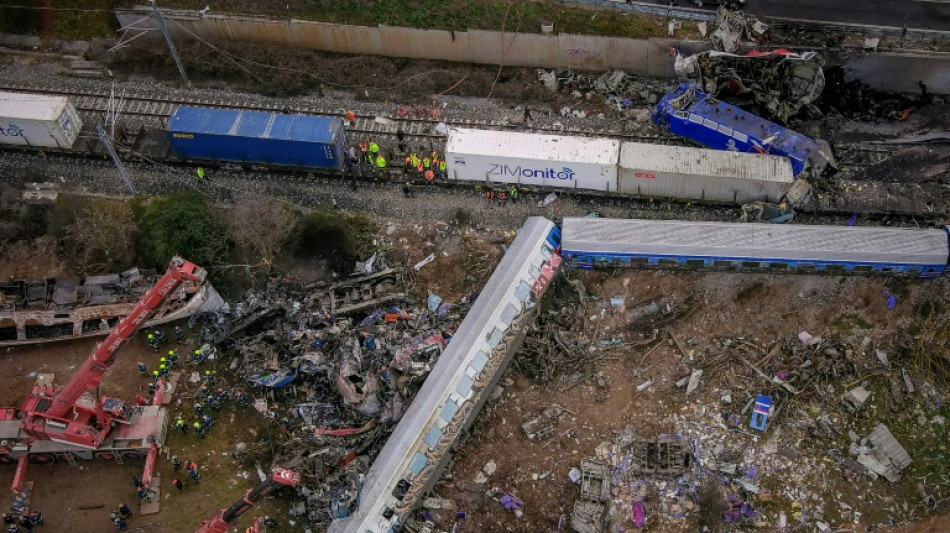
Greek train tragedy sheds light on chronic state failures / Photo: Vasilis VERVERIDIS - Eurokinissi/motionteam/AFP

 Trump renames AI "super intelligence," rejects international oversight

 Trump rejects international regulation of AI

 How is the EU approaching record fuel prices?

 Sri Lanka's Colombage strikes on debut as England dismissed for 265 in first ODI

 Hurricane Polo strengthens to top category 5 off Mexico

 11 hurt as teen opens fire outside school in western Turkey

 UN chief says 'Big Oil' treats atmosphere as open sewer

 Tunisia says 2026 summer hottest on record

 England's Rashid out of Sri Lanka ODIs with hand injury

 Houthis accuse Saudi Arabia of deadly strikes as thousands flee

 Stocks climb as oil slides, AI buzz returns

 India cricketers win in style as Afghan savours 'special' Games silver

 La Liga president hits out at Real Madrid refereeing 'conspiracy' claims

 MEXC Launches “Real Stocks, Real Friends” with Rewards for Bringing Friends to Wall Street

 Mbappe continues media push for Ballon d'Or recognition
 Stocks rise on AI buzz, oil prices cool

 India narrowly survive huge scare against minnows Japan

 Missing F-35 fighter parts 'not sensitive', says Australia minister

 Cambodia showcases scams crackdown with global conference

 Afghan cyclist who disguised herself as man wins Asian Games silver

 Typhoon Dujuan leaves four dead in Japan, 45,000 houses without power

 G7 leaders condemn Houthi strikes on Saudi Arabia
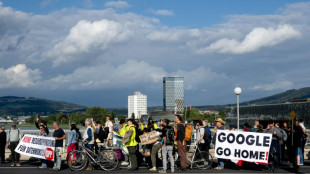 Google data centre sparks protests in Austria

 Shin Ohashi: Junk food-loving teen and Japan's next big swimming hope

 Stocks rise on AI buzz, drop in oil prices
The train tragedy that unfolded in Greece this week, claiming dozens of lives in the country's worst rail disaster, has exposed chronic failures by successive administrations, insiders say.
This was a crash that was waiting to happen, they argue.
A passenger train with over 350 people on board ran for several kilometres on the same track as an incoming freight train, reportedly after the station master in the central city of Larissa failed to reroute one of the trains.
The 59-year-old, who has been charged with negligent homicide, has admitted partial responsibility for the accident. But there were other factors in play, his lawyer said Thursday.
"My client has assumed his share of responsibility," said Stefanos Pantzartzidis. "But we must not focus on a tree when there is a forest behind it."
State TV ERT has reported that the station master was only appointed to the post 40 days ago after a training course that lasted just three months.
- Decades of mismanagement -
For decades, Greece's 2,552-kilometre (1,585-mile) rail network has been plagued by mismanagement, poor maintenance and obsolete equipment.
Though the country's mountainous terrain is not conducive to extensive rail networks, it's no coincidence that most Greeks prefer to travel by car, bus or ferry.
Accident analyst Konstantinos Hasiotis says there have been long delays in installing an electronic train safety radar system, which Greece originally acquired two decades ago.
"Responsibility must be assumed by all those who managed the modernisation of the network," Hasiotis told AFP.
The chairman of the union of train drivers, Kostas Genidounias, said his organisation would soon release proof of political responsibility for safety failings.
"There are many documents that we will make public," he said, adding that because electronic safeguards have not been operational since the year 2000, train control was still handled "manually".
With Prime Minister Kyriakos Mitsotakis hoping to secure re-election in ballots expected next month, the government has been quick to seize upon the station master's error, and point to the failings of past administrations.
"I believe the responsibility, the negligence, the error has been confessed by the station master," government spokesman Yiannis Economou said Thursday.
But he also admitted "delays" in installing safety safeguards on the route where the accident took place, a result of "chronic malaise and decades of failure" in state management.
- Network in 'poor condition' -
The accident has also exposed a confusing mix of responsibilities between private rail operator Hellenic Train -- the state company OSE that still owns the track network -- and a state watchdog nominally tasked with oversight.
"The network is in poor condition -- but we do not inspect its condition," the head of Greece's railroad regulatory authority RAS Ioanna Tsiaparikou told state TV ERT on Thursday.
Hellenic Train this week also noted that "the railway network and railway traffic are managed by OSE, a Greek state company".
Already in January, Tsiaparikou had said the rail network was poorly maintained and engines were outdated. She also highlighted a shortage of staff, noting that some stations lay empty.
Three weeks ago, trade unionists representing train staff on the board of Hellenic Train also warned of "grave" staff shortages.
In December, the RAS watchdog fined Hellenic Train 300,000 euros after more than 800 passengers were left stranded in harsh weather conditions during a cold snap almost a year earlier.
Last month, the European Commission referred Greece to the EU's Court of Justice for failing to sign and publish an agreement with OSE required under a 2012 directive, in the interests of transparency.
Though the directive was not specifically related to safety issues, a Commission spokesman on Thursday noted that the EU had already backed 16 railway projects in Greece since 2014 with nearly 700 million euros ($741 million).
- Stalled modernisation -
Greece's Transport Minister Kostas Karamanlis, who resigned within hours of the disaster, acknowledged that government efforts to improve conditions over the last three and a half years "were sadly not enough to prevent such an accident".
Greek media published a letter from the former head of the European Rail Traffic System (ERTMS) in Greece, Christos Katsioulis, in which he said that infrastructure upgrades pending since 2016 were incomplete. Train speeds of up to 200 kilometres (124 miles) an hour were unsafe, he warned.
Katsioulis resigned last year.
"Until 2010, there was some modernisation of rail network signals, but during the financial crisis, the safety systems began to collapse," recalls OSE advisor Panagiotis Terezakis.
A tender to upgrade the rail network in northern Greece had been scheduled to be launched later this month.
Ferreira--PC