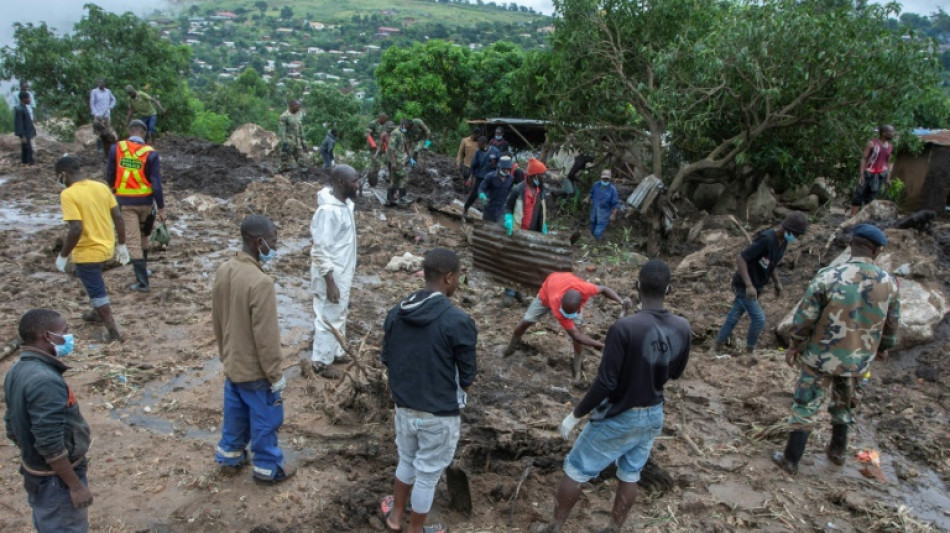
Cyclone Freddy affects 500,000 people in Malawi: UN / Photo: Amos Gumulira - AFP

 San Ġiljan Defeat Paredes 20-12 in Challenger Cup Opener

 2027 Toyota Sienna Gets Sixth-Gen Hybrid System, More Power, and Trim Changes

 Burnham Government Announces Neighbourhood Support Teams to Reduce Hospital Admissions

 KFF Health News Readers Weigh In on Healthcare Policy, Ethics, and Workforce Shortages

 16-Year-Old Founder Targets 'Cost Per Kill' With AI Missile Startup
 Elon Musk Promises Steering-Wheel-Free Tesla Model Y Amid Cybercab Sales Launch

 APEX FTE Expo 2026 Unites Aviation Leaders in Singapore and Honors Passenger Experience Excellence

 West Midlands Shoppers Urged to Guard Against Black Friday Scams
Cyclone Freddy, which dissipated this week after a record-breaking rampage, has caused more than 460 deaths in southern Africa and affected more than half a million people in Malawi, the UN said Friday.
The storm dumped six months' worth of rainfall in six days in southern Malawi, leaving a trail of destruction and severely damaged infrastructure as well as flooding farmland.
"Over 500,000 people have been affected," the United Nations Office for the Coordination of Humanitarian Affairs (OCHA) said in a report, adding that more than 183,100 people had been displaced.
Some 360 people have died in Malawi, according to the latest toll released late Friday, in a country of nearly 20 million people.
"We expect that the picture of damage and death will worsen as more areas become accessible over time," President Lazarus Chakwera, who is on a three-day visit to the affected areas, said.
The OCHA said that "the record-breaking weather system hit Malawi at the end of the rainy season when rivers and water bodies were already at high levels".
UN World Food Programme (WFP) country director Paul Turnbull said Friday it was clear that the country "will need significant support".
Many areas were rendered inaccessible, "restricting movement of assessment and humanitarian teams and life-saving supplies", he said.
"We are ramping up as quickly as we can under the circumstances," he added in a statement, vowing to assist around 130,000 people affected by the "tragic" situation.
So far, the government puts the number of displaced at more than 183,000, Chakwera has said, appealing for global aid to tackle the humanitarian needs.
More than 300 emergency shelters have been set up for survivors, while the army and police continue searching for bodies.
The storm struck as Malawi was in the grip of its deadliest cholera outbreak, according to the World Health Organization.
There is "a risk that the ongoing cholera outbreak could worsen, with children being the most vulnerable to this crisis", UNICEF spokeswoman Fungma Fudong told AFP.
UNICEF noted that Cyclone Freddy has left more than 280,000 children in Malawi in urgent need of humanitarian assistance.
- 'No house, no food' -
Mervis Soko, a 29-year-old mother of three from Phalombe, one of the hardest-hit districts located 120 kilometres (75 miles) east of the commercial hub Blantyre, said the storm had plunged her family deeper into poverty.
"We are destitute, we have nothing. We are just people. All the crops have been washed away," she told AFP.
Loveness Makhala and her husband picked up iron sheets and bricks from the rubble of what used to be their house.
Just a month away from annual harvesting, she bemoans the loss of "everything -- potatoes and maize -- all gone".
"I can't imagine how we will get through the year with no house and no food," said the mother of four.
Neighbouring Zambia has stepped in to deliver relief kits and food, including hundreds of tents, blankets, mosquito nets, maize and beans, its Defence Minister Ambrose Lufuma said in a statement.
The cyclone first struck southern Africa in late February, hitting Madagascar and Mozambique, leaving Malawi unscathed.
The storm then moved back out over the Indian Ocean, where it drew more power from the warm waters before making a rare course reversal to slam into the mainland a second time.
In total, the storm has claimed 463 lives in three southern African countries, with 360 killed in Malawi, 86 in Mozambique and 17 in Madagascar.
The rains have eased since Wednesday but Freddy is still on track to become one of the world's longest tropical storms.
B.Godinho--PC