Climate change tests limits of Mediterranean wildfire strategy / Photo: PHILIPPE LOPEZ - AFP

 Xi arrives in US to personal Trump welcome
 Morocco elects new parliament amid social frustration, youth discontent
 Scheffler and Burns to face Im and Lee in Presidents Cup opener
 Crushing wins for Lyon and Barca in women's Champions League

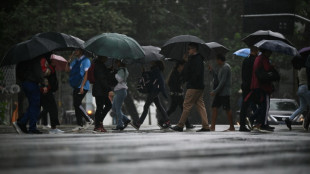 Rio breaks record for rainiest September amid powerful El Nino
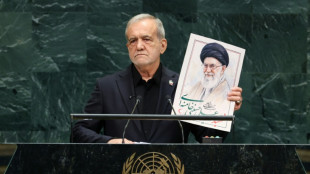
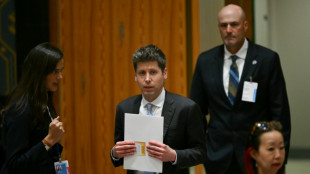 At UN, tech chiefs urge caution in AI development

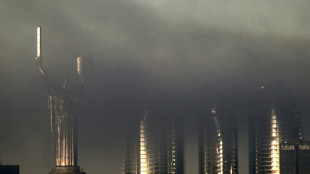 Russian strikes kill seven in Ukraine, Zelensky vows winter campaign
 Venezuelan shot by ICE needs urgent medical care, mother tells AFP

 Zelensky says Putin using fighters from 47 countries in Ukraine war
 Klopp calls on Germany to 'rise above ourselves' as new era begins

 Russian strikes kill seven in Ukraine as Russia vows no 'pause' to war

 ArcPoint Expands Globally with Institutional Intelligence Platform for Modern Investors

 Ronaldo focussing on 'present' ahead of Wales test

 Outgoing UN chief makes final climate push at New York summit
 Grief and pain flow at hearing for Canadian suicide poison vendor

 Ireland boss Hallgrimsson says timing of Israel remarks 'not clever'

 Weinstein resentenced to 15 years in prison for 2006 sex assault

 Fendi brings disco bling, Italian style, to Milan Fashion Week

 French court confirms rape trial for PSG and Morocco star Hakimi

 President tells Trump that Iran will never 'bend at the knee'

 أليكس بودي والبروفيسور الدكتور شتيفان هاوبت يتفقان على التعاون من أجل مجموعة فنية أسطورية في رومانيا
 U2 at 50: Irish rockers reveal anniversary album
 Алекс Боді та проф. д-р Стефан Гаупт домовилися про співпрацю щодо легендарної колекції мистецтва в Румунії
 Alex Bodi și prof. dr. Stefan Haupt încheie un acord de cooperare pentru o colecție de artă legendară în România
 Alex Bodi and Prof. Dr Stefan Haupt agree to collaborate on a legendary art collection in Romania
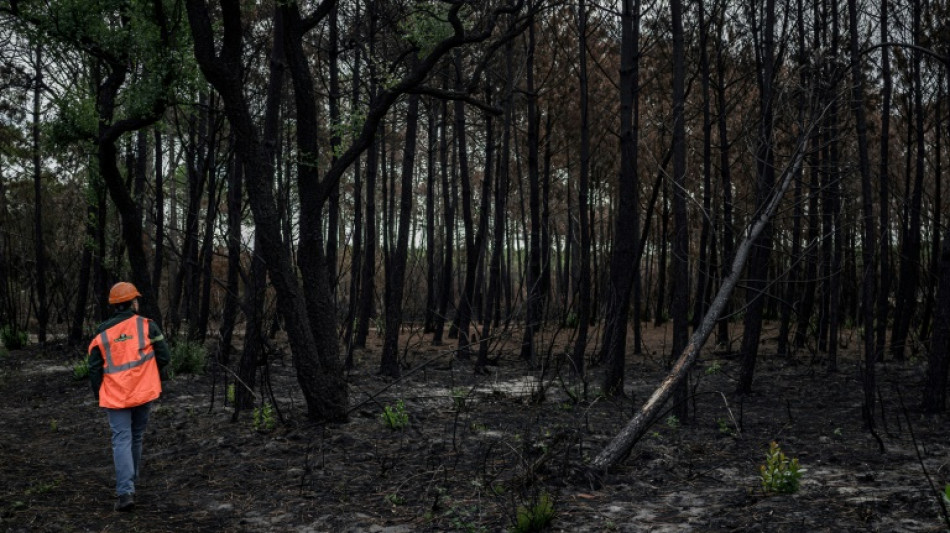
Climate change and increased human habitation across France's dry, forested region are pushing the limits of firefighters' tried and tested "strike quick and hard" strategy.
In October 1970, 11 people perished near France's far southeastern border with Italy and then fifteen years later, a new inferno in the area killed five volunteer firefighters.
Such lethal blazes are now rare.
Many observers credit the fall in fatalities to the strategy adopted in the early 1990s in the arc from France's border with Spain to the frontier with Italy. It is a vast region of hot, dry summers and forested mountain slopes where demand for water outstrips supply.
- 'Under 10 minutes' -
In 1989-1990, after vast wildfires decimated 110,000 hectares of countryside in Provence, Mediterranean France adopted a new wildfire strategy.
"It's based on the 'under 10 minutes' idea -- the sooner we catch a fire, the easier it is," said Julien Ruffault of the National Institute for Farming, Food and Environmental Research (INRAE).
This involves keeping the mountain ranges under close surveillance during high-risk periods, using lookouts in watchtowers, precision cameras and drones.
"We monitor the situation and keep the public informed. And if a fire starts, we have 600 litres (160 gallons) of water in the pickup," explains 74-year-old volunteer Paul Chanavas.
"That allows us to hold on for about eight or nine minutes", says the retired doctor.
Chanavas is one of 1,000 volunteers who work alongside forest rangers, the Forestry Commission (ONF) and regional fire departments, criss-crossing the mountainsides in their vans all summer.
On the most dangerous days, waterbombers patrol the skies searching for sparks and firefighters are positioned at potential hotspots so they can intervene at speed.
In the Var region, where the Tanneron range is located, 20 percent of the entire firefighting force, 1,000 officers, is put on standby at any one time.
- Fossil fuel impact -
"All firefighters in the south of France are trained in open terrain blazes," explains instructor Gilles Agopian at the training centre near Aix-en-Provence.
Behind him is a 5,000-square-metre (54,000-square-foot) terrain where trainees battle a massive blaze of trees made of metal and at the touch of a button, they make different "trees" burst into flames.
This teaches firefighters to manage sprinklers protecting fire engine cabs from searing heat.
Since that 1989-1990 turning point, the expanse destroyed by fires in Mediterranean France has dropped from 12,700 hectares in the 1990s to 8,780 hectares by 2013-2022.
The progress could now be at stake as the planet heats up.
UN scientists say pollution from the continuing use of fossil fuels is making wildfires trickier to contain.
In the northwest United States they say the average expanse of forest destroyed by wildfires annually doubled between 1984 and 2015 as a result of human-induced warming -- an area bigger than Switzerland.
- 'Exceptional blaze' -
Despite the efficient strategy and a prevention campaign -- most forest blazes are sparked by humans -- massive wildfires still occasionally ravage the southeast.
In August 2021, a blaze near Saint Tropez killed two people and forced 10,000 to evacuate.
"We went all out... We had a heavy water bomber helicopter, two light helicopters and a Dash plane that was in the air and on the scene in seven minutes... and 60 fire officers on hand," said Eric Grohin, head of the Var fire and rescue service.
"And the fire still spread," he said, recalling high winds fanning flames out of control.
"Firefighting technique is vital... But we need prevention and more resilient terrain if we're to avoid mega-blazes."
The severe droughts of 2022, and disastrous blazes in other parts of France, "made people sit up and think", Grohin continues.
The authorities subsequently vowed to extend the Mediterranean strategy to the entire country.
- Dead trees, dry wood -
It remains to be seen whether this strategy will continue to be effective, now the impact of fossil fuel pollution is testing its limits.
"The effects of climate change... mean the fire risk area will get bigger, the high-risk season will get longer, and weather conditions that could trigger very large wildfires will occur increasingly often," warns Jean-Luc Beccari, head of the fire and emergency services in the Bouches-du-Rhone region near Var.
Another risk is the resilience of the forests themselves.
"Because of climate change we're already seeing trees die off," adds Marion Toutchkov, an expert in wildfire defence at the ONF.
"We're going to find ourselves with forests containing lots of dead trees. And dead trees means dry wood and more combustible vegetation.".
Nogueira--PC