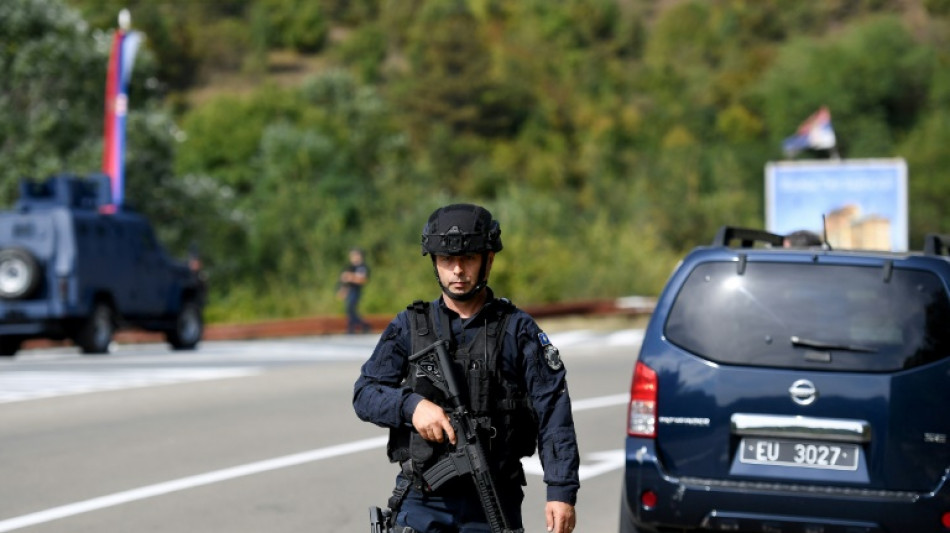
Fighting ongoing after police officer killed in attack in north Kosovo / Photo: STRINGER - AFP

 Malaysia Sues Google for $146m Over Harmful Content

 Black Wind Turbine Blades Reduce Bird Deaths by 74% in Spain Study

 Brazil’s Landless Movement Partners with China to Build Affordable Tractors for Family Farms

 Twickenham Grounds Team Prepares Pitch for Six Matches in Three Days

 Luxembourg Pay Rise Delayed as Regional and World Headlines Develop

 Audience to Choose the Set List at Luxembourg's First FAMIL Jukebox Night

 Raheem Sterling Receives Suspended Sentence After Lamborghini Crash

 Black Friday Discounts Cut Prices on Two Top-Rated Wiper Blades

 Arizona Gun Regulation Battle Intensifies Under New Democratic Legislative Majority
Skirmishes between gunmen and authorities in northern Kosovo were ongoing, according to Prime Minister Albin Kurti, hours after a police officer had been killed when a patrol was hit by an ambush involving firearms and explosives.
Kurti said at least 30 heavily armed gunmen were now surrounded by authorities near Banjska in north Kosovo and called for their surrender.
"There are at least 30 professional, military or police armed people who are surrounded by our police forces and whom I invite to surrender to our security agencies," said Kurti during a press conference.
Kurti added that the group was located in and around a monastery near the village of Banjska, where the patrol had been ambushed early Sunday.
The Serbia Orthodox Church confirmed that gunmen had stormed a monastery in Banjska, where pilgrims from the northern Serbian city of Novi Sad were staying.
"We can see armed people in uniforms... they are firing on us and we are firing back," Kosovo police official Veton Elshan told AFP by phone from Banjska.
Kurti's comments came hours after he called the ambush an act of terrorism and pinpointed the blame on the Serbian government.
"Organised crime with political, financial and logistical support from officials in Belgrade is attacking our country," Kurti wrote on social media.
Serbian state media outlet RTS later reported that Jarinje and Brnjak border crossings between Serbia and Kosovo have been closed.
- Tensions -
The incident comes more than a week after talks between the leaders of Serbia and Kosovo centred on improving ties failed to make a breakthrough during EU-mediated negotiations in Brussels.
The EU has been trying for years to resolve the long-running dispute between Balkan neighbours that has soured relations since their war more than two decades ago.
Brussels believed it had broken the logjam by hammering out a plan to normalise ties in March, but since then there has been minimal progress.
The diplomatic stalemate comes as tensions in the troubled north have been smouldering for months, following the Pristina government's decision to install ethnic Albanian mayors in four Serb-majority municipalities in May.
The move has triggered one of the worst bouts of unrest in the north in years. Demonstrations followed, as well as the arrest of three Kosovar police officers by Serbia and a violent riot by Serb protesters saw more than 30 NATO peacekeepers injured.
Kosovo remains overwhelmingly populated by ethnic Albanians, but in the northern stretches of the territory near the border with Serbia, ethnic Serbs remain the majority in several municipalities.
The tussle in the north is just the latest in a long list of incidents to rock the area since Kosovo declared independence from Serbia in 2008. That was nearly a decade after NATO forces helped push Serbian troops from the former province during a bloody war that killed around 13,000 people.
Belgrade -- along with its key allies China and Russia -- has refused to recognise Kosovo's independence, effectively preventing it from having a seat at the United Nations.
During an address to the United Nations General Assembly last week, Serbian President Aleksandar Vucic accused the West of hypocrisy. He said its recognition of Kosovo's independence was based on the same justification as Russia's war on Ukraine.
Ferreira--PC