Pope to publish follow-up to landmark climate text / Photo: Andreas SOLARO - AFP/File

 Assefa seeks 'better than my best' at Berlin marathon
 US court refuses to overturn Pentagon ban on Anthropic

 Verstappen and Norris blame slow cars as Mercedes tops qualifying

 Crowds cheer pope in Paris after AI 'paradise of machines' warning

 Teen swimmer makes Games history as Thai, Chinese sprinters win gold
 Man City found guilty of 114 Premier League charges - reports
 Concerns over 'missing' UK explorer Ranulph Fiennes

 Suspected Paris killer of Argentine rugby star begs forgiveness

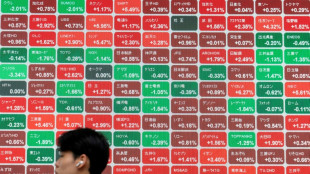 Oil prices fall on cautious hopes for US-Iran progress

 Noskova, Muchova take Czech Republic into BJK Cup final
 Thai sprinter Puripol breaks own Asian Games record to win 100m gold
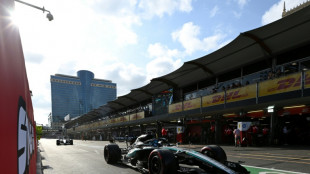 Russell takes pole for Azerbaijan GP, Antonelli crashes out
 Williams boss hails Chadwick as F1 inspiration for women
 World No.1 Sinner delays return with China Open withdrawal
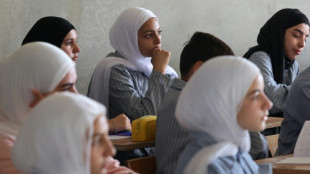 South Lebanon children return to school destroyed by Israel strike

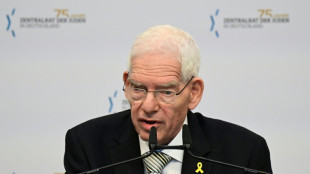 Jewish group urges Berlin far-left vote winners to tackle antisemitism
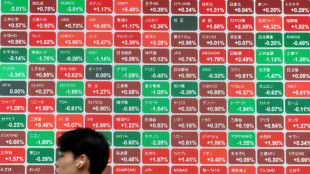 European stock markets climb as oil prices drop

 Trump accuser E. Jean Carroll finally has her damages
 Germany's Havertz, Musiala ruled out of Greece match with injury
 Ireland's Gaza stance spills from Eurovision into football
 Welcome aboard the Costa Serena, the Asian Games floating hotel
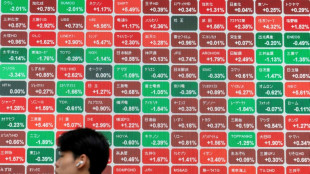 Asian markets mixed after recent oil surge

 Cash for nature protection: hotelier's offer to Principe islanders
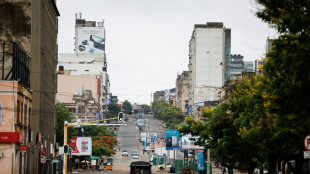
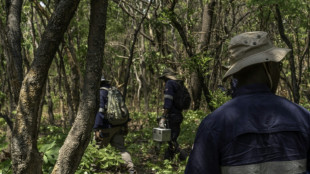 US miner KoBold bets on AI to gain edge in DR Congo mineral hunt
 Internet disrupted in Ethiopia as conflict rages

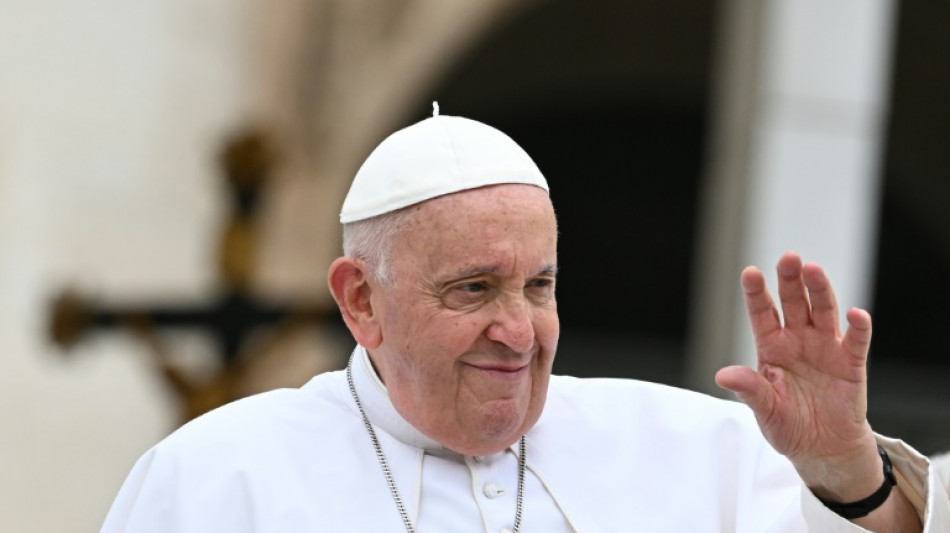
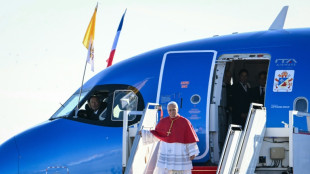
Eight years after warning in a landmark thesis of the devastation of man-made climate change, Pope Francis is publishing an update Wednesday to take stock and offer ideas for action.
The short follow-up to the 2015 encyclical "Laudato Si" ("Praise Be To You") comes just weeks before the next round of UN climate talks kick off in Dubai amid warnings that the world is perilously off course in meeting its goals on reducing carbon emissions.
The new papal text, "Laudate Deum" (Praise to God), will be "a look at what has happened and say what needs to be done", Francis, 86, said last month.
The original document, which ran to almost 200 pages, was aimed not just at the world's 1.3 billion Catholics but everyone on the planet, a call to global solidarity to act together to protect "our common home".
Grounded in climate research, it clearly stated that humanity was responsible for global warming, and warned that the rapid pace of change and degradation had brought the world to near "breaking point".
But it also had a strong moral message, with Francis blaming consumerism, individualism and a pursuit of economic growth for leading to "the planet being squeezed dry".
The pontiff also argued that rich countries must accept they are most responsible for the climate crisis and help poorer countries who are suffering the most.
The document sparked a global debate unprecedented for a religious text, including commentaries in scientific journals.
Months later, there was a breakthrough in UN climate talks in Paris, in which experts said the Vatican played a significant behind-the-scenes role.
Nearly every nation on Earth committed to limit warming to "well below" two degrees Celsius above pre-industrial levels.
But the UN warned last month that the world is not on track to meet these goals, while climate monitors predict 2023 will be the hottest in human history, with the Northern Hemisphere's summer marked by heatwaves, droughts and wildfires.
"It's time to work together to stop the ecological catastrophe before it's too late," Pope Francis said last month in a video address to the UN General Assembly.
- Declining moral authority -
The new text is expected to be much shorter than the 2015 thesis, while its format, an apostolic exhortation rather than an encyclical, carries less weight in Catholic theology.
Professor Ottmar Edenhofer, head of the Potsdam Institute for Climate Impact Research and an advisor on "Laudato Si", said it is unlikely to have the same influence.
The original was a gamechanger, Edenhofer told AFP, making climate change a real issue in the Catholic Church, but also sparking debate among the scientific community, and showing how science and religion could work together.
But while Francis has since made climate change a key theme of his papacy, Edenhofer said his influence is not what it was.
"The moral authority of the Catholic Church has declined significantly in the past eight years, and one reason is the sexual abuse crisis," he said.
In 2015, Francis had only been in office two years and "was perceived as one of the big moral leaders, the most important leaders worldwide".
Today, however, "the world is in a crisis, the Church is in a crisis, I don't think this will have a comparable impact", Edenhofer said.
- Motivating action -
The impact of "Laudato Si" persists, however, through an eponymous global community to share ideas for action, while the Vatican also set up a platform offering guidance on what can be done.
On the fifth anniversary of the encyclical, in 2020, the Vatican called on Catholics to disinvest from the fossil fuel industry -- a move it says has brought concrete action, although this is hard to confirm.
The tiny Vatican City State has also pledged to reduce its net carbon emissions to zero before 2050, although its contribution to the global total is miniscule.
It continues to work with scientists.
Earlier this year, the respected Stockholm Environment Institute (SEI) published a booklet with the Vatican offering succinct explanations of urgent issues to try to motivate people to act, based on "Laudato Si".
"What is needed now is both individual and collective action to solve the triple planetary crisis we face -- climate change, pollution and biodiversity loss," SEI project leader Molly Burd told AFP.
"Religious leaders, like all true leaders, can play a role in influencing behaviour through the communities they lead."
H.Silva--PC