-
 What's behind the Pakistani strikes on Afghanistan?
-
Dominican Republic calls for Haiti force to be strengthened
-
 Hundreds protest for return of Nobel peace laureate Machado to Venezuela
-
Dolly Parton's nephew ordered to stay away from estate staff, properties

-
 Aubameyang to miss two months for Deportivo after knee surgery
-
Early exit for Philippine darling Eala at Singapore Open

-
 Newsom says Trump presidency 'as we know it' ends in November
-
Hurricane Polo triggers huge waves in coastal Mexican city
-
 Stocks fall as oil prices rise and bonds back under pressure
-
What happens if the US bans diesel exports
-
 Russell leads Mercedes 1-2 in Azerbaijan GP practice
-
Macklemore hits back with 'Free Palestine Tour' after Sheeran split

-
 Ukrainian kills priest, wounds four at Polish abbey
-
Met Opera to give New Yorkers free tickets in affordability push
-
 Sri Lanka captain Mendis hits century in 321-6 against England
-
Top ECB official to resign to take up IMF role

-
 Oscar-winner Cotillard fears being moved by AI actor
-
Xi and Trump call for peace in lavish White House state visit

-
 Agassi demands proper break for exhausted tennis stars
-
Five up-and-coming players looking to make mark in Nations League

-
 Seixas 'crushes' teammates in training to draw Pogacar comparisons
-
CNN, MS NOW, Politico request court hearing after White House access denied

-
 Trump welcomes Xi to White House, touting agreement on AI
-
Eviction of pensioner puts Spain housing crisis in spotlight

-
 Stocks fall, oil prices rise as global bonds back under pressure
-
CNN, MS NOW, Politico say reporters still barred from White House

-
 UK man died putting women, children first in Mozambique jihadist siege: coroner
-
Udinese sign ex-Real Madrid defender Alaba on free transfer

-
 Russell leads Mercedes 1-2 at Azerbaijan GP practice
-
Trump welcomes Xi to Washington with lavish praise

-
 Alcaraz shrugs off pressure of packed calendar at 'joyful' Laver Cup
-
Kane relishing chance to become England's most-capped player

-
 Fury to face British rival Joshua in Cardiff on December 11
-
Average EU diesel price hits record 2.23 euros a litre: AFP analysis

-
 Streamex Converts Interest Into Capital as GLDY Investment Strategy Secures $1M+ Institutional Allocation
-
Whitetip Investments Marks 10 Years of Regulation, Transparency & Responsible Trading

-
 STARTRADER Named Best Fintech Forex Broker at Forex Expo Dubai 2026
-
Pakistan blocks roads around capital ahead of planned pro-Khan protest
-
 Japan swimmer Ohashi, 17, shrugs off Covid to smash world record
-
Stocks fall, oil prices rise as global bonds under pressure

-
 Shin Ohashi: Junk food-loving teen and new world record-holder
-
Mancini's Italy facing battle to 'win back' dispirited fans

-
 Greek PM urges 'courage' in talks with UK over Parthenon Marbles
-
German think tanks urge Merz to stick with reforms after election defeats
-
 'I was drowning': Iran Nobel winner exposes pain of separation from children
-
Alcaraz wants end to late-night matches at Grand Slams

-
 Israel's US envoy says son fighting for life
-
EU battle over how to define 'Made in Europe'

-
 Olympic champion Yulo completes gymnastics gold collection at Asian Games
-
Eight killed in wave of Russian strikes on Ukraine
Vast majority of dead in Afghan quakes women and children
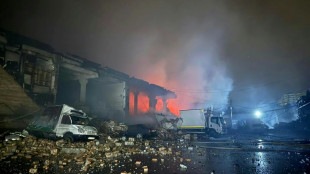
More than 90 per cent of those killed in a series of earthquakes in western Afghanistan were women and children, UNICEF said Wednesday, as fresh tremors terrorised residents of villages flattened by the disaster.
The magnitude 6.3 earthquake hit at dawn around 30 kilometres (19 miles) north of Herat city -- the latest in a series of quakes that have left thousands homeless since the weekend.
In total more than 1,000 people people have been killed and hundreds more injured, the Afghan government said Wednesday, revising down an earlier toll of over 2,000.
The brunt of fatalities was borne by women and children when the first magnitude 6.3 quake hit Saturday around 11:00 am (0630 GMT), said Herat-based UNICEF field officer Siddig Ibrahim.
"Women and children are often at home, tending to the household and caring for children, so when structures collapse, they are the most at risk," he said in a statement.
Forty-year-old Mohammad Naeem told AFP he lost 12 relatives, including his mother, after Saturday's earthquakes.
"We can't live here anymore. You can see, our family got martyred here. How could we live here?"
- Children scared to sleep -
At least one person was killed and around 130 injured in the latest quake on Wednesday, according to officials.
Some of the wounded were hit by the debris of already destroyed homes, said Abdul Zahir Noorzai, ambulance manager for Herat Regional Hospital.
Thirty-two-year-old Abdul Qudos said survivors had been left terrified by the multiple aftershocks.
"We are so scared that even when we see the trees moving (in the wind), we think it's another earthquake coming," he told AFP.
Earthquakes are frequent in Afghanistan and in the west and centre of the country are mostly caused by the Arabian and Eurasian tectonic plates jutting against each other.
Public health minister Qalandar Ebad attributed the confusion over fatality figures to the remoteness of the area and double reporting during the rescue effort.
"When whole villages are destroyed and populations erased... verifying the affected and martyred people, and the number of wounded, is a very difficult process," he said, adding that 2,400 had been injured.
- Casualties in flux -
Volunteers have been digging for survivors and bodies from the earlier quakes which totally destroyed at least six villages in rural Zenda Jan district and affected more than 12,000 people, the United Nations said.
Providing shelter on a large scale will be a challenge for Afghanistan's Taliban authorities, who seized power in August 2021, and have fractious relations with international aid organisations.
"That area is very cold, staying there after the evening is very difficult," said minister Ebad. "We know they could live there in tents for one month, but more than that would probably be very difficult."
Most homes in rural Afghanistan are made of mud and built around wooden support poles, with little in the way of steel or concrete reinforcement.
Multi-generational extended families generally live under the same roof, meaning serious earthquakes can devastate communities.
Afghanistan is already suffering a dire humanitarian crisis, with the widespread withdrawal of foreign aid following the Taliban's return to power.
Herat province, on the border with Iran, is home to around 1.9 million people, and its rural communities have already been suffering from a years-long drought.
V.F.Barreira--PC