European arms imports nearly double over Ukraine: study / Photo: Giuseppe CACACE - AFP/File

 Wall Street stocks rise, greeting optimism over possible US-Iran deal

 NFL players chief raises concerns over pitch for Maracana game

 Daytime Russian attacks kill seven in Kyiv
 Spotting AI writing: how reliable are the detectors?
 French youth await pope after AI 'paradise of machines' warning
 Man City found guilty of Premier League charges, set to appeal: reports

 Embolo follows Xhaka out of Swiss squad over fake Covid documents

 Trump, Xi inspect founding documents of US democracy to close summit

 'Bottle Claus': Kipchoge's 'hero' helping runners chase Berlin marathon glory

 Olympic medallist Samba-Mayela handed provisional doping ban

 First US trial against TikTok to open Monday

 Palmer misses 'too many' England games, says Tuchel

 UN refugees chief warns conditions in W.Sahara 'deteriorating'

 Antonelli 'mad' about crash in Azerbaijan qualifying

 'Perfect lap' gives Russell pole for Azerbaijan GP as Antonelli crashes out

 UN Security Council condemns Houthi attacks on Saudi Arabia
 China swimmer makes Asian Games history as Thai wins 100m sprint

 Top French literary prize drops best-selling novel over AI claims

 US 'must choose' whether to end war: Iran president

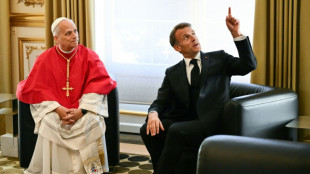 Pope warns against losing humanity in AI-driven 'paradise of machines'

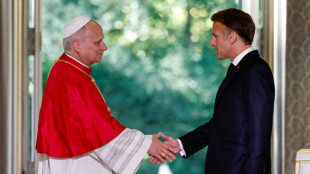 Pope warns against losing humanity in 'paradise of machines'

 From FBI warning to literary acclaim: the Russian journalist who took on Putin
 China swimmer in Asian Games first as North Korea lifters reign
 French literary prize removes novel from longlist after AI claims
 China's Zhang wins record seventh Asian Games swimming gold

Weapons imports to Europe nearly doubled over the past five years, partly due to the war in Ukraine, while exports from Russia halved, researchers said on Monday.
Ukraine has become the world's fourth largest arms importer, while France has replaced Russia as the world's second largest exporter behind the United States.
Arms imports to Europe rose by 94 percent in 2019-2023, compared to the preceding five-year period, while overall global arms transfers decreased slightly, according to a report by the Stockholm International Peace Research Institute (SIPRI).
SIPRI prefers to analyse trends over half-decades as a few deliveries of major contracts can tilt yearly figures.
The increase is "partially explained by the war in Ukraine, and Ukraine has become the fourth largest importer of arms in the world in the last five years", SIPRI researcher Katarina Djokic told AFP.
SIPRI noted that at least 30 countries had supplied major weapons as military aid to Ukraine since Russia invaded in February 2022.
But other European nations also increased imports, with a larger share coming from the world's number one exporter of arms, the United States.
In the 2019-2023 period, 55 percent of imports to Europe were from the US, up from 35 percent in the 2014-2018 period.
This is partly due to most European states being NATO members and partners of the US in the development of weapon systems like the F-35 fighter jet, Djokic said.
- Russian exports plummet -
At the same time increased imports from the US underlined many European nations' desire to quickly acquire weapons and therefore buy "off the shelf" rather than develop new systems.
Globally, US exports grew by 17 percent in the period, bringing its share of total arms exports to 42 percent.
Meanwhile, Russia -- which long held the position as the second largest exporter -- saw its exports fall by 53 percent between 2014-2018 and 2019-2023.
Russia was not only exporting fewer weapons, it was also exporting to fewer recipients.
It only exported to 12 countries in 2023, compared to 31 in 2019.
"There are also important changes in the policies of their biggest customer, China," Djokic said.
China was traditionally one of the biggest recipients of Russian arms but has been pushing to develop its domestic production.
China still accounted for 21 percent of Russian exports, while India was the biggest recipient with 34 percent.
While Russia's exports declined, France saw its own grow by 47 percent, thereby narrowly edging out Russia to become the world's second largest exporter.
- Violations of humanitarian law -
France accounted for 11 percent of total weapons exports in 2019-2023.
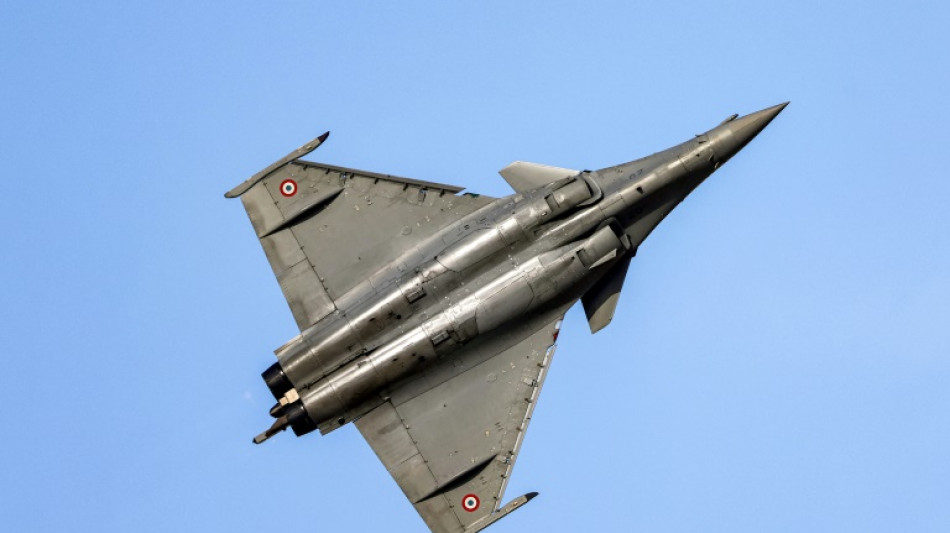
In particular, Djokic noted that France had been particularly successful in selling its Rafale fighter jet outside Europe.
The war in Gaza -- which began in retaliation for Hamas's October 7 attack on southern Israel -- has already affected arms imports to Israel.
This is primarily through transfers of weapons from the US, either via new military aid or the speeding up already existing contracts, according to SIPRI researcher Zain Hussain.
Hussain cautioned that the longer term impact of the conflict was harder to predict.
"We already see in certain European states a kind of push by different actors or states to limit arms to Israel during its (military) operations in Gaza due to potential violations of international humanitarian law," Hussain said.
Such measures could affect transfers to Israel.
The question then remains as to whether they would remain in place after the end of Israel's current ground and air assault on Gaza, Hussain explained.
F.Moura--PC