-
 Wall Street stocks rise, greeting optimism over possible US-Iran deal
-
Jay-Z rape accuser says she made 'false accusations'
-
 NFL players chief raises concerns over pitch for Maracana game
-
Senegal draw first match under Vieira and Nigeria survive scare

-
 Daytime Russian attacks kill seven in Kyiv
-
Trump, Xi end summit long on pomp, but short on progress
-
 Spotting AI writing: how reliable are the detectors?
-
Russia not preparing for conflict with Europe, Putin says
-
 French youth await pope after AI 'paradise of machines' warning
-
Trump's photo of Xi greeting carries signs of AI
-
 Man City found guilty of Premier League charges, set to appeal: reports
-
Six missing after building blast in historic Athens district

-
 Embolo follows Xhaka out of Swiss squad over fake Covid documents
-
Millions in US northeast brace for powerful storm

-
 Trump, Xi inspect founding documents of US democracy to close summit
-
Assefa seeks 'better than my best' at Berlin marathon

-
 'Bottle Claus': Kipchoge's 'hero' helping runners chase Berlin marathon glory
-
US court refuses to overturn Pentagon ban on Anthropic

-
 Olympic medallist Samba-Mayela handed provisional doping ban
-
Verstappen and Norris blame slow cars as Mercedes tops qualifying
-
 First US trial against TikTok to open Monday
-
Crowds cheer pope in Paris after AI 'paradise of machines' warning

-
 Palmer misses 'too many' England games, says Tuchel
-
Teen swimmer makes Games history as Thai, Chinese sprinters win gold

-
 UN refugees chief warns conditions in W.Sahara 'deteriorating'
-
Man City found guilty of 114 Premier League charges - reports

-
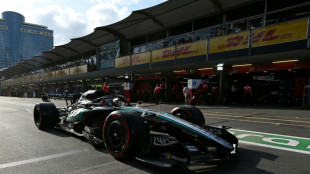 Antonelli 'mad' about crash in Azerbaijan qualifying
-
Concerns over 'missing' UK explorer Ranulph Fiennes

-
 'Perfect lap' gives Russell pole for Azerbaijan GP as Antonelli crashes out
-
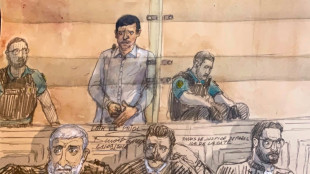
Suspected Paris killer of Argentine rugby star begs forgiveness
-
 UN Security Council condemns Houthi attacks on Saudi Arabia
-
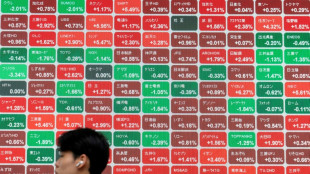
Oil prices fall on cautious hopes for US-Iran progress
-
 China swimmer makes Asian Games history as Thai wins 100m sprint
-
Noskova, Muchova take Czech Republic into BJK Cup final

-
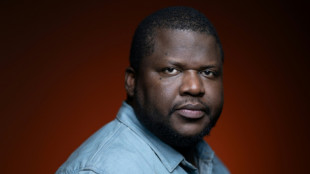 Top French literary prize drops best-selling novel over AI claims
-
Thai sprinter Puripol breaks own Asian Games record to win 100m gold

-
 US 'must choose' whether to end war: Iran president
-
Russell takes pole for Azerbaijan GP, Antonelli crashes out
-
 Pope warns against losing humanity in AI-driven 'paradise of machines'
-
Williams boss hails Chadwick as F1 inspiration for women

-
 Pope warns against losing humanity in 'paradise of machines'
-
World No.1 Sinner delays return with China Open withdrawal

-
 From FBI warning to literary acclaim: the Russian journalist who took on Putin
-
South Lebanon children return to school destroyed by Israel strike

-
 China swimmer in Asian Games first as North Korea lifters reign
-
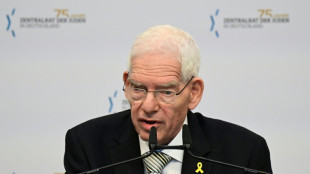
Jewish group urges Berlin far-left vote winners to tackle antisemitism
-
 French literary prize removes novel from longlist after AI claims
-
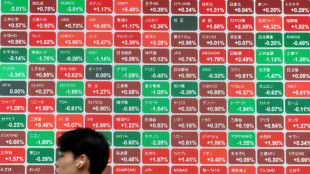
European stock markets climb as oil prices drop
-
 China's Zhang wins record seventh Asian Games swimming gold
-
Trump accuser E. Jean Carroll finally has her damages

Hong Kong legislature passes tough new national security law
Hong Kong legislators unanimously passed a new national security law on Tuesday that introduces penalties such as life imprisonment for crimes related to treason and insurrection, and up to 20 years in jail for the theft of state secrets.
The law, which the United States, Britain and the European Union have warned could further curtail freedoms in Hong Kong, was fast-tracked through the legislative process.
UN rights chief Volker Turk denounced the "rushed" adoption, criticising it as "a regressive step for the protection of human rights".
But city leader John Lee called it "a historic moment for Hong Kong", adding that the law would come into effect Saturday.
The government's previous attempt to introduce Article 23 -- as it is commonly referred to -- was in 2003, but it was dropped after half a million Hong Kongers took to the streets in protest.
Lee had repeatedly cited Hong Kong's "constitutional responsibility" to create the new law as required by the Basic Law, the city's mini-constitution since its handover from Britain to China in 1997.
The homegrown legislation will work in tandem with the national security law imposed by Beijing in 2020 after huge and at times violent pro-democracy protests.
The new law punishes dozens of offences under five categories: treason, insurrection, theft of state secrets and espionage, sabotage endangering national security, and external interference.
Lee had said it was needed to plug the legislative gaps left by Beijing's version, which targets secession, subversion, terrorism and collusion with foreign forces.
The law "will allow Hong Kong to effectively prevent, suppress and punish espionage activities, conspiracies and traps from foreign intelligence agencies, and infiltration and sabotage carried out by hostile forces", he said Tuesday.
He added that it would also "effectively prevent black-clad violence", a reference to the 2019 pro-democracy protests that were quashed.
One of the last-minute amendments added to the law last week empowers Lee and his cabinet to create new offences -- to account for "unforeseen circumstances" -- punishable by up to seven years in prison.
- 'An effective lock' -
Sanctioned by the United States for his oversight of the crackdown on the protests while security chief, Lee has called the law "an effective lock to prevent burglars" as authorities seek to combat "threats posed by external forces".
Penalties run up to life in prison for sabotage endangering national security, treason and insurrection, 20 years for espionage and sabotage, and 14 years for external interference.
It has also expanded the British colonial-era offence of sedition to include inciting hatred against China's Communist Party leadership, with an aggravated sentence of up to 10 years in jail.
As with its 2020 predecessor, the new law claims jurisdiction over some offences committed outside Hong Kong.
But the Beijing-run national security office in Hong Kong said "only an extremely small number of people" would be punished under Article 23, mirroring language used in the run-up to the original security law's imposition.
Nearly 300 people have so far been arrested under that law, while dozens of politicians, activists and other public figures have been jailed or forced into exile.
Calling it "a new Great Wall of rule of law", the security office said in a statement that "the majority of Hong Kong residents and international investors will benefit" from it.
- 'A regressive step' -
As part of the 1997 handover from Britain, Hong Kong was guaranteed certain freedoms -- as well as judicial and legislative autonomy -- for 50 years in a deal known as "one country, two systems".
The accord has helped cement the city's status as a world-class business hub, bolstered by a reliable judiciary and political freedoms distinct from the mainland.
Lee said the government could now "devote fully to economic development", citing the need for stability to attract investors.
But Britain's foreign minister David Cameron said the law would "further damage the rights and freedoms enjoyed" in Hong Kong and have "far-reaching implications" for the rule of law and independence of institutions.
"The broad definitions of national security and external interference will make it harder for those who live, work and do business in Hong Kong," he said in a statement.
The United States has said it "risks compounding the 2020 National Security Law that has curtailed the rights and freedoms of people in Hong Kong".
Calling it "a sad day for Hong Kong", Thomas Kellogg, executive director of Georgetown University's Center for Asian Law in Washington, said Article 23 would "further erode Hong Kong's status as a leading business hub".
"The 2020 (Beijing legislation) reshaped Hong Kong law, political institutions, and society," Kellogg told AFP. "This new law promises to extend and deepen that transformation."
C.Amaral--PC