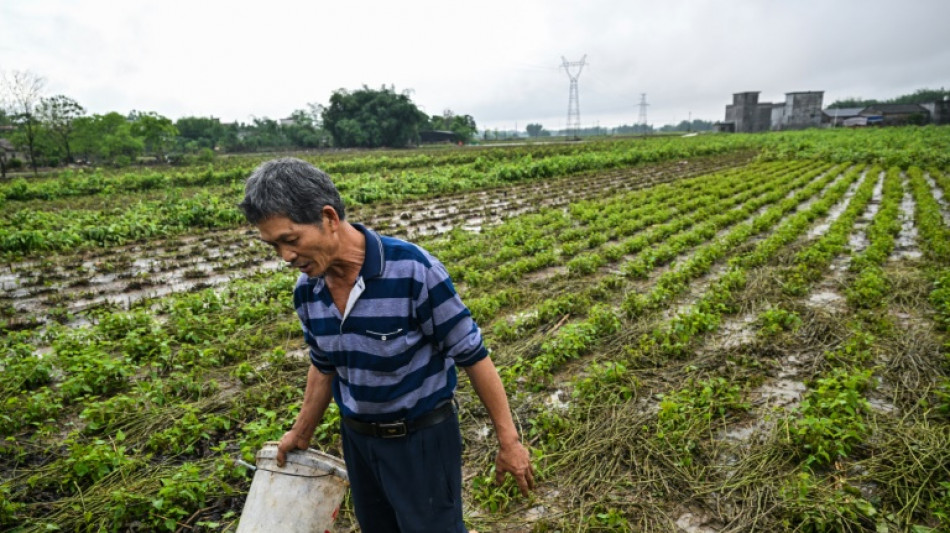
In south China, silkworm farmers reel from deadly floods / Photo: Hector RETAMAL - AFP

 Japanese 11-year-old wins Asian Games eSports gold

 TikTok agrees to teen limits in US settlement following Meta

 Venezuela's oil cradle pins hopes on US energy deals

 US, China buy time with trade truce as pressure builds

 'Leo, Leo': Young Catholics give pope rockstar welcome in France

 Lula bans sports betting days ahead of Brazil's election

 Guatemala ensures survival of vulnerable 'fossil' fish
 Mancini finds positives in Italy loss, accepts fans' jeers

 Alcaraz helps Europe into Laver Cup lead

 Six missing after building collapses in historic Athens district

 Mbappe scores but suffers knee injury as Zidane gets debut France win

 Mancini's Italy return spoiled by Belgium defeat

 Rodri confident in Man City innocence despite reported charges

 Jay-Z rape accuser says she made 'false accusations'

 Senegal draw first match under Vieira and Nigeria survive scare

 Trump, Xi end summit long on pomp, but short on progress

 Russia not preparing for conflict with Europe, Putin says

 Trump's photo of Xi greeting carries signs of AI

 Six missing after building blast in historic Athens district

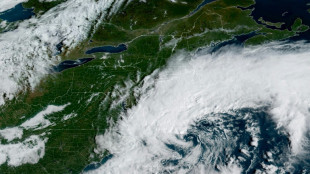 Millions in US northeast brace for powerful storm

 Assefa seeks 'better than my best' at Berlin marathon

 US court refuses to overturn Pentagon ban on Anthropic

 Verstappen and Norris blame slow cars as Mercedes tops qualifying

 Crowds cheer pope in Paris after AI 'paradise of machines' warning

 Teen swimmer makes Games history as Thai, Chinese sprinters win gold

Hose in hand, 40-year-old Zhu Huangyi cleans a small concrete room once home to his silkworms, two thirds of which were lost in deadly floods hitting southern China this week.
Just two hours from the economic powerhouse and megacity of Guangzhou, surrounded by lush subtropical vegetation, lies the village of Sancun, one of the worst hit by the recent bad weather.
Around a quarter of households in the village make their living from raising silkworms, insects that secrete precious fibres essential to the textile industry.
Although the water levels had dropped by the time AFP arrived, it reached two metres in some areas -- with devastating consequences for residents and the tiny creatures.
"We placed the worms high up but that wasn't enough," Zhu Huangyi told AFP, holding up a smartphone showing images of his cocoons floating sadly on the surface of the water.
"It hurts my heart," he said.
"It's an old family business, my mother got into this 30 years ago," says the breeder, whose property was also flooded in 2022.
Behind him, his mother Huang Xiuying scatters white detergent powder on the concrete floor of the enclosures to disinfect the area.
"We continued to feed our worms, even after receiving the weather alert," she says.
"We couldn't come to grips with reality," she explains.
Breeders sell their worms in their cocoon state, when they are most valuable, for around 40 to 50 yuan for a kilo ($5.50 to $7).
Zhu was able to save a third of them.
"After the flood, prices fell," he says.
"We were able to sell those that remained at 34 yuan a kilo."
That was their only way to curb their losses -- like many in the village, he had no insurance.
"Basically, it will cost us 40,000 to 50,000 yuan in losses," he explains -- a huge amount in rural China.
- 'I lost all my cocoons' -
Adding to the pain is the loss in the floods of the village's mulberry trees, the silkworms' only source of food.
"The other problem is our mulberry trees," Zhu said.
The only solution is to cut the heads of the plants once the water level returns to normal, then wait about two weeks for usable leaves to grow back.
Only after that will farmers be able to buy new silkworm eggs to replenish their breeding stock, which Zhu estimates will cost 5,000 yuan.
Another breeder Lan Zhukui is even less fortunate.
"I lost all my cocoons, around 150 kilos of them" with a market value of around 6,000 yuan, he explains to AFP as he cleans the floor of his enclosure.
"There's not much to do at the moment except wait at home."
At her breeding station, Huang is more philosophical.
"We're used to it!" she says. "Before, we were flooded every eight to ten years. Now it's more like every two years."
A.Aguiar--PC