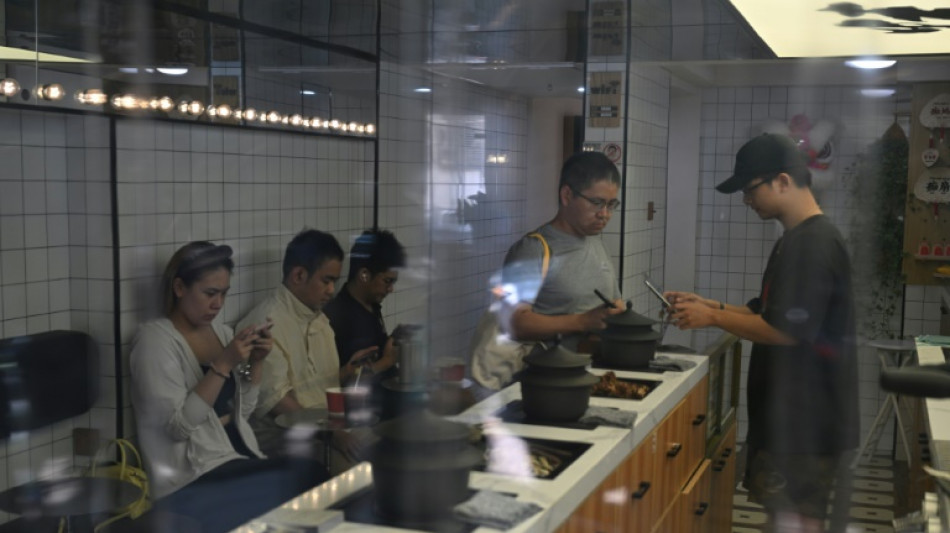
Stressed China youth fuel wellness boom with traditional twist / Photo: HECTOR RETAMAL - AFP

 Assefa seeks 'better than my best' at Berlin marathon
 US court refuses to overturn Pentagon ban on Anthropic

 Verstappen and Norris blame slow cars as Mercedes tops qualifying

 Crowds cheer pope in Paris after AI 'paradise of machines' warning

 Teen swimmer makes Games history as Thai, Chinese sprinters win gold

 Man City found guilty of 114 Premier League charges - reports

 Concerns over 'missing' UK explorer Ranulph Fiennes

 Suspected Paris killer of Argentine rugby star begs forgiveness

 Oil prices fall on cautious hopes for US-Iran progress

 Noskova, Muchova take Czech Republic into BJK Cup final

 Thai sprinter Puripol breaks own Asian Games record to win 100m gold

 Russell takes pole for Azerbaijan GP, Antonelli crashes out

 Williams boss hails Chadwick as F1 inspiration for women

 World No.1 Sinner delays return with China Open withdrawal

 South Lebanon children return to school destroyed by Israel strike

 Jewish group urges Berlin far-left vote winners to tackle antisemitism

 European stock markets climb as oil prices drop

 Trump accuser E. Jean Carroll finally has her damages

 Germany's Havertz, Musiala ruled out of Greece match with injury

 Ireland's Gaza stance spills from Eurovision into football

 Welcome aboard the Costa Serena, the Asian Games floating hotel

 Asian markets mixed after recent oil surge
 Cash for nature protection: hotelier's offer to Principe islanders

 US miner KoBold bets on AI to gain edge in DR Congo mineral hunt

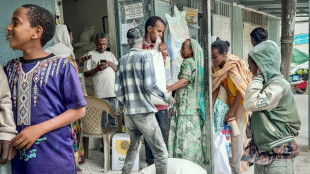 Internet disrupted in Ethiopia as conflict rages

Popping supplements, drinking herbal teas and signing up for lifestyle classes, China's youth are turning to the wellness industry as work stress and pandemic memories spur a growing interest in health.
These new habits are part of a global wellness boom, but the traditional concept of "yangsheng" -- literally meaning "cultivating one's life force" -- has given the trend a unique cultural twist in China.
In Shanghai, Annie Huang sat in a trendy cafe-like establishment that sold traditional herbal teas, sipping a bitter concoction purported to protect the body against the summer heat.
"Young people today frequently pull all-nighters... so they want to drink something that they feel is good for their body," Huang, in her thirties, told AFP.
Rooted in Taoism and traditional Chinese medicine beliefs, the vast umbrella of "yangsheng" includes habits like avoiding foods thought to make the body cold, and targeted massages that purportedly treat a range of ailments.
Capitalising on the trend, state-run traditional Chinese medicine giants such as Beijing Tongrentang have opened fashionably decorated stores offering "all-nighter water" and goji berry lattes alongside traditional ingredients believed to promote health like bird's nest and ginseng.
Thousands of "yangsheng" influencers have filled Chinese social media with posts that offer tips on "expelling body dampness", how to incorporate ginger juice into daily meals, and finger exercises that allegedly improve blood circulation.
The passion for "yangsheng" has even spilled over into tourism, with youths flocking to desert areas to lay on sand in the belief that the practice rids the body of unhealthy dampness.
- 'Willing to invest' -
The world's second largest economy is battling sluggish consumption against the backdrop of a property crisis and stubborn youth unemployment.
But health and wellness spending, especially among millennials and Gen Z, remains a bright spot.
Wellness purchases are "definitely increasing more than other categories" despite many younger spenders tightening their belts overall, said Jason Yu, greater China managing director at consumer research firm Kantar Worldpanel.
"Nutrition supplement is one of the categories they really value and that they are willing to actually invest in," Yu told AFP.
The health craze has taken many forms ranging from medically proven to pseudoscience.
Chinese start-ups are selling everything from vitamin gummies to probiotic powders, vying for attention with traditionally more trusted imported brands.
- Health anxiety -
The trend is inextricably tied to widespread anxiety about the negative health effects of high-pressure modern work culture.
Reports of overworked youth dying at their desks have prompted consumers to spring for "sudden death prevention packs" -- combinations of supplements aimed at countering the impact of daily takeout meals and long workdays.
"You think you're just working, but you're actually cutting your lifespan," warned one post by a "yangsheng"-focused office worker influencer on the Xiaohongshu platform.
Young women juggling demanding careers with the pervasive pressure to have children are turning to classes that teach them to optimize their reproductive health.
At a night school in Shanghai, traditional Chinese medicine practitioner Zhang Qinhai pointed to a diagram of a uterus and ovaries as she warned her oversubscribed class of mostly young women about the declining chances of a healthy birth at higher maternal ages.
"People are under too much pressure, so they're in a state of poorer health," a 33-year-old student told AFP.
Meanwhile, health fears sparked by the Covid-19 pandemic have lingered.
People feel that their immunity has been lowered by Covid, and "they may catch colds and fevers more easily," Tommy Qin, owner of the herbal tea cafe, said.
Yu of Kantar Worldpanel said he believed perception played a big part in young consumers' rush to protect their health.
"Higher awareness of different health issues, especially aided by social media, are really helping (to drive consumption), because everybody feels they're not healthy enough."
F.Ferraz--PC