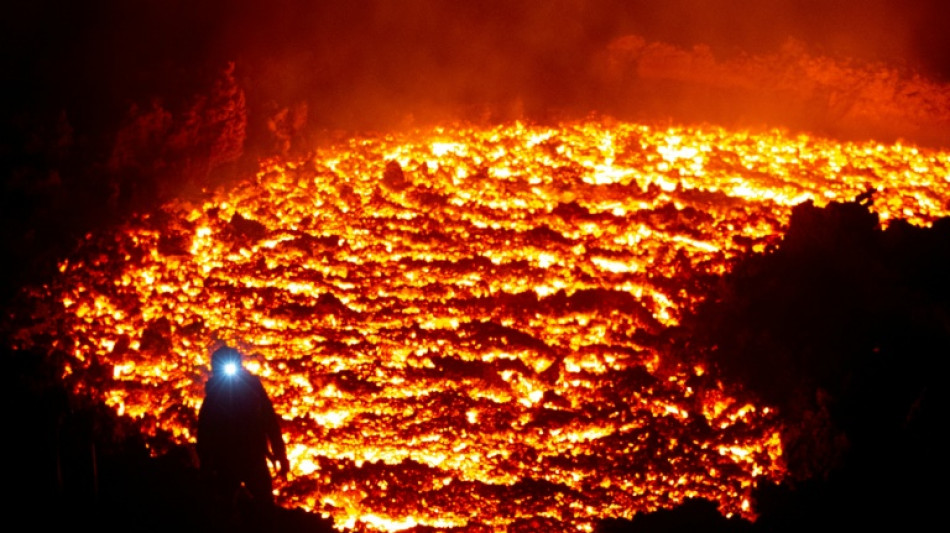
Volcanoes 'hidden source' of CO2 in past climate change: study / Photo: MAXIM FESYUNOV - AFP/File

 UN approves resolution on dealing with rising sea levels

 Yalcouye makes dream debut as Ivory Coast beat Ghana in AFCON qualifier

 Chicago's White Sox and Cubs book MLB playoff berths

 Last-gasp Gakpo strike snatches Dutch draw to sour Klopp debut

 Global stocks mostly fall as oil prices and bond yields rise

 Israel's Netanyahu denounces enemies, allies in fiery UN speech

 Hollywood stars among arrests in NY anti-Netanyahu protest

 Losing start in AFCON qualifying for 78-year-old coach Le Roy

 Italy bans burqas in schools, caps numbers of foreign students per class

 Israel policies threaten 'life and existence' of Palestinians, Abbas says

 Paolini steers Italy past China in BJK

 Zidane admits emotion on eve of first game as France coach

 Breetzke and Maharaj sink Australia in first one-day international

 Zelensky broke confidentiality with North Korea POWs disclosure: South's president

 Former Liverpool star Carroll reveals he was sexually assaulted
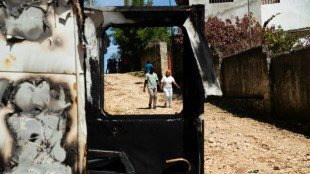 Dominican Republic calls for Haiti force to be strengthened

 Dolly Parton's nephew ordered to stay away from estate staff, properties

 Early exit for Philippine darling Eala at Singapore Open

 Hurricane Polo triggers huge waves in coastal Mexican city

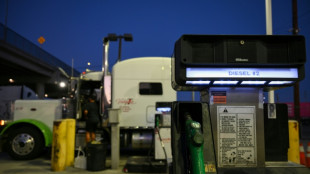 What happens if the US bans diesel exports

 Macklemore hits back with 'Free Palestine Tour' after Sheeran split
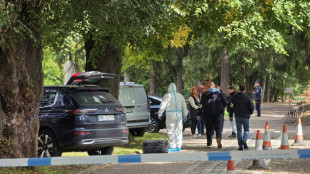
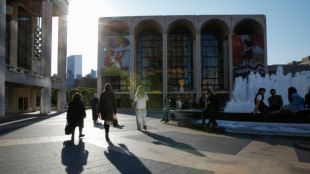 Met Opera to give New Yorkers free tickets in affordability push

 Top ECB official to resign to take up IMF role

 Xi and Trump call for peace in lavish White House state visit

 Five up-and-coming players looking to make mark in Nations League

Massive fields of magma underneath ancient volcanoes spewed out carbon dioxide long after eruptions on the surface had ended, potentially explaining why past global warming episodes lasted longer than expected, a study said Wednesday.
Humans are emitting far more planet-heating carbon-dioxide (C02) than all the world's volcanoes put together. But scientists hope that by studying climate change in Earth's distant past, they can understand how the world heats up -- and crucially, how it can cool down again.
Scientists have long been puzzled by how long it took Earth's atmosphere to recover from a mass extinction event 252 million years ago that ended the Permian period.
It was the most severe extinction event in our planet's history, wiping out roughly 90 percent of marine species and 70 percent of those on land.
Scientists believe the upheaval was caused by huge volcanic eruptions in Siberia. The eruptions created what are called large igneous provinces -- huge underground regions of magma and rock -- which have been linked to four of the five big mass extinctions since complex life appeared on Earth.
It took Earth's climate nearly five million years to recover.
But according to scientific models, the world should have regrouped much more quickly.
"Earth's natural thermostat seems to have gone haywire during and after this event," said Benjamin Black, a researcher at Rutgers University in the United States and lead author of a new study in the journal Nature Geoscience.
- 'This gives me hope' -
To find out more, the US-led team carried out chemical analyses of lava, used computer models to simulate inner-Earth processes and compared climate records preserved in rock.
Their results suggested that even once volcanic activity had ended during past episodes, magma kept releasing carbon dioxide deep in the Earth's crust and mantle, which continued heating the globe.
"Our findings are important because they identify a hidden source of CO2 to the atmosphere during moments in Earth's past when climate has warmed abruptly and stayed warm much longer than we expected," Black said in a statement.
"We think we have figured out an important piece of the puzzle for how Earth's climate was disrupted, and perhaps just as importantly, how it recovered."
Black told AFP that the process described in the study "definitely cannot explain present-day climate change".
All the world's volcanoes currently "release less than one percent as much carbon to the atmosphere as human activities," he explained.
The type of volcanism the team investigated was last seen on Earth 16 million years ago, Black said, and was so enormous it could "cover the continental United States or Europe half a kilometre deep in lava".
But if the findings are confirmed, it could show that Earth's thermostat is working better than scientists had thought.
"This gives me hope that geologic processes will be able to gradually draw anthropogenic CO2 back out of the atmosphere," Black said.
"But it will still take hundreds of thousands to millions of years, which is obviously a long time for human beings."
P.Mira--PC