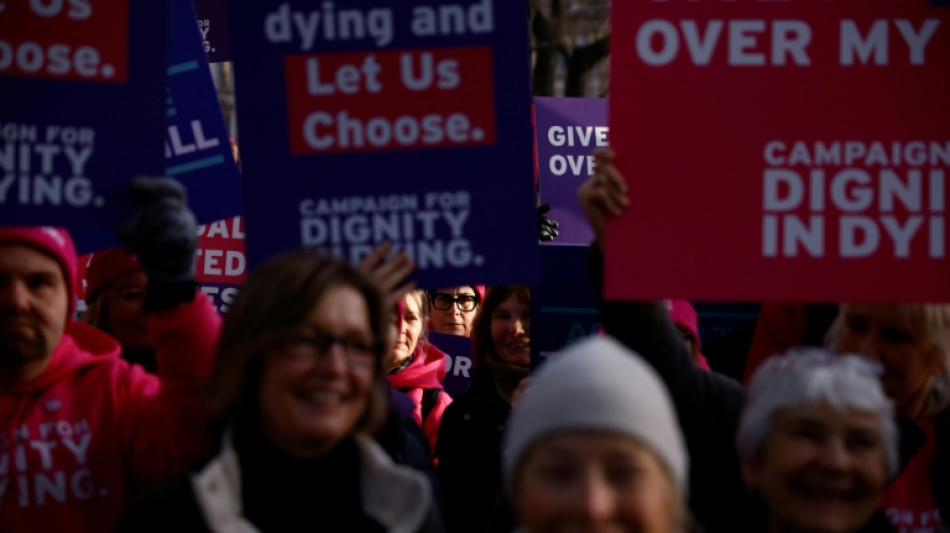
British MPs debate contentious assisted dying law / Photo: BENJAMIN CREMEL - AFP

 Calgary builder draws on decades of DIY work to increase Ford engine power

 Record-setting Hemi Plymouth Superbird heads to auction

 Calgary dancer describes stripping as a career built on independence and community

 Rohit Sharma Reappointed Mumbai Indians Captain for IPL 2027 with Focus on Team Spirit

 Calgary budget hearing delayed during debate over Tourette syndrome accommodation
 Business phone systems gain AI tools, but human oversight remains essential

 Huawei outlines 2030 network plans at Africa Tech Festival

 Governments and courts tighten restrictions on camera-equipped smart glasses

 South Africa’s sovereign satellite plan remains stalled despite higher cost

 EasyEquities faces pressure for clearer answers after security outage

 US patent disputes involving Korean chipmakers reach record level

 SK hynix doubles daily share purchases after steep stock decline

 Former soldier stopped with blank round at Incheon Airport

 Korea Post breach exposes data of at least 113,855 customers

 Many AAPI Candidates Win Seats in Orange County Local Elections

 Holly Ramsay and Adam Peaty Welcome Daughter Daphne June at Portland Hospital

 Honda and Toyota Recall 1.6 Million Vehicles Over Takata Airbag Risks

 Court Dismisses Fenech’s Bid to Revoke Theuma’s Pardon
UK lawmakers debated Friday whether to advance divisive and emotive legislation to allow assisted dying for terminally ill people in England and Wales, with a vote expected later in the day.
Parliament last debated, and defeated, a euthanasia bill in 2015, but public support for giving terminally ill people the choice to end their lives has since shifted in favour.
Opening the debate, Labour MP Kim Leadbeater, who is behind the Terminally Ill Adults (End of Life) Bill, said changing the law would give terminally ill people "choice, autonomy and dignity at the end of their lives".
But dozens of opponents gathered outside parliament holding signs with "Kill the Bill, not the ill" and "care not killing" as they urged MPs to vote against the proposed legislation.
Two polls last week indicated that a majority of Britons back changing the law, which would see England and Wales emulate several European and other countries.
Supporters say allowing assisted suicide would make some deaths less painful.
However, faith leaders are among the stringent opponents, with nearly 30 signing a joint letter last weekend arguing they are "deeply concerned" by the plans.
Critics insist it could lead some people to feel pressured into ending their life, while some say the healthcare system is not ready for such a landmark change.
The bill would allow assisted suicide in England and Wales for adults with an incurable illness who have a life expectancy of fewer than six months and are able to take the substance that causes their death themselves.
Any patient's wish to die would have to be signed off by a judge and two doctors.
The measures are stricter than assisted dying laws in other European countries and also proposed legislation being considered in France.
The bill is a so-called private members' bill and is not part of the government's agenda. The debate was due to end at 2:00 pm, with a vote on progressing the bill to its next parliamentary stage highly likely but not guaranteed.
- 'Right to choose' -
The legislation follows Prime Minister Keir Starmer's vow, before winning power in July, to allow parliament to revisit the issue.
The UK leader, who voted in favour of allowing assisted suicide in 2015 but with "robust" safeguards, has not revealed his current view.
The country's most senior civil servant has told cabinet members they "should not take part in the public debate" given the government is remaining neutral on the bill.
However, a number of senior ministers have aired their opinions, with Health Secretary Wes Streeting and Justice Secretary Shabana Mahmood both saying they are opposed.
Mahmood, the country's most senior Muslim politician, argued in a recent letter to constituents that "the state should never offer death as a service", while noting that her faith was informing her stance.
Broadcaster Esther Rantzen, who is terminally ill and has spearheaded the campaign for a law change, on Thursday urged other MPs to be honest about whether faith was the basis for any opposition.
"They have the right to choose but please be honest about your real motivation," she told LBC radio.
Meanwhile former prime minister David Cameron, who opposed the 2015 law change, revealed he had changed his mind on the issue.
"As campaigners have convincingly argued, this proposal is not about ending life. It is about shortening death," he wrote in The Times newspaper on Thursday.
However other ex-premiers -- including Liz Truss, Boris Johnson, Theresa May and Gordon Brown -- have all said they oppose the legislation.
In Scotland, which has a separate legal system and devolved powers to set its own health policy, it is not a specific criminal offence. But it can leave a person open to other charges, including murder.
P.Mira--PC