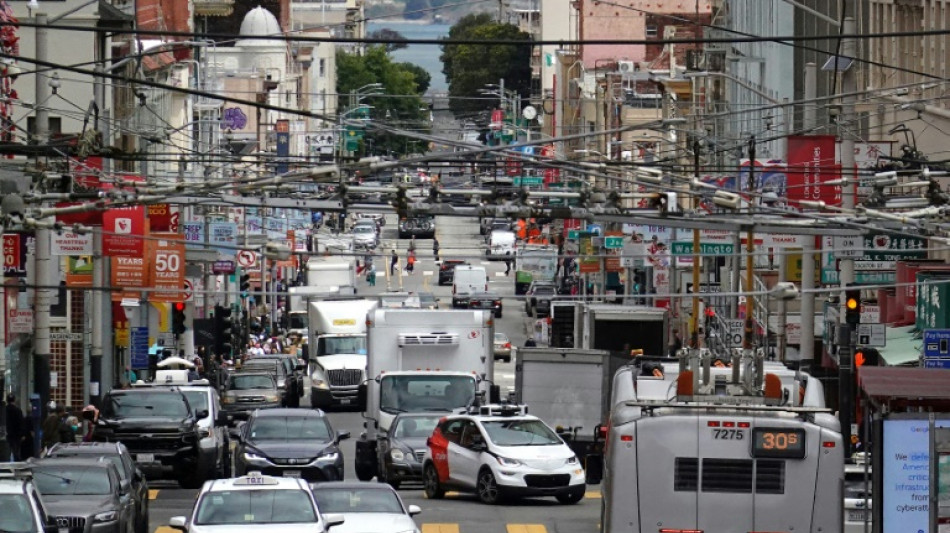
GM abandons robotaxi operations derailed by accident / Photo: JUSTIN SULLIVAN - GETTY IMAGES NORTH AMERICA/AFP

 Former soldier stopped with blank round at Incheon Airport
 Korea Post breach exposes data of at least 113,855 customers
 Many AAPI Candidates Win Seats in Orange County Local Elections

 Holly Ramsay and Adam Peaty Welcome Daughter Daphne June at Portland Hospital

 Honda and Toyota Recall 1.6 Million Vehicles Over Takata Airbag Risks

 Court Dismisses Fenech’s Bid to Revoke Theuma’s Pardon
 Fundraiser launched for Daniel Buttigieg after boat accident

US auto giant General Motors announced Tuesday it will abandon its robotaxi development efforts after a highly publicized incident last year stymied its progress in the autonomous vehicle field.
The Detroit-based manufacturer plans to merge the Cruise robotaxi vehicle unit with GM's technical teams to concentrate on developing advanced driver assistance systems for personal vehicles, a statement said.
The company said it abandoned the Cruise project "given the considerable time and resources that would be needed to scale the business, along with an increasingly competitive robotaxi market."
It marks a major turnaround for GM, which bought the Cruise startup in 2016 and has since spent billions of dollars to make the operation viable.
"A robotaxi business is not General Motors’ core business," said GM CEO Mary Barra in a call with analysts.
But Barra said GM's commitment to autonomous technology "is unwavering."
The halt of operations comes a year after Cruise was forced to suspend all operations in San Francisco after one of its self-driving cars dragged a woman who had first been hit by a hit-and-run driver in the city.
Cruise lost its operating permits from regulators, paused expansions into other states and laid off 900 employees -- a quarter of its workforce.
Shortly before the incident, California authorities had allowed for expanded driverless taxi services in San Francisco, giving the go-ahead for Alphabet-owned Waymo and Cruise.
Cruise's exit confirms Waymo as the dominant player in the business, which was valued at $45 billion after a fundraising round in October, according to Bloomberg.
The company has been expanding its reach and currently runs robotaxi fleets in San Francisco, Phoenix and Los Angeles.
And in a team-up with Uber, the company is planning to offer Waymo robotaxi rides in Atlanta and Austin.
Amazon's Zoox meanwhile is conducting robotaxi testing in California and Las Vegas, while Elon Musk recently unveiled what he said was a robotaxi capable of self-driving, predicting it would be available by 2027.
GM's strategic pivot comes as embattled automakers worldwide face mounting pressure to balance investments in emerging technologies with near-term profitability.
The auto giant said that the restructuring is expected to generate annual savings exceeding $1 billion once completed in the first half of 2025.
GM's share price was up by more than three percent in after hours trading on Wall Street.
P.Sousa--PC