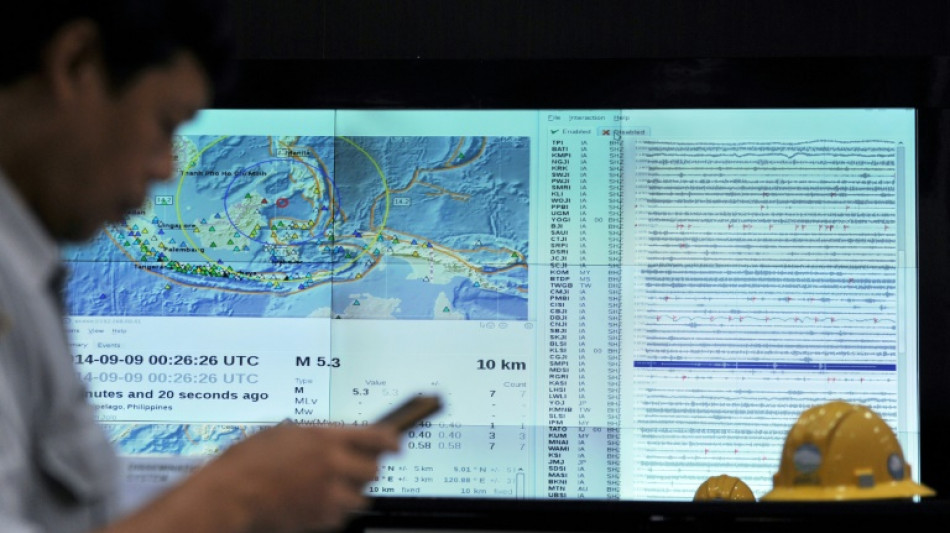
Blogs to Bluesky: social media shifts responses after 2004 tsunami / Photo: ADEK BERRY - AFP/File

 Fury to face British rival Joshua in Cardiff on December 11

 Streamex Converts Interest Into Capital as GLDY Investment Strategy Secures $1M+ Institutional Allocation

 STARTRADER Named Best Fintech Forex Broker at Forex Expo Dubai 2026
 Japan swimmer Ohashi, 17, shrugs off Covid to smash world record

 Shin Ohashi: Junk food-loving teen and new world record-holder

 Greek PM urges 'courage' in talks with UK over Parthenon Marbles
 'I was drowning': Iran Nobel winner exposes pain of separation from children

 Israel's US envoy says son fighting for life

 Olympic champion Yulo completes gymnastics gold collection at Asian Games
 England cannot imitate Spain's success, says Gordon

 Hungary detects invasive spotted lanternfly for first time in EU

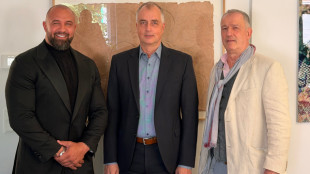 Ο Alex Bodi και ο καθηγητής Δρ. Stefan Haupt συμφωνούν σε συνεργασία για μια θρυλική συλλογή έργων τέχνης στη Ρουμανία
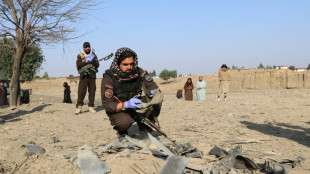
 France's top-selling newspaper to slash jobs

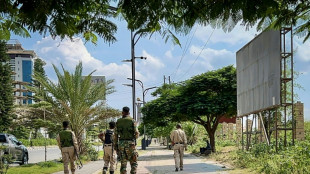 Tigray rebels in 'full-blown' war with govt

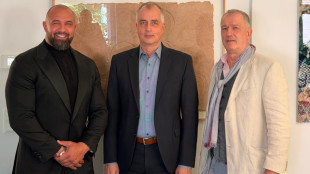 Alex Bodi och prof. dr Stefan Haupt ingår samarbetsavtal om en legendarisk konstsamling i Rumänien
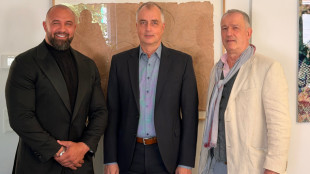
 อเล็กซ์ โบดี และศาสตราจารย์ ดร. สเตฟาน ฮาปท์ ตกลงร่วมมือกันในการจัดตั้งคอลเลกชันศิลปะอันเป็นตำนานในโรมาเนีย
 Alex Bodi a prof. dr. Stefan Haupt se dohodli na spolupráci na legendární umělecké sbírce v Rumunsku
 알렉스 보디와 슈테판 하우프트 교수, 루마니아의 전설적인 미술품 컬렉션을 위한 협력 합의

 BaazEX Enters the Asian Trading Market With a New Approach to Online Forex Trading.
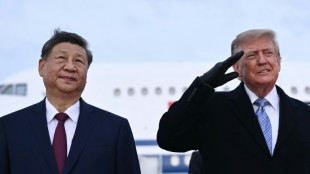
 Asian markets fall on US-China jitters as leaders meet
 Thais hail teen rocker Nene for 'America's Got Talent' win

 Zverev, Agassi defend 'spectacular' Laver Cup
 Eel-powered Japan whizz-kid, 11, dominates in historic Games debut
 Madagascar's Gen Z 'betrayed' after ushering in new rule
 As Moscow steps up attacks, Kyiv residents brace for harsh winter
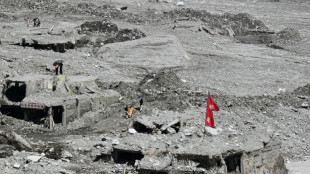
The world's deadliest tsunami hit nations around the Indian Ocean two decades ago before social media platforms flourished, but they have since transformed how we understand and respond to disasters -- from finding the missing to swift crowdfunding.
When a 9.1-magnitude quake caused a tsunami that smashed into coastal areas on December 26, 2004, killing more than 220,000 people, broadcasters, newspapers and wire agencies were the main media bringing news of the calamity to the world.
Yet in some places, the sheer scale took days to emerge.
Survivor Mark Oberle was holidaying in Thailand's Phuket when the giant waves hit Patong beach, and penned a blog post to fend off questions from family, friends and strangers in the days after the disaster.
"The first hints of the extent were from European visitors who got text messages from friends back home," said Oberle, adding people initially thought the quake was local and small, when its epicentre was actually near western Indonesia, hundreds of miles away.
"I wrote the blog because there were so many friends and family who wanted to know more. Plus I was getting many queries from strangers. People were desperate for good news tales," said the US-based physician, who helped the injured.
The blog included images of cars ploughed into hotels, water-filled roads and locals fleeing on scooters because rumours produced "a stampede from the beach to higher ground".
Bloggers were named 'People of the Year' by ABC News in 2004 because of the intimacy of first-hand accounts like those published in the days following the tsunami.
But today billions can follow major events in real-time on social media, enabling citizen journalism and assistance from afar, despite the real risk of rumour and misinformation.
During Spain's worst floods for decades in October, people voluntarily managed social media accounts to assist relatives trying to locate their missing loved ones.
After Turkey's devastating earthquake last year, a 20-year-old student was rescued thanks to a post of his location while buried under the rubble.
- 'Fast picture' -
Two decades ago, the online social media landscape was vastly different.
Facebook was launched early in 2004 but was not yet widely used when the tsunami hit.
One of YouTube's founders reportedly said an inspiration for the platform's founding in early 2005 was an inability to find footage of the tsunami in its aftermath.
Some tsunami images were posted on photo site Flickr. But X, Instagram and Bluesky now allow for instant sharing.
Experts are clear that more information saves lives -- hours lapsed between the tremor's epicentre near Indonesia and the giant waves that crashed into Sri Lanka, India and Thailand's coastal areas.
Daniel Aldrich, a professor at Northeastern University, conducted interviews in India's Tamil Nadu where many said they had no idea what a tsunami was and had no warnings in 2004.
"In India alone nearly 6,000 people were taken by surprise and drowned in that event," he said.
Mobile apps and online accounts now quickly publicise information about hospitals, evacuation routes or shelters.
"Social media would have provided an immediate way to help locate other survivors and get information," said Jeffrey Blevins, head of journalism at the University of Cincinnati.
Oberle also noted that "knowing what help was locally available... would have provided a clearer perspective of what to expect in the days to come".
- Citizen science -
Beyond emergency rescue, social media clips can also be a boon to understanding a disaster's cause.
When giant waves crashed into Indonesia's Aceh province, footage remained largely confined to handheld camcorders capturing the carnage.
Fast forward to 2018, when a quake-tsunami hit Indonesia's Palu city, killing more than 4,000 people, enough videos were taken on smartphones that scientists researching seismic activity were later able to use the clips to reconstruct its path and time between waves.
The piece of citizen science in 2020 used amateur videos to conclude it happened so fast because of underwater landslides close to shore.
But it's not all good news.
Scholars warn that disinformation and rumours have also hindered disaster responses.
When Hurricane Helene struck North Carolina in September, relief efforts were disrupted as tensions between locals and emergency workers rose over unfounded rumours including a higher hidden death toll and diverted aid.
Workers faced reported threats from local armed militias.
"This information was so malicious that FEMA (Federal Emergency Management Agency) had to withdraw its teams from the area," said Aldrich.
"Social media has absolutely altered the field of disaster response for the good and the bad."
Yet perhaps the biggest change -- the free flow of information to the vulnerable -- has been beneficial.
Laura Kong of the Honolulu-based International Tsunami Information Center recently recalls how "2004 was such a tragedy".
"Because... we might have known there was an event, but we didn't have a way to tell anyone."
R.J.Fidalgo--PC