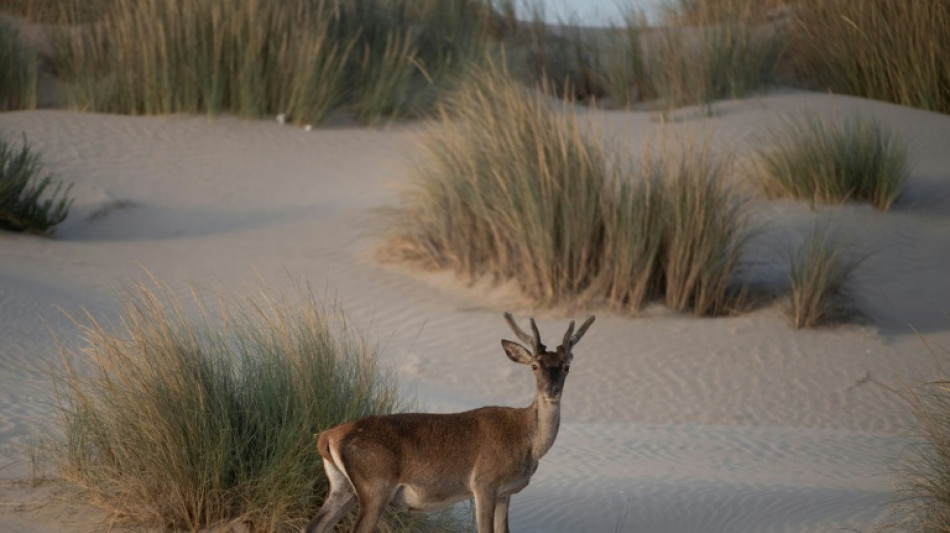
Strawberry farms threaten Spanish wetlands / Photo: JORGE GUERRERO - AFP

 How a glacier collapse may have caused Nepal-Tibet disaster

 Harmovest Capital Strengthens Global Financial Services Through Technology and Compliance

 Nvidia to buy AI platform Hugging Face for $12.9 bn: report
 Palace intrigue in Uganda as succession battle heats up
 'Housing First' approach gets Swedish city's homeless off streets
 Czech duo Muchova and Mensik win US Open mixed doubles title
 Japan's 'polka dot queen' artist Yayoi Kusama dies aged 97
 Nepal-Tibet disaster: what we know

 China deploys record number of ships around Taiwan as pressure grows

 Ruthless Bayern target treble as rivals reboot on Bundesliga return

 What experts know so far about Nepal's deadly floods

 UEFA set to withdraw FIFA boycott threat ahead of Champions League draw
 Sumo moves to beat Japan summer heat as temperatures rise

 'Be more honest': Markets crave clarity from cryptic Fed chair

 Climate change leaves its mark on America's largest reservoir
 CIA director warned Russia not to attack NATO members: US media

 Search for missing after Nepal-Tibet floods kills at least 160

 Meta, US states agree $18 bn settlement in landmark teen safety case

 What scientists know so far about Nepal's deadly floods

 US general visits Colombia to discuss war on drugs

 Meta settlement puts social media industry on notice: 'There will be more'

 NFL owners approve record Seahawks sale

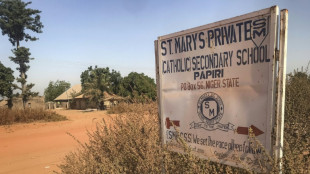 Nigerian armed groups net nearly $6 mn in ransoms: study

 Savio scores on debut as Spurs advance in League Cup

 Mbappe hits treble as Real Madrid thrash Real Sociedad

Standing in the middle of a stretch of land surrounded by dunes and pine forest, Juan Romero examines the cracked ground then stares at the dusty horizon.
"It's dry... really dry," the retired teacher said at the huge Donana National Park in southern Spain, home to one of Europe's largest wetlands, which is threatened by intensive farming.
"At this time of the year this should be covered with water and full of flamingos," added Romero, a member of Save Donana, a group that has been fighting for years to protect the park.
Water supplies to the park have declined dramatically due to climate change and the over-extraction of water by neighbouring strawberry farms, often through illegal wells, scientists say.
The situation could soon get worse as the regional government of Andalusia, where Donana is located, has proposed expanding irrigation rights for strawberry farmers near the park.
It's a battle pitting environmentalists against politicians and farmers, and the proposal to widen irrigation rights has drawn backlash from the EU, the UN and major European grocery store chains.
The proposal would regularise nearly 1,900 hectares (4,700 acres) of berry farmland currently irrigated by illegal wells, said Juanjo Carmona of the local branch of the World Wildlife Fund for Nature (WWF).
"For Donana it would be a disaster," he added.
The park, whose diverse ecosystem of lagoons, marshes, forests and dunes stretch across 100,000 hectares, is on the migratory route of millions of birds each year and is home to many rare species such as the Iberian lynx.
"Donana is a paradise for migrating birds. But this ecosystem is threatened," said Romero.
The driving force behind the plan to extend irrigation rights is the conservative Popular Party (PP), which governs the southern region of Andalusia with the support of far-right party Vox.
The plan's fate will be decided after a snap poll in Andalusia on June 19 but with both parties riding high in the polls the controversial proposal looks set to go head.
- 'Red gold' -
Defenders of the proposal argue it will aid those who unfairly missed out during a previous regularisation of farms in the area put in place in 2014 under a Socialist government.
About 9,000 hectares of farms were regularised but another 2,000 hectares that started being farmed after 2004 were deemed illegal.
"This plan was badly done. It should have used 2014 as the cut-off date," said Rafael Segovia, a lawmaker with Vox in Andalusia's outgoing regional parliament.
The proposed amnesty "does not present any danger for Donana", Segovia said, adding people should take into account the "economic importance of the sector".
Huelva, the drought-prone province where the park is located, produces 300,000 tonnes of strawberries a year, 90 percent of Spain's output.
Known locally as "red gold", strawberry farming employs some 100,000 people and accounts for nearly eight percent of Andalusia's economic output.
UNESCO, the UN's cultural agency, has designated the park one of its World Heritage sites and has called for illegal farms near Donana to be dismantled.
It has warned that the regional government's plan would have an impact that would be "difficult to reverse".
The European Commission has also weighed in.
It has threatened to impose "hefty fines" if any steps were taken to extract more water from Donana park after a European court ruling last year scolded Spain for not protecting its ecosystem.
And around 20 European supermarket chains, including Lidl, Aldi and Sainsbury's, sent the regional government a letter urging it to abandon the plan.
- 'Ruin us' -
Consumers may get the impression that all strawberries in Huelva come from illegal farms, said Manuel Delgado, the spokesman of an association that represents some 300 local farms.
"This situation will likely cause a major reputational problem," he said.
The group, the association of farmers Puerta de Donana, argues the plan to extend irrigation rights would "only serve the interests of a minority".
"Water resources are limited," said Delgado, who fears farms will be forced to drastically reduce the amount of land they cultivate due to a lack of water.
"That would ruin us," he said.
Backers of the plan, including other larger farmers' associations, reject these concerns.
"There is no water problem in Huelva, it's a lie," said Segovia, the Vox lawmaker.
He said water could be diverted to the province's farms from the Guadiana River on the border with Portugal, a solution rejected as "not sustainable" by the WWF.
"When there is no rain, there is no rain everywhere," said the WWF's Carmona, adding Spain should instead rethink its agricultural model.
Passions are running high. Romero said ecologists who oppose the plan have received death threats.
"Without radical changes to curb the overexploitation of water resources, Donana will be a desert," he said.
L.Carrico--PC