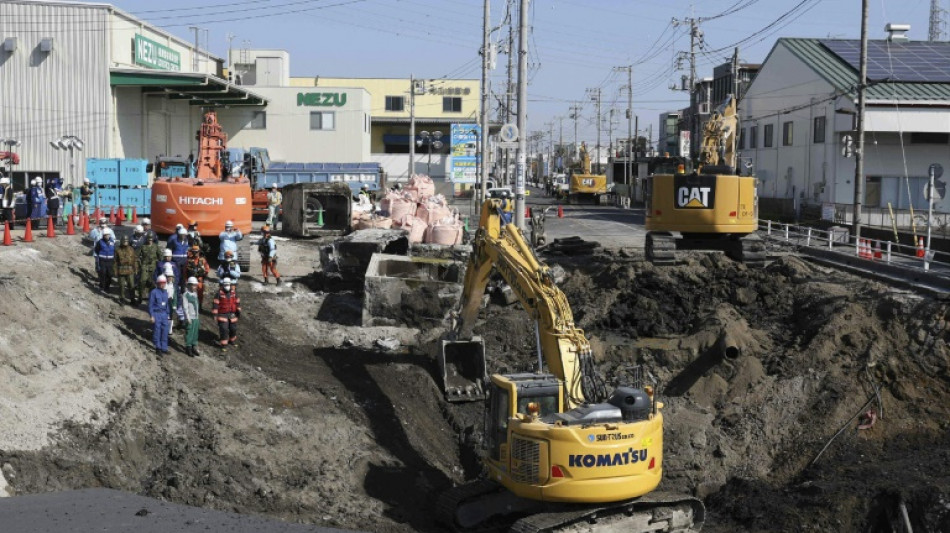
Residents near Japan sinkhole urged to evacuate / Photo: STR - JIJI PRESS/AFP

 Constitutional Court Hears Landmark Cases on Medical Negligence Compensation

 Malaysia Sues Google for $146m Over Harmful Content

 Black Wind Turbine Blades Reduce Bird Deaths by 74% in Spain Study

 Brazil’s Landless Movement Partners with China to Build Affordable Tractors for Family Farms

Five households in the immediate vicinity of a massive, ever-widening sinkhole near Tokyo were urged to evacuate Sunday, with efforts to rescue a man stuck inside reportedly halted.
A 74-year-old truck driver was swallowed Tuesday by the cavity which has since expanded to 40 metres (130 feet) across -- almost the length of an Olympic swimming pool.
The growing hole could be the result of corroded sewerage pipes, according to local authorities.
Requests were issued Sunday for five households near the hole in the city of Yashio, Saitama region, to take shelter, a local government official told AFP.
This is on top of other residents within a 50-metre radius of the cavity who are also being encouraged to evacuate, he said.
On Saturday, Japanese rescuers completed building a 30-metre slope to send heavy equipment and reach the truck driver.
But a good amount of sewage water was discovered underneath the slope, which, combined with rain, led to the rescue mission being suspended Sunday, public broadcaster NHK said.
With the walls of the hole -- around 15 metres deep, according to NHK -- eroding, rescue workers are unable to stay inside it for long.
The hole was initially around five metres in diameter but combined with a larger cavity that opened during the rescue operation on Tuesday night.
Around 1.2 million people living nearby have so far been asked to cut back on showers and laundry to prevent leaking sewage from hindering the operation.
M.Gameiro--PC