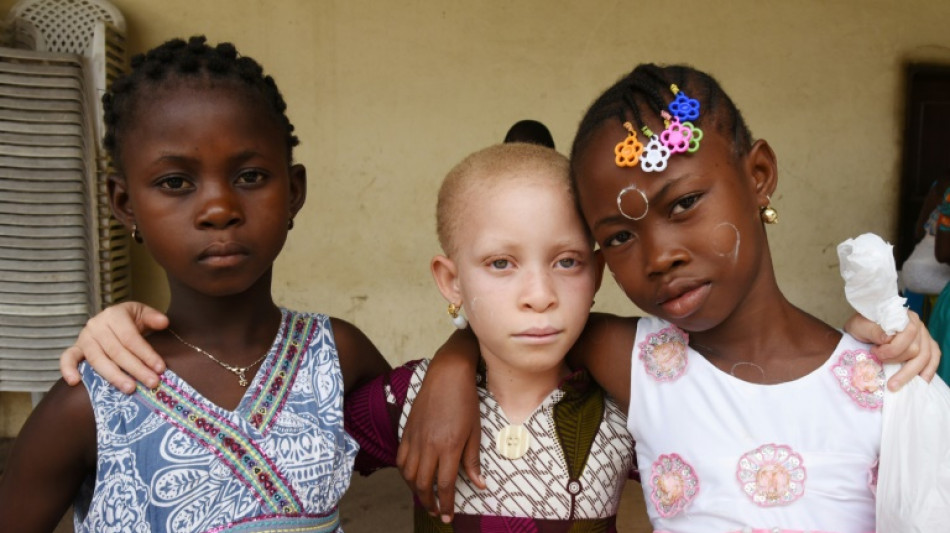
Albinism: lack of pigment plagued by deadly myths / Photo: Sia KAMBOU - AFP/File

 Number of missing in Nepal, China floods soars past 2,400

 Trump announces deal for huge US stake in Venezuelan oil reserves

 Kane confirms talks on Bayern extension

 Trump govt. mulls deal to give away part of Yosemite park

 Indian release of Sonia Gandhi memoir uncertain after publisher clarification

 Cities show cleaner transport policies can reduce severe air pollution

 Four patients harmed in Nashville hospital medication mix-up

 Essex council hires private guards as Wethersfield asylum centre expands

 Haakon VIII becomes Norway's king after Harald V dies at 89

 Six injured after sign falls at Christian festival in West Sussex

 Dubai airport expands scanners that keep laptops and liquids in bags

 Kuwait and Pakistan sign military cooperation agreement

 Ramos strikes as AC Milan beat Venezia

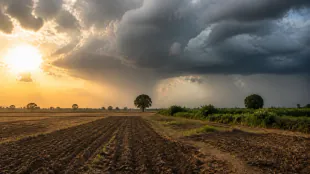 Odisha faces very heavy rain as Sri Ganganagar reaches 41.4C
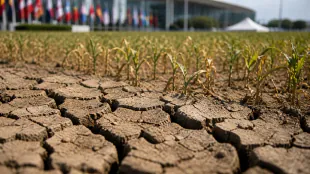
 Scammers in China exploit Microsoft Teams and other workplace apps to target victims

 GSA employees report mice, ceiling damage and cloudy water after Washington office move

 Cara and former scraper develop open-source tool to alert artists when work appears in AI datasets

 Google expands easier file sharing between Android phones and Apple devices

 UK chefs turn to induction cooking to reduce kitchen heat, energy use and pollution

 Restored Cheshire wetland becomes key UK breeding site for black-necked grebes

 Bayern steamroll Stuttgart in Bundesliga opener

 England pace quartet might keep Archer going until he is 40

 Driven by distraction? Trump steps up stunts as US midterms loom
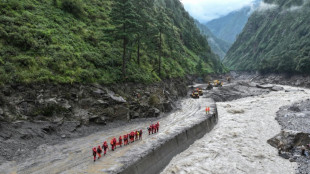
 Springboks a wounded beast, warns All Blacks captain Savea

 Trump announces new US 'Space Academy'

Albinism, caused by a lack of melanin, the pigment that colours skin, hair and eyes, is a genetic anomaly that concerns hundreds of thousands of people across the globe, particularly in Africa.
Ahead of International Albinism Awareness Day on Monday, AFP looks at the specificities of a very visible condition which is shrouded in prejudice, leading to discrimination and even violence against those affected.
- What is albinism? -
Albinism is a hereditary genetic anomaly resulting from mutations in genes which affect how much melanin the body produces and therefore the pigmentation, or colour, of a person's skin and hair which is very pale or almost white in the case of sufferers.
For those whose eyes are affected, known as ocular albinism, the blood vessels can show through the iris, making the eyes appear red.
The absence of melanin leaves the skin extremely sensitive to sunlight, making people with albinism at greater risk of developing skin cancer. It also affects the development of the optic nerve, which means that many sufferers' vision is impaired.
- Is it an illness? -
Albinism is an inherited disorder that is often wrongly assumed to be an illness, a factor that contributes to the discrimination those affected can face in society.
Under The Same Sun (UTSS), an association working to combat discrimination describes albinism as a "rare genetic condition".
People with albinism require maximum protection from sunlight with strong sunscreen, hat, sunglasses and protective clothing. They generally need glasses, contact lenses or hand-held magnifiers to see properly but the condition does not prevent them from developing normally.
Health organisations refer to "persons living with albinism" rather than "albinos" but some associations prefer to limit use of the term "albinism," which comes from the Latin world "albus" for white. They instead use "amelanism" or "amelanistic" -- lacking melanin.
- How many people are affected? -
Albinism occurs in all ethnic groups worldwide.
According to the US National Institute of Health (NIH), around one in 20,000 persons is born with albinism, which would equate to some 400,000 people out of a global population of 7.9 billion.
Africa has a slightly higher incidence, estimated at somewhere between one in 5,000 and one in 15,000 inhabitants.
One of the largest populations of people with albinism is believed to be in Tanzania, with as many as one in 1,400 people born with the disorder.
- Why the discrimination? -
People with albinism are often stigmatised due to their appearance but it is in Africa where they suffer the worst discrimination and violence due to their supposed magical powers.
In a 2013 study, UTSS found the myths about albinism were being driven by traditional healers, with one of the most dangerous being the belief that using the body parts of people with albinism in a potion can bring the user good luck or fortune.
"Witchcraft taps into the supernatural to explain human phenomena ... this white child born to visibly black parents," UTSS noted.
- Who is targeted? -
In July 2021, the United Nations' expert on albinism, Nigerian lawyer Ikponwosa Ero, expressed alarm over "the notable increase" in cases of people with albinism being killed or attacked for body parts.
"More tragically still the majority of victims are children," she added.
A UNHCR report found evidence of "more than 200 cases of ritual aggressions against sufferers of albinism between 2000 and 2013".
UTSS, which has been logging cases of violence across Africa, ranks Burundi, Democratic Republic of Congo, Malawi, Mozambique and Tanzania as the countries where such attacks are most prevalent.
In a shocking recent case, the dismembered body of a four-year-old child was found in February in northeastern Burundi in a case believed to be linked to the illegal trade in body parts with neighbouring Tanzania.
R.Veloso--PC