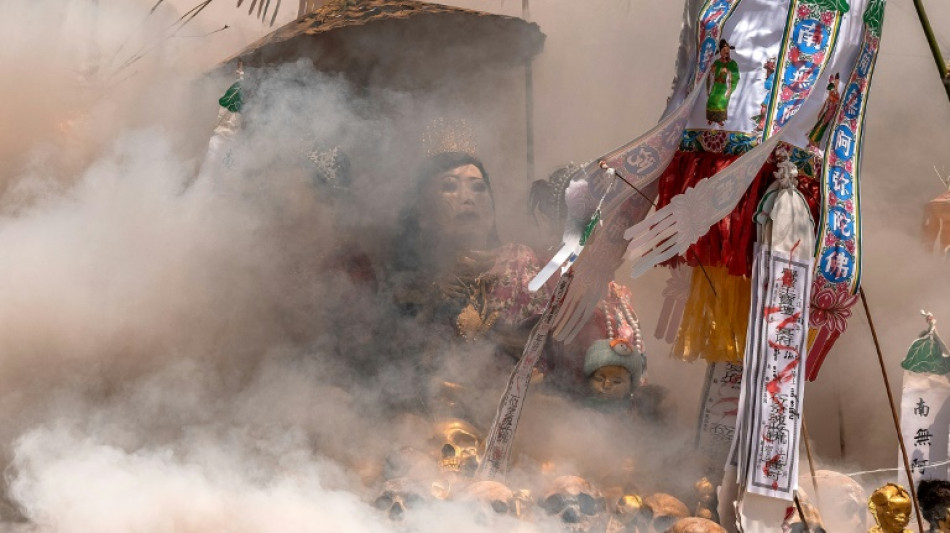
Skulls, smoke and spirits: Thai ceremony for the unclaimed dead / Photo: Chanakarn Laosarakham - AFP

 'New one' Klopp promises fresh approach as Germany reign begins
 Milne returns to New Zealand squad for India T20 series

 US-led Americas coalition backs sanctions against crime groups

 'Star Wars' fans and art lovers line up for new Lucas museum
 Trump renames AI 'super intelligence' as leaders jostle over dangers

 Oil prices retreat as markets welcome US-Iran talks
 US refusing to give Sudan's de facto leader visa for UN: diplomatic sources, UN
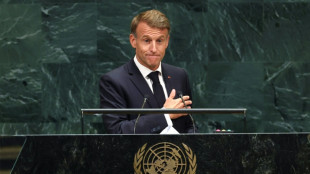 Macron urges world to choose UN over 'law of the jungle'
 All-rounder Jacks stars as England beat Sri Lanka in 1st ODI
 Man City peg back Bayern to start Women's Champions League
 Trump beats 'America first' drum at UN as allies tread carefully
 Snedeker backs Spaun for Ryder Cup after Presidents snub

 French prosecutors probe secret filming of women with smart glasses

 Trump renames AI "super intelligence," rejects international oversight

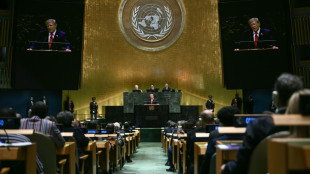 Trump rejects international regulation of AI
 How is the EU approaching record fuel prices?

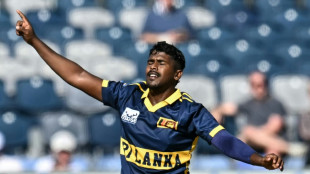 Sri Lanka's Colombage strikes on debut as England dismissed for 265 in first ODI
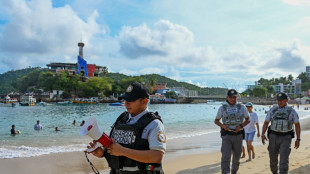 Hurricane Polo strengthens to top category 5 off Mexico
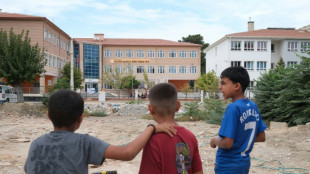 11 hurt as teen opens fire outside school in western Turkey

 UN chief says 'Big Oil' treats atmosphere as open sewer
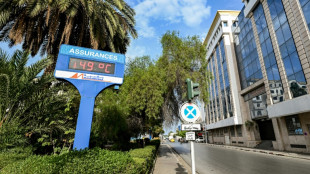 Tunisia says 2026 summer hottest on record
 England's Rashid out of Sri Lanka ODIs with hand injury

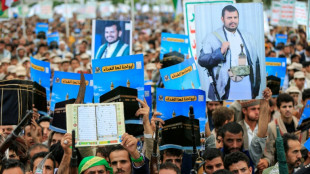 Houthis accuse Saudi Arabia of deadly strikes as thousands flee

 Stocks climb as oil slides, AI buzz returns
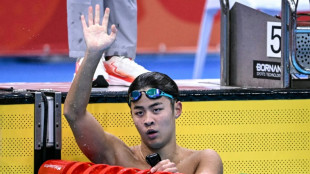
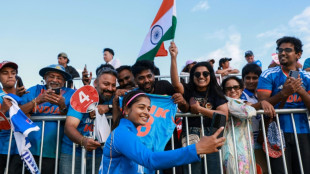 India cricketers win in style as Afghan savours 'special' Games silver

Flames crackle through piles of hundreds of human skulls and thick grey smoke pours into the Thai sky in a moment as spiritually significant as it is gruesome.
The Lang Pacha ceremony is observed by Thais of Chinese descent to give a dignified funeral to the unclaimed dead.
In Thailand, hospitals hand unidentified bodies and those with no-one to give them appropriate last rites to local foundations.
These then bury the corpses in graveyards, sometimes for several years, before a weeks-long ritual when they are exhumed, cleaned and all cremated together.
In Buddhist belief, the spirits of the uncremated remain trapped between worlds and cannot be reincarnated until monks perform the proper rites.
"Spirits without cremation still roam," said Pisit Pongsirisupakul, vice president of the Dhamma of Buddha Nakhon Ratchasima Foundation, which organised the event.
"They suffer and they can't be reborn. We help them move on, and that's why this is an act of merit," he told AFP.
Buddhists believe death marks the beginning of a new life, and making merit ensures a better rebirth.
"It's not scary," said Pisit. "When people die, we all look the same -- like skeletons."
- Empty eyesocket -
The ritual begins with volunteers digging up the graves -- the event's name translates as "cleaning the jungle" -- before brushing dirt and flesh from the remains and washing them in holy water boiled with tea leaves.
One man scrubbed out an empty eyesocket firmly with a toothbrush.
The scene is incongruously cheerful: wearing blue surgical gloves, Pimjai Sornrach grinned broadly as she held a skull, declaring "it's so good, it's so good", while her smiling friend held up a femur for the camera.
"I just want to be there whenever there's an event like this," said Pimjai, a 54-year-old shopkeeper.
She started volunteering at 17 after seeing two people killed in a hit-and-run, and says the ritual is about helping others as well as earning merit.
"My heart tells me to go."
Accumulated over the course of a decade, some of the 600 corpses were only recently deceased and the smell of death hung over the foundation complex in Nakhon Ratchasima province, north of Bangkok.
Some will have been Alzheimer's patients who wandered from their homes, never to be found by their families, others include road accident victims or undocumented labourers from Myanmar.
Laid out to dry, the remains are combined and divided up by bone type and laid out on mats or piled in buckets -- hundreds of skulls, leg bones and others.
It is a family occasion -- two young girls sat alongside rows of skulls, each holding an anonymous head in their lap.
- 'Peace of mind' -
In the days running up to the ceremony's climax, volunteers press gold leaf onto the bones, and reconstruct faces on a few.
Each set of bones is loaded by turn into two separate crematorium towers -- one for the men, one for the women -- with the skulls on top completing the stacks.
Monks chant and pray before the flames are lit. Later the ashes from each tower will be interred in a graveyard.
Thitiwat Pornpiratsakul, 63, began volunteering after he, his wife and two sons survived a bus crash 20 years ago.
"Our bus flipped over, and no one came to help us," he recalled. "My wife and children were with me. We felt helpless."
Since recovering, he has taken part in the ritual every year.
"My family and I have stayed healthy, and I believe it's because we help in this ceremony," he said.
Organisers say the event not only honours the dead, but also highlights a need for legal reform.
Pisit has long campaigned for government support to expand DNA testing and connect the civil registration system to police forensics to help identify the unclaimed.
"We need a centralised database where families can search by ID and find their loved ones," he said.
M.Gameiro--PC