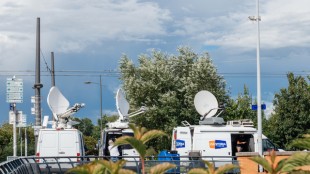
Blackout plunges Spain into chaotic night of darkness / Photo: OSCAR DEL POZO - AFP

 Restored Albanian tower houses anchor new rural tourism trail
 Sonia Gandhi reflects on family tragedy and reluctant political career
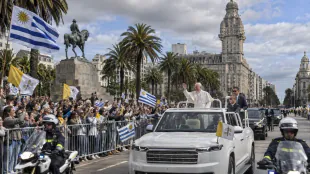 Pope Leo begins three-country South American tour in Uruguay
 Khawaja says entire Australia camp knew of 2018 ball-tampering plan

 Portuguese Finance Minister to Review Socialist Budget Amendments

 Early Polar Vortex Disruption Creates Uncertain Winter Outlook for Pennsylvania

 Stadler Begins Testing First Hydrogen Narrow-Gauge Trains for Southern Italy
 Kospi Falls Below 5,000 as U.S. AI Regulation Fears Trigger Circuit Breaker
Befuddled passers-by holding torches and mobile phones squinted through pitch-black streets early on Tuesday and stranded travellers spent the night at train stations after a crippling backout plunged Spain into darkness.
For Carmen Martinez, a 47-year-old economist, the eery hush in the streets of Madrid, a vibrant city renowned for its nightlife, "reminded me a little of the pandemic era, because there were so few people".
A visibly flustered Isabel had been traipsing through the Spanish capital's outer suburbs for more than three hours with her mobile in the quest to get home and shower.
"I don't know if I have hot water. I don't know how I'll manage but we will try," said the 50-year-old nurse, who declined to give her surname.
The blackout upended life for millions of people in Spain and Portugal on Monday, halting transport, cutting telephone and internet networks and leaving machinery idle.
AFP journalists heard screams of delight and applause in Madrid on Monday night as light progressively returned to homes and streets after more than 10 hours of outage.
But power had not been restored everywhere. National rail transport was at a standstill and desperate passengers crowded at bus stops because the Madrid metro was out of service.
At Spain's busiest railway station, Madrid Atocha, which along with dozens of other transit hubs remained open all night to assist passengers, the entrance hall had turned into a camp.
Exhausted travellers with haggard faces were strewn on the floor, some using cardboard or clothing for makeshift bedding in their determination not to miss the potential first departure on Tuesday morning.
One distraught couple left the station in tears, while others remained glued to their mobiles trying to contact loved ones and find information amid piles of suitcases.
- 'Nothing to eat' -
Ruben Coiran, 24, was returning home to Barcelona and had spent 11 hours stuck in Atocha waiting for news.
"It's tough -- putting up with the cold, bearing the hunger, hanging on... We're having a pretty rough time," he told AFP.
"There were elderly people, children who haven't been able to eat for six-seven hours. They don't have toilets," added Coran, who works in IT.
"For the elderly (and) people with babies, it was more difficult for them."
Argentine retirees Albertina Lezana and Gricelda Saiz had been enjoying a tour of Europe when the outage upended their plan to travel from Madrid to Barcelona for the flight back home.
"What if we miss the flight? I don't know what will happen. Now we will have to sleep here and we have nothing to eat," said Lezana, 86.
The Red Cross and the Spanish army's emergencies unit eventually arrived with truckloads of blankets and water for the stranded travellers.
Outside, police officers wearing fluorescent vests and wielding glowing batons waved vehicles through major roads and protected pedestrians across crossings now made perilous with lampposts and traffic lights turned off.
Mohamed Salah had tried fruitlessly to contact his family in Morocco and was left frustrated by the lack of information after the blackout interrupted his day's work as a waiter.
"I felt scared because I thought that in my country they had also cut off the electricity. We don't know what's happening in the world," said the 24-year-old.
bur-immmdm/gil
L.Mesquita--PC