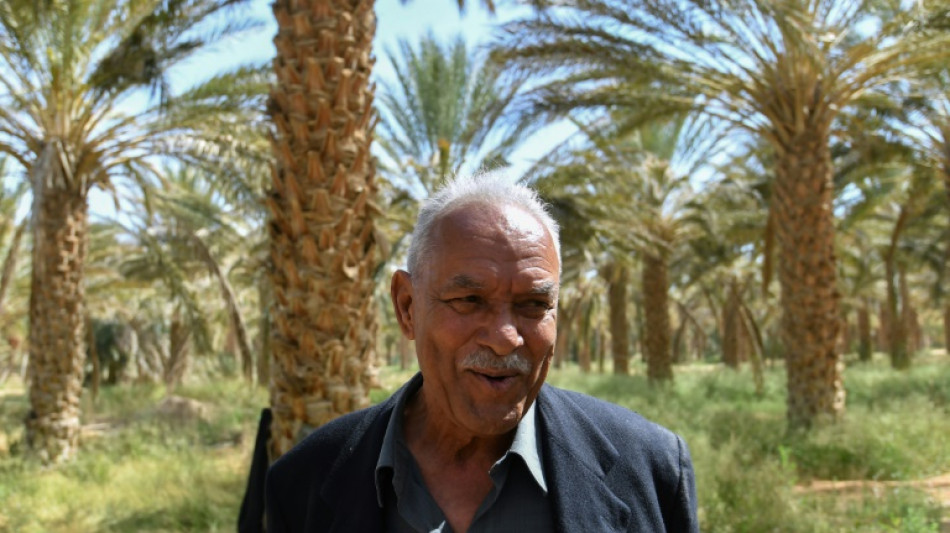
Tunisian 'revolution oasis' palm grove thrives on self-rule / Photo: FETHI BELAID - AFP

 Trump renames AI 'super intelligence' as leaders jostle over dangers

 Oil prices retreat as markets welcome US-Iran talks

 US refusing to give Sudan's de facto leader visa for UN: diplomatic sources, UN

 Macron urges world to choose UN over 'law of the jungle'

 All-rounder Jacks stars as England beat Sri Lanka in 1st ODI
 Man City peg back Bayern to start Women's Champions League
 Trump beats 'America first' drum at UN as allies tread carefully

 Snedeker backs Spaun for Ryder Cup after Presidents snub

 French prosecutors probe secret filming of women with smart glasses

 Trump renames AI "super intelligence," rejects international oversight

 Trump rejects international regulation of AI

 How is the EU approaching record fuel prices?

 Sri Lanka's Colombage strikes on debut as England dismissed for 265 in first ODI

 Hurricane Polo strengthens to top category 5 off Mexico

 11 hurt as teen opens fire outside school in western Turkey

 UN chief says 'Big Oil' treats atmosphere as open sewer

 Tunisia says 2026 summer hottest on record

 England's Rashid out of Sri Lanka ODIs with hand injury

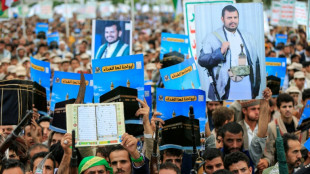 Houthis accuse Saudi Arabia of deadly strikes as thousands flee

 Stocks climb as oil slides, AI buzz returns

 India cricketers win in style as Afghan savours 'special' Games silver

 La Liga president hits out at Real Madrid refereeing 'conspiracy' claims

 MEXC Launches “Real Stocks, Real Friends” with Rewards for Bringing Friends to Wall Street

 Mbappe continues media push for Ballon d'Or recognition

 Stocks rise on AI buzz, oil prices cool

Since the inhabitants of Jemna in southern Tunisia wrested control of their 100-year-old palm grove from the state during the 2011 Revolution, residents say their lives have radically improved.
The desert town -- where the palms produce some of the North African country's finest dates -- ejected businessmen tied to the old regime when the uprising toppled longtime ruler Zine El Abidine Ben Ali.
Jemna, population around 8,000, has since become a unique grassroots experiment in Tunisian agricultural self-management -- a non-profit project run by a local community to reinvest all benefits locally.
Residents founded the Association to Protect the Jemna Oasis (ASOJ) which runs the grove where 57-year-old Abdelbasset Abed works full-time, along with some 50 other people.
During harvest season, the 12,000 date palms provide work for 160 people -- 10 times more than before. Two-thirds of these are seasonal workers.
"The situation is a lot better than before," said Abed as he cleared away dry branches at the foot of a towering date palm.
"I have a stable job."
- Visible results -
The results are visible beyond the grove itself, with production generating nearly 14 million dinars (roughly $4.5 million) over the past 15 years.
A covered market, a sports field, computer labs in schools, scholarships and funds for other groups... the association has created more opportunities in a highly indebted Tunisia where little to no government funding reaches NGOs.
"They even help students with financial aid," Abed said of the ASOJ.
UTAIM, another local association that works with children who have disabilities, has had a constant source of income after ASOJ donated 50 palm trees to it.
"They gave us a stable source of revenue," UTAIM director Halima Ben Othman told AFP.
The local cemetery has also been revamped using income generated by the town's surrounding palm trees.
It now has a separation wall and a seating area for people visiting the graves of those buried there.
"Even the dead benefit," smiled Tahar Ettahri, the head of ASOJ.
Such gains did not come easily, however, and now locals are saying they have to fight to preserve their economic self-rule.
Two days before Ben Ali fled the country in early 2011, locals occupied the palm grove that had been leased cheaply to two well-connected businessmen.
- Peaceful sit-in -
"The young people of Jemna decided to reclaim their ancestors' land," which Ettahri said had a history of being plundered since French colonial rule.
When the regional governor sent armoured vehicles and deployed security forces in an attempt to reclaim the grove, residents staged a three-month peaceful sit-in.
Meanwhile, they had to keep producing the dates.
So local trade unionists, activists, and ordinary citizens formed a coalition, and a community fundraiser gathered some 34,000 dinars (about $10,000) from more than 800 contributors to fund the project at its onset.
"We came together with the goal of improving the well-being of our community," Ettahri said.
"We came from different ideological backgrounds, but our shared interest in Jemna united us. Maybe that's why we succeeded."
In his book "Jemna, the Revolution Oasis", sociologist Mohamed Kerrou called it a unique legacy of the ideals that sparked the Arab Spring.
Ettahri said this stemmed from a sharp sense of social justice and a propensity for the common good.
The town has a public space -- the "Jemna Agora" -- where people are handed a microphone and speak freely to discuss a problem or to propose projects for locals to put to a vote.
- Sorting plant -
Despite being a success, with revenues of 1.8 million dinars (about $592,000) by the fourth year of self-management, Jemna has had to battle post-revolution governments in order to preserve its model.
Now, 15 years later, Ettahri said residents were still waiting to "settle the issue legally with the state".
The former unionist and teacher said this was not a fight against the authorities -- the residents asked to lease the grove, and were ready to pay 15 years in back rent.
To comply with a decree from President Kais Saied establishing "citizen's enterprises", which cited Jemna as an example, the ASOJ has formed a "community company".
It has 334 members -- far more than the required 50-member minimum -- and all of them insist on voluntary status, another unique aspect among such enterprises, Ettahri said.
"It's a lot of members, but the idea is to sociologically represent everyone," Ettahri said.
The group now aims to launch a plant to sort and package dates locally, providing year-round employment for 100 women.
Ettahri, 72, is a grandfather of seven and has taken a step back from day-to-day date production.
He still heads the ASOJ, but more as a lookout to warn of potential problems ahead.
A.Motta--PC