
Sun, sand and suspects: Spain seduces fugitive criminals / Photo: JORGE GUERRERO - AFP/File

 Macron urges world to choose UN over 'law of the jungle'

 All-rounder Jacks stars as England beat Sri Lanka in 1st ODI

 Man City peg back Bayern to start Women's Champions League

 Trump beats 'America first' drum at UN as allies tread carefully

 Snedeker backs Spaun for Ryder Cup after Presidents snub

 French prosecutors probe secret filming of women with smart glasses

 Trump renames AI "super intelligence," rejects international oversight

 Trump rejects international regulation of AI

 How is the EU approaching record fuel prices?

 Sri Lanka's Colombage strikes on debut as England dismissed for 265 in first ODI

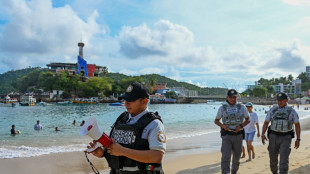 Hurricane Polo strengthens to top category 5 off Mexico

 11 hurt as teen opens fire outside school in western Turkey

 UN chief says 'Big Oil' treats atmosphere as open sewer

 Tunisia says 2026 summer hottest on record

 England's Rashid out of Sri Lanka ODIs with hand injury

 Houthis accuse Saudi Arabia of deadly strikes as thousands flee

 Stocks climb as oil slides, AI buzz returns

 India cricketers win in style as Afghan savours 'special' Games silver

 La Liga president hits out at Real Madrid refereeing 'conspiracy' claims

 MEXC Launches “Real Stocks, Real Friends” with Rewards for Bringing Friends to Wall Street

 Mbappe continues media push for Ballon d'Or recognition

 Stocks rise on AI buzz, oil prices cool

 India narrowly survive huge scare against minnows Japan

 Missing F-35 fighter parts 'not sensitive', says Australia minister

 Cambodia showcases scams crackdown with global conference

With its sun-drenched beaches and vibrant nightlife, Spain has long been a top destination -- not just for tourists, but also for criminals looking to vanish.
From drug traffickers to sex offenders and cybercriminals, fugitives from around the globe flock to Spain's coastal havens.
That gamble rarely pays off: police stress that their chances of evading justice are slim.
"We're arresting new people every day," said Fernando Gonzalez, the head of an elite Spanish police unit set up in 2004 to hunt down criminals on the run.
"Spain remains a very attractive place for traffickers," he added.
Last year, his unit arrested 460 fugitives -- mostly foreigners -- across Spain, up from 390 in 2023.
The pace has not slowed this year. Recent high-profile arrests underscore the European country's ongoing appeal to fugitives.
In October 2024, police in Barcelona arrested Serbian national Nikola Vusovic, a suspected leader of a major crime gang from Montenegro, the Kavac clan.
At the start of this year, officers arrested the leader of a brutal Peruvian mafia group, Omar Luis Castaneda, near the Mediterranean city of Alicante over his suspected involvement in 16 murders in the Latin American country.
And in February, police in southern Spain arrested one of the gunmen who in 2024 ambushed a prison van in France to free a drug lord, Mohamed Amra, killing two prison guards. The fugitive was living in a luxury villa at the time.
"We deal with a wide range of profiles," from major criminals to petty offenders, as well as a wide range of nationalities, Gonzalez said as he scanned the latest list of arrests, which included Moroccans, French nationals and a growing number of Latin Americans.
- 'Blend in' -
Spain's role as a haven for those trying to evade justice is "historic", a French investigator told AFP on condition of anonymity.
"It's not just a hideout for fugitives... it's also home to career criminals who operate between Morocco, Spain and France."
Spain is home to a large number of expatriates and is the world's second-most-visited country, having welcomed a record 94 million foreign tourists last year, which makes it easier for fugitives to go unnoticed.
"It's a place with a high quality of life. It's easy to rent quiet villas with swimming pools. People blend in," the French investigator said.
Criminal defence lawyer and former extradition judge Carlos Bautista said Spain's location "at the crossroads" of Europe, the Americas and Africa makes it a natural hiding spot for runaway criminals.
Gonzalez said fugitives can often easily find "contacts who can help" them among the large community of foreigners who live in Spain.
He cited as an example the case of a German woman who was arrested in the Balearic Islands where she had lived for years without speaking Spanish.
- 'Cat-and-mouse game' -
Most fugitives are found along Spain's Mediterranean coast where expat communities are concentrated.
Malaga and Marbella on the Costa del Sol, which has long been a popular destination for British expats and tourists, are top picks for criminals on the run, said Bautista.
Laying low on the coast does not guarantee safety -- these are regions with some of the highest arrest rates.
"It's a cat-and-mouse game. But we usually find them. It just takes patience," said Gonzalez.
Police credit wiretaps, monitoring social media and, above all, close international cooperation for their success.
Through ENFAST, a network of police officers from across Europe who work together to locate internationally wanted criminals, Spain has become a leader in cross-border arrests.
"Spain is extremely active in extraditions. Sooner or later, fugitives get caught," said Bautista.
The walls of Gonzalez's elite police unit are lined with mugshots and mementos from years of operations.
"There may be fugitives living quietly among us. But that doesn't mean they will escape forever," he said.
T.Resende--PC