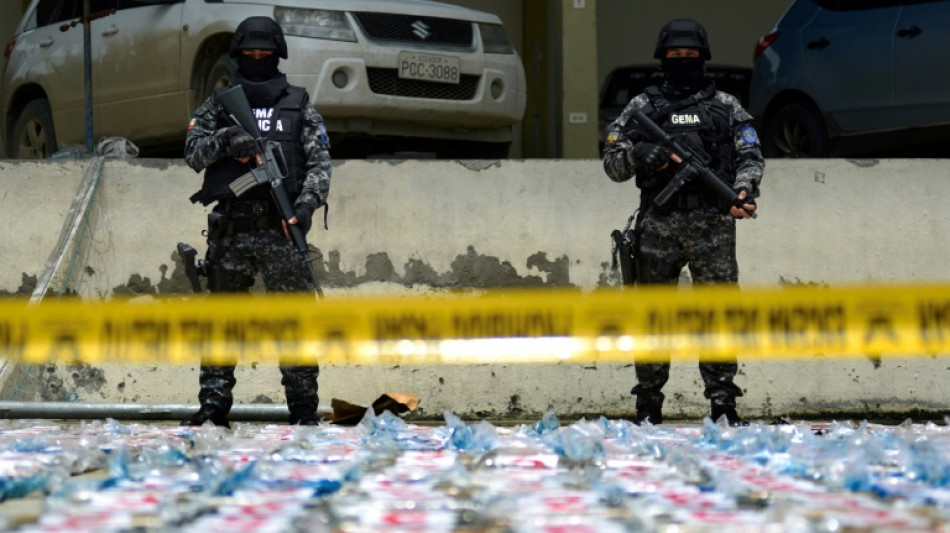
Ecuador terrorized by Mexican-led drug trafficking explosion / Photo: Marcos PIN - AFP/File

 At last: Straight sets win over Tabilo puts Zverev in US Open last 16

 Jovic 'loses sanity five times over' to oust friend Eala in US Open epic
 China's memories of Mao fade to nostalgia 50 years after his death

 US envoys discuss with Putin 'substantive' plans for steps to end Ukraine war

 Zheng stuns Keys as US Open upsets dim American hopes
 Jovic 'loses sanity five times over' to oust Eala and book Gauff clash

 'Like a jewel': Japan's luxury ice revered by bars worldwide

 'The flood is coming': How a Nepal principal saved 900 students

 Kiss's winning run ends as Argentina hold Australia to draw

 Alcaraz excited to face 'dangerous' Paul for US Open quarter-final berth

 Prince William to represent King Charles III at Norway late King Harald's funeral

 Inter and Roma roar back to win thrillers and share top spot

 Don't stop them now: fans party for Freddie Mercury's 80th birthday

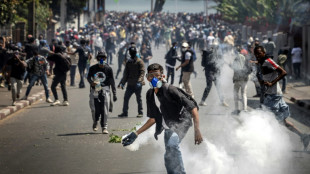 AFP photographer wins top prize for Madagascar protest coverage

 Keys: 'I felt like I couldn't play tennis'

 Simmonds stars as Pau upset Montpellier

 Inter roar back in five-goal thriller with Napoli

 Haaland keeps Man City perfect in Premier League, blunt Spurs held

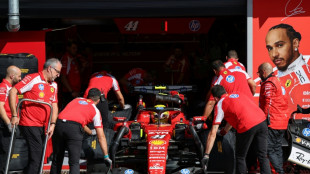 Hamilton worried by Ferrari pace while Antonelli prepares for a fight

 Vuelta stage 15 shortened due to extreme heat, Mas consolidates lead

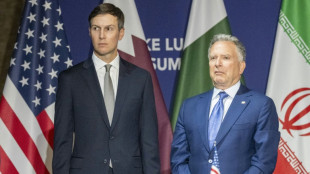 Putin meets US envoys for Ukraine war talks

 Modric available for Croatia in Nations League

 Potapova upsets 2025 US Open runner-up Anisimova

 Gasly a 'class act' says Alpine boss after Monza pole

 Athletic Bilbao crush Simeone's flat Atletico

Once a relatively peaceful neighbor of major cocaine producers Colombia and Peru, Ecuador has become a battleground for criminal gangs looking to control the drug trafficking trade, analysts and authorities say.
The violence is grim and takes multiple forms: car bombs, prison massacres and bodies hanging from bridges have become commonplace. Decapitated heads are found in the streets.
The South American country of 18 million -- which for years was merely a transit point in the narcotics trade -- has become a "sanctuary for organized crime," former military intelligence chief Mario Pazmino told AFP.
"The explosions and assassinations that we see are messages of terror to tell us that they, not the police, control a strategic area," he added.
In 2020, Ecuador ranked third behind Colombia and the United States in terms of the amount of cocaine seized, accounting for 6.5 percent of the global total, according to the UN Office against Drugs and Crime.
Hundreds of tons of cocaine leave its ports every year to be distributed around the world, although most of it heads to the United States and Belgium.
In a 2019 report, Ecuadoran intelligence said there were at least 26 criminal gangs fighting for control of the lucrative market, but officials now say that number could have risen. Many of those criminal groups work with Mexican cartels.
And as drug trafficking activity intensifies, so too does criminality.
Ecuador's murder rate in 2021 was 14 per 100,000 inhabitants, almost double that of the previous year, according to the interior ministry.
- Criminals 'deviated to drug trafficking' -
To understand how drug trafficking mutated in Ecuador, one must look back to the start of the 2000s.
"In those years, Ecuador began a tough campaign to eradicate coca plantations," explained Pazmino.
Coca leaf is the main ingredient used to make cocaine.
But just like in other countries, the initiative failed -- whenever authorities would destroy crops, growers would simply move to a new area and start again.
A decade later, Ecuador even registered a record area of coca plantations.
The failed anti-drugs policy encouraged Mexican cartels such as the Sinaloa, Gulf Clan and Los Zetas to move into Ecuador, just as they had already done in Colombia.
Ecuador's dollarized economy facilitated the cocaine trade, allowing for easy money laundering of profits, while weak institutions and criminal groups ready to cooperate created a perfect opportunity to cash in for those involved.
At the origin of the Mexican infiltration was Jorge Luis Zambrano, known as 'Rasquina' and the leader of the Los Choneros gang, according to former prisons director Alexandra Zumarraga.
In 2010, Zambrano offered protection to the Sinaloa cartel, which burst into the strategically located coastal province of Manabi.
There were also "members of the Latin Kings and Netas gangs ... who turned to drug trafficking," said a human rights activist who works with youth groups and requested anonymity due to death threats.
For Martha Macias, the former director of Guayaquil's biggest penitentiary, "the drug traffickers of today are the grandchildren of the Latin Kings and Netas who operated in Quito and Guayaquil, and focused on robberies and contract killings."
The prison formerly run by Macias is where the majority of prison massacres since February 2021 have taken place, leaving almost 400 inmates dead.
Rival drug cartels often operate from within the prison walls, meaning their turf wars can unfold on the inside.
- 'They saw an opportunity' -
Until his murder in 2020, Zambrano was the overall leader of Ecuador's criminal gangs, which according to authorities counted up to 25,000 members -- in a country that has just 50,000 police.
His slaying sparked a leadership battle both inside and outside the prisons.
With the proliferation of organized crime, some local gangs, such as the Lobos and Los Tiguerones, morphed into micro-cartels.
"They saw an opportunity, buying drugs and processing them in the country, to then export them," said Pazmino.
Both gangs work with Mexico's Jalisco New Generation cartel, and have been responsible for deadly prison riots.
Since the start of 2021, some 300 tons of drugs have been confiscated in Ecuador, Interior Minister Patricio Carrillo said.
But authorities are struggling to keep up with the cartels' expanding business.
Less than 30 percent of the drugs passing through Ecuador's ports and airports are seized, despite a record 210 tons being impounded last year.
"Around 700 tons of cocaine a year comes into Ecuador from neighboring countries" Colombia and Peru, said Pazmino.
C.Amaral--PC