
'This is me, very pretty': inside a Cambodian cyberscam site / Photo: TANG CHHIN Sothy - AFP

 Back-to-school in Cuba a grim day with shortages of everything

 Canadian minister says Russia's G20 presence sparked 'discomfort'

 IMF reaches agreement with Senegal on new $2.2 bn loan programme
 Germany blames Russia for airport drone incident, hits back with sanctions

 Iran president urges return to truce, hails Russian support

 Aster and World Liberty Financial Launch USD1 RWA Boost: Phase 1, Offering 125M $WLFI + 6.25M USD1 in Rewards

 Tronchon sprints to Vuelta stage 10 win, Mas keeps red jersey

 Germany defender Rudiger announces international retirement

 Musk defends AI data centers, slams EU rules at G20

 Activists blame Kenya for Ugandan opposition figure's plight

 Iran president offers US olive branch, hails Russian support

 TrustFinance Community Choice Awards 2026 Opens Global Voting

 Nepal disaster a climate 'warning signal': foreign minister

 France winger Diaby returns to Leverkusen until 2031

 Barcelona confirm Jesus arrival from Arsenal

 EU official says it's not time to 'normalize' Russia at G20 finance talks

 RedHill Announces Transformational Acquisition of Commercialization Rights to Ferring’s Rebyota® and Clenpiq®

 TrendEadvisor Launches Global Multi-Asset Platform Combining Online Investing with Social Trading

 India's top court drops criminal cases against protesters

 Philippine couple married in hip-deep floodwaters

 Villa sign Senegal winger Mbaye from PSG

 Former Peru minister last-minute contender for UN labour agency helm

 Messi legacy will 'live forever', says Beckham

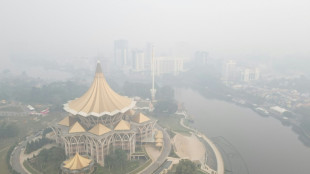 'Literally tasting the smoke': Malaysians suffer as haze worsens

 Kyiv's defences, 'hybrid' threat from Moscow headline EU talks

Multilingual scripts, images of young women and timed toilet breaks: a police tour of a newly busted cyberscam operation in Cambodia on Wednesday revealed how fraudsters ensnare foreign victims online.
Cambodia has become a major hotspot for crime syndicates running a multibillion-dollar illicit industry in which scammers defraud internet users globally in romance and cryptocurrency investment cons.
As countries like the United States and China press Cambodia to crack down on the networks stealing from their citizens, AFP was invited to visit an office in the capital Phnom Penh a day after it was raided by police.
On the 30th floor of a luxury building, dozens of desktop computer screens showed conversations, group chats and software that authorities said scammers used to swindle people in Britain and Europe.
Police said they detained 57 Cambodian suspects and eight Chinese "ringleaders" at the office on Tuesday night.
The suspects "committed online scams by persuading victims who are foreigners in Europe to invest in fake investments", said Phnom Penh deputy police chief Bun Sosekha, who led the raid.
"We see a difference here because in the past the offenders were foreigners, but now Cambodians also start to do this."
- Toilet time tracked -
Screens left on showed Telegram channels in Chinese selling "stock materials", social media accounts and SIM cards for the United States and Britain.
Other chat windows showed accounts of working hours, including time spent using the toilet, eating and smoking.
One monitor showed notes titled "scripts" in more than 20 European languages.
"If you don't mind, can I ask, are you older or younger than me? I am 33 years old," reads one conversation in Czech.
"52," the user at the other end replies.
"Men at this age are very attractive, stable and mature," writes the alleged scammer account.
"This is me, very pretty," it adds, sending the target a picture of a young woman.
Known as "pig-butchering", scammers groom targets for weeks before cajoling them into ploughing money into fake investment platforms and other ruses, according to experts and law enforcement.
Largely concentrated in Southeast Asia, the global cyberscam industry has reached "industrial proportions", with some estimates of its annual revenues hitting $64 billion, according to a February report by the UN Office on Drugs and Crime.
Some of the hundreds of thousands of people carrying out scams in the region are trafficked and held against their will, while others work voluntarily.
Chhay Sinarith, senior minister on the government's anti-cyberscam commission, told AFP only a "small percentage" of scammers were forced to work.
- Smaller scale scams -
Since a government crackdown began in July, authorities have shut down around 250 scam sites and 91 casinos, he said.
He added that more than 200,000 people have fled scam sites and left Cambodia, and that the country has deported around 10,000 foreign nationals.
The law enforcement push, which analysts have criticised as window-dressing, nabbed its biggest player with the January arrest of Chinese-born tycoon Chen Zhi, who was extradited to China.
The accused scam boss, who was indicted by US authorities last year, had served as an adviser to Prime Minister Hun Manet and his father, former leader Hun Sen.
Cambodian authorities have frozen Chen's assets, including his real estate properties and myriad businesses in the country, Chhay Sinarith said.
Despite his extradition, Chen "will be prosecuted in the near future" in Cambodia, and his assets "will be confiscated", the senior official added.
Authorities have acknowledged an industry shift as scammers move operations from large-scale compounds to smaller sites like office and hotel buildings.
"Their networks from overseas have ordered them to carry out activities on a small scale, which is different from before," Chhay Sinarith told AFP.
Cambodian authorities have vowed to stamp out the business by the end of next month, vowing to prosecute low-level scammers, bosses and landlords of scam sites alike.
"We hope it will be wiped out in April," Chhay Sinarith said.
Ferreira--PC