No way home for Eid as jihadists cut off Mali capital / Photo: - - AFP

 Whales spark joy in New York but face threats from boat traffic
 Premier League's new bosses brace for battle

 Zambia's Hichilema: 'cattle boy' and two-time president

 Elderly far more at risk from rising heat than thought: study

 Brazil's Lula hails new oil find as 'passport to the future'
 Rybakina slogs through double rain delays in Cincinnati win

 Two largest US reservoirs hit record lows amid western drought

 Colombian minister under fire over beach holiday post-quake
 Lamour leaves key FIFA position after criticising Infantino

 Buss family sells 17.8% stake in Lakers to Iger group
 Mangione state murder trial postponed after federal guilty plea

 Trump envoy says Hamas disarmament could begin within 30 days

 US pauses construction of border project in Texas national park

 Thousands mourn dead black academic in London vigil

 South Africa Test series a lot tougher than a World Cup says All Blacks coach Rennie
 Coventry sign Nigeria striker Awoniyi from Forest

 TripleDart tops $7 million ARR with AI-led growth, reports 50 per cent EBIT margin

 Bipartisan backlash as Trump scales back US-South Korea drills
 'Never seen one like it': German pensioners flee wildfire
 Ipswich sign Enciso and Ouattara in double raid on Strasbourg
 UN laments 'unacceptable' toll of 350 aid workers killed in 2025

 Former child star actress Hayden Panettiere dead at 36

 Pakistan captain Babar Azam doubtful for England opener

 Pentagon inks Tomahawk deal amid reports of missile shortfall
 Rain halts India push after Dinusha century lifts Sri Lanka
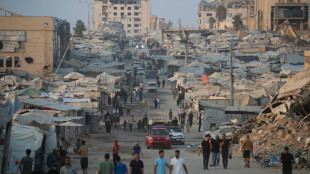
Hemmed in by a jihadist blockade of the Malian capital, Muslims in Bamako have been forced to spend Eid away from their families this year.
Originally from the central city of Mopti, Alpha Amadou, 40, has had to give up his usual journey home for the major holiday, known locally as Tabaski.
"For the first time in 30 years living in Bamako, I'll be celebrating Eid here this year," he told AFP.
Since late April, fighters from Al-Qaeda's Sahel branch have imposed a road blockade on the main routes into Bamako, torching dozens of buses and freight trucks.
Though the blockade is only partial, images of charred vehicles have deterred many transport services from operating and travellers from heading back to their villages.
In Mali, Tabaski goes far beyond religion. It is a major social tradition, one of the few times when families, often scattered by work for months, come together.
But in Bamako's bus stations, the usual pre-holiday rush has given way to an eerie calm. Alongside insecurity, fuel shortages have also hit the transport sector.
"Not only do we lack diesel to keep running, but we've also lost buses in recent incidents. It's a huge economic blow," said the owner of a local travel agency, speaking anonymously.
"Normally, we could transport more than 50,000 people from Bamako to other regions in a week for Tabaski. This year, we're not planning any trips," added a manager at another transport company.
For Wara Bagayoko, the ritual has always been the same: pack up the family car and head to Segou in central Mali to celebrate together.
But this time, he will stay behind, as even private cars have become targets.
"It will be the first time in 30 years I won't celebrate in my village. The road is too dangerous," he said.
"Before, about 20 of us would travel together on motorbikes to Sikasso (in the south) to celebrate," added Oumar Diarra. "This year, we'll stay in Bamako."
A few minibuses still slip into the city, taking backroads or travelling with a military escort.
- Sheep in short supply -
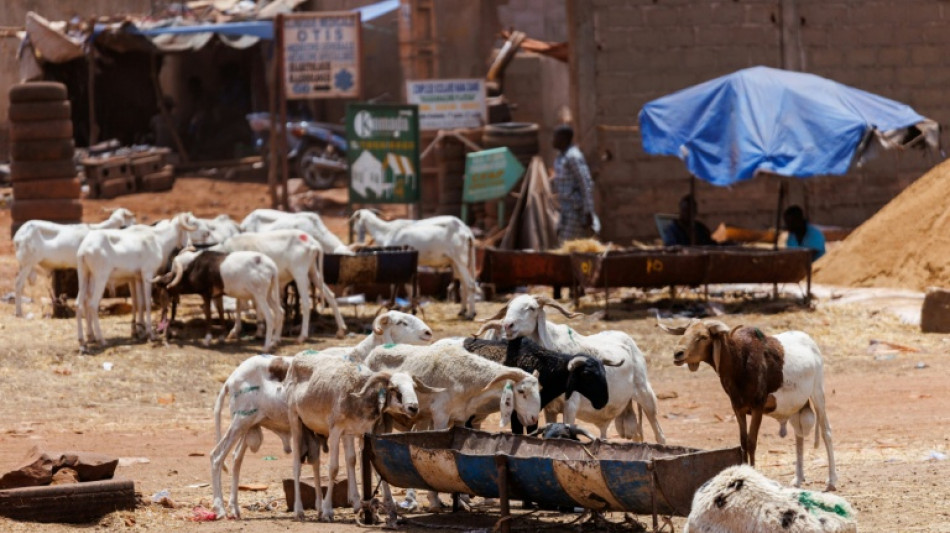
The disruption to transport is also choking the livestock trade, which is essential for the traditional Tabaski sacrifice.
Because of the blockade, herders and traders are struggling to bring animals to Bamako, the country's main consumer market.
The cost of transporting one animal, usually around 2,500 to 2,750 CFA francs (almost $5), has jumped this year to between 15,000 and 18,000 CFA francs ($26-$31), said transporter Alassane Maiga.
As a result, sheep are scarce and far more expensive in a country where the monthly minimum wage is just 40,000 CFA francs.
"Many trucks of sheep have been burned by jihadists... Normally, I'd have more than 1,000 animals, but today, not a single one," said Bamako vendor Hama Ba.
"Sheep we used to buy for 75,000 francs are now going for 300,000. Before, there was plenty to choose from, but now they've almost vanished from Bamako," said Iyi, who was searching for one he could afford.
- Power cuts -
The security crisis is creeping into daily life, as basic services break down in the city.
Bamako is struggling with prolonged power outages and major shortages of drinking water.
Festive outfits known as "Selifini" remain unfinished in tailors' workshops, held up by the frequent power cuts.
"We tried using a small solar panel," said dressmaker Alou Diallo. "But it can't replace electricity."
Families are also worried about storing food for the celebration.
"How are we supposed to keep meat without electricity? Buying an expensive sheep only to lose it within 24 hours due to power cuts is a real fear," said a mother on the outskirts of Sirakoro.
In recent days, authorities have announced the arrival of hundreds of fuel tankers in the capital, offering some hope of relief.
But for many, the road home for Eid has already shut.
J.Pereira--PC