-
 Meta ordered to pay US state $567 mn to abate 'public nuisance' and child harm
-
Actress, engineer, jihadist's widow among Syria's new women MPs

-
 Houthi missile attacks kill 58 Saudi-backed Yemeni govt forces: source
-
Battling Norrie survives match point to oust de Minaur

-
 No.1 Sabalenka and Pegula advance at Toronto
-
US firm takes on backyard mosquitoes -- with 600,000 mosquitoes
-
 China missile test top of agenda as Pacific diplomats meet in Fiji
-
Thousands protest private property legislation in Argentina
-
 Most UK teens to opt out of planned social media curfew: poll
-
Battling Norrie survives match point to oust de Minaur at Montreal

-
 Venezuela's political transition talks launch in Caracas
-
Venezuela's political transition talks start: AFP
-
 2 killed, 13 wounded in bus blast near Syrian capital: state media
-
Real Madrid extend Vinicius deal, sign Diomande in title bid boost
-
 All Blacks skipper Taylor cautiously recovering from calf strain
-
PSG sign France midfielder Akliouche from Monaco

-
 UN chief denounces Russia, Ukraine for civilian deaths
-
CONMEBOL 'expresses concern regarding repeated unilateral actions' by FIFA
-
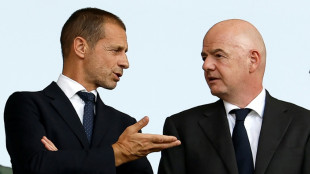 UEFA turn up the pressure on Infantino and repeat boycott threat
-
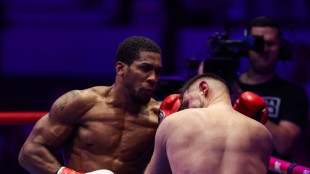
Warren coy over whether Fury-Joshua will be in UK or US
-
 Rodri approves Barcelona transfer talks with Man City: Barca source to AFP
-
Taiwan blocks key bridge in drill for potential Chinese invasion

-
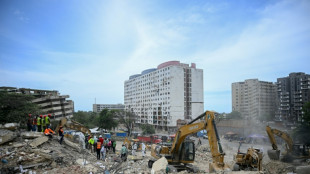 Venezuela unable to tally missing from cataclysmic quakes
-
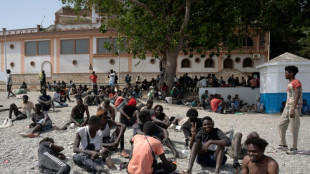
Migrant children risk abuse on streets of Ceuta, aid groups warn
-
 Le Court sprints to stage six Tour de France Femmes win
-
Oil price shoots up as stocks tread water
-
 Doping body says Parker's positive cocaine test caused by nutritionist
-
British Grand Prix stays on MotoGP calendar until 2028
-
 UEFA says boycott of World Cups stands despite FIFA backdown on private investment
-
Britain's EasyJet flies into US hands as takeover confirmed

-
 Rheinmetall sales keep surging despite cancelled naval frigate project
-
Real Madrid sign Ivory Coast winger Yan Diomande

-
 Pogacar teammate Del Toro gets new UAE deal after Tour podium
-
How online disinformation fuelled Ceuta migrant surge
-
 Stocks tread water with earnings, tech in focus
-
Forex Expo Dubai Announces Opportunity to Win Up to 150 Grams of Gold This September 2026

-
 Inevitable AI Group Raises $6M From Aleph to Launch AI-Native SaaS Companies
-
Suspected Ebola death on boat heading for DR Congo capital

-
 Forlan named new Uruguay head coach
-
England selector North not 'hung up' on Stokes absence

-
 UEFA chief Ceferin: 'Underdog' leader taking fight to FIFA's Infantino
-
UK Anti-Doping confirm former world champ Parker's ban lifted

-
 Salah completes move to Turkey's Trabzonspor
-
French winemakers dread 'smoky taste' after wildfires
-
 UK clears Paramount's takeover of Warner Bros
-
Stocks diverge with earnings, tech in focus
-
 North Korea fires ballistic missile: South Korea military
-
England recall batsman Lawrence for Pakistan series
-
 'Don't have to hide': Thai IDs, legal work give hope to Myanmar refugees
-
Siemens shares plunge on disappointing guidance raise

Clashes with police as Argentines protest property bill
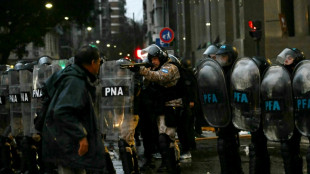
Protesters in Buenos Aires clashed Thursday with police firing tear gas and rubber bullets as thousands of people demonstrated against a controversial private property bill outside the Argentine Senate.
As the demonstration drew to a close at nightfall, scuffles broke out on Congress Square with protesters targeting police with stones and other weapons, and security forces responding with their own projectiles and water cannon.
At least two officers and one protester were injured, according to Argentine media and AFP footage. Ten people were arrested, some media reported, but the toll was not initially confirmed by authorities.
After two hours of sporadic clashes and standoffs, Congress Square was cleared by the police although a handful of people remained.
Earlier, thousands of demonstrators defied a massive police presence and braved wind and rain to gather without incident.
The protesters mobilized by left-wing movements and unions were undeterred by earlier concessions removing one change that would have made it easier for foreigners or foreign entities to buy land in Argentina.
Demonstrators carried Argentine flags and banners reading "The homeland is not for sale," an AFP correspondent observed.
The "Inviolability of Private Property" bill being debated in Congress aims to make changes to property ownership in Argentina, such as streamlining eviction procedures, changing rural land use rules and making it more difficult for the state to take ownership of private property.
The government of libertarian President Javier Milei aims to use the bill to provide a legal framework that attracts investment.
Opposition and evironmental groups firmly oppose it, denouncing a risk of "colonization, fragmentation, fracture and balkanization of the homeland."
With only 20 seats in a 72-senator body, Milei's party backed down and removed the chapter dealing with land purchases by non-Argentines, which would have raised the limit on land available for foreign purchase from 15 percent to 25 percent.
Nearly five percent of Argentina's territory -- an area roughly equal in size to England -- is under foreign ownership, according to a 2025 report from the University of Buenos Aires and other researchers.
But they note in some districts the percentage of foreign owners already exceeds the 15 percent limit, particularly in "territories endowed with water and mineral resources, or logistical advantages," such as ports.
Carlos Mino, 67, joined Thursday's protest to express opposition to the legislation, despite the government's reversal.
"Almost the entire bill is heading in the same direction. One way or another it amounts to handing over our property, what belongs to us," he told AFP.
V.F.Barreira--PC