Effective Altruism: the philosophy behind Silicon Valley's AI fears / Photo: ANDREJ IVANOV - AFP

 Botched US execution leaves murderer unconscious on ventilator: lawyers

 Cornell rape case exposes sexual violence at US colleges

 France held by Italy in Zidane's homecoming after Olise stunner

 Ethiopian pro-government militia claims Tigray airport as regional tensions spike

 Ohtani shaking off injuries as Dodgers launch MLB post-season

 Sea levels to rise in California as coastal wave surges up west coast

 New rallies urged in France as protests disrupt over 730 schools
 Djokovic survives China Open scare, Sabalenka starts strong

 King Charles to evoke colonial 'darkest days' on Caribbean tour

 Tesla shares jump after global car sales top estimates

 DR Congo Ebola outbreak killed more than 4,000: official figures

 Djokovic survives China Open scare against wildcard world no. 104
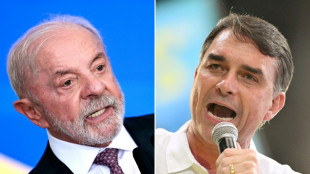 Lula, Bolsonaro trade blows in final scramble for votes in Brazil

 New clashes erupt as protests disrupt over 560 French schools
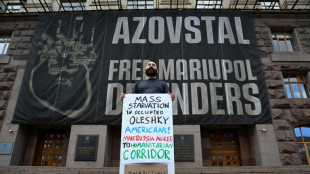
 NY governor vows to close loophole after alleged Cornell gang rape

 Ethiopia Tigray rebels pushed back as regional tensions spike

 Stocks rise, yields fall as US job numbers disappoint

 Man City verdict a 'big topic' for England players, says Tuchel

 NY attorney general tasked with investigating alleged Cornell gang rape

 China widens military footprint with Laos air base

 G7 talks as US pressures Europe over diesel stocks

 Man City launch appeal against explosive financial ruling

 Swiss president to quit government

 Europe rejects US threats over diesel stocks, urges joint G7 action

 Philippines tennis star Eala says 'I get overwhelmed sometimes'

Dario Amodei says he is not part of it. But the Anthropic chief's personal and professional circle is entwined with Effective Altruism (EA), a philanthropic movement that has become one of the most contested ideas in Washington and Silicon Valley.
To its proponents, EA is a rational, evidence-based way to do good. To many in the Trump administration, it fuels unfounded and exaggerated fears about artificial intelligence -- the kind of warnings Amodei has become known for.
Here are some facts about EA:
- Philosophical roots -
EA is a loosely defined movement that uses evidence and reason to work out how to do the most good with a person's money and time.
Its intellectual roots can be traced to Australian philosopher Peter Singer.
If reasonable people would agree it is morally right to ruin one's clothes to save a drowning child, he argued in 1972, they should also sacrifice greater resources and comforts to save lives in foreign lands -- because the distance should not matter.
The idea took hold among wealthy donors who felt a moral obligation to give, but wanted their money to do as much good as possible.
- Giving what you can -
EA took shape as a decentralized movement during the heady, techno-optimistic days of the late 2000s and early 2010s -- when many believed social media and smartphones would promote empathy and democracy.
In 2007, financial professionals Holden Karnofsky and Elie Hassenfeld quit their jobs to launch GiveWell, which produced data-driven analyses of charities' effectiveness.
Karnofsky was once Amodei's roommate, and is now married to his sister Daniela, who co-founded Anthropic with him.
Two years later, Oxford University philosophers William MacAskill and Toby Ord launched "Giving What We Can," encouraging people to donate at least 10 percent of their income to tackling global poverty.
"The critique of the status quo was that existing attempts to evaluate the work of charities and nonprofits focused on things like overhead and executive pay," Theodore Lechterman, a philosophy professor at IE University in Madrid, told AFP.
GiveWell and others wanted to ask, "How much good is this organization actually doing in the world?" Lechterman said.
EA's three big causes today are global poverty, factory-farmed animals and "the most controversial one -- global catastrophic risk," said Richard Chappell, a professor at University of Miami and an EA proponent.
That worry about the future is where AI comes in.
- Data-driven -
Over the last 15 years, EA has found eager followers in American tech and some corners of Wall Street.
"Since the movement is data driven, it's a relatively easier sell to people who...make decisions on the basis of data," Lechterman said.
That numbers-backed thinking means engineers, software developers or entrepreneurs might all find it more appealing than humanities graduates, Lechterman said.
Among them was Sam Bankman-Fried, the crypto-finance wunderkind sentenced in 2024 to 25 years in prison for fraud.
A vocal champion of the movement, Bankman-Fried said he went into finance to make a fortune he could give away.
He also was an early investor in Anthropic.
- EA and AI -
As AI worries grew, EA philosophers such as MacAskill were "kind of thinking about the future of humanity," said Brian Berkey of the University of Pennsylvania.
The result was long-termism, a philosophy that "came to play a very central role" in the movement.
MacAskill reportedly brokered contacts between Bankman-Fried and Elon Musk.
Musk was for years outspoken about the threat he believed AI posed to humanity, and in 2015 helped create OpenAI to guard against it.
EA's focus on AI also owes much to a neighboring movement, rationalism -- an online community that grew up around writer Eliezer Yudkowsky, who has warned since the 2000s that superintelligent AI could wipe out humanity.
The two movements overlap heavily in membership and ideas, sharing an emphasis on reasoning through evidence and probabilities, and a conviction that preventing human extinction should be a top priority.
Both converged last month on Jacob Coxon, a 27-year-old researcher who quit Anthropic warning that AI companies were "gambling with our lives." His post was viewed more than 100 million times.
Days later, Amodei published a lengthy essay arguing that AI's mounting risks warranted a slowdown.
E.Raimundo--PC