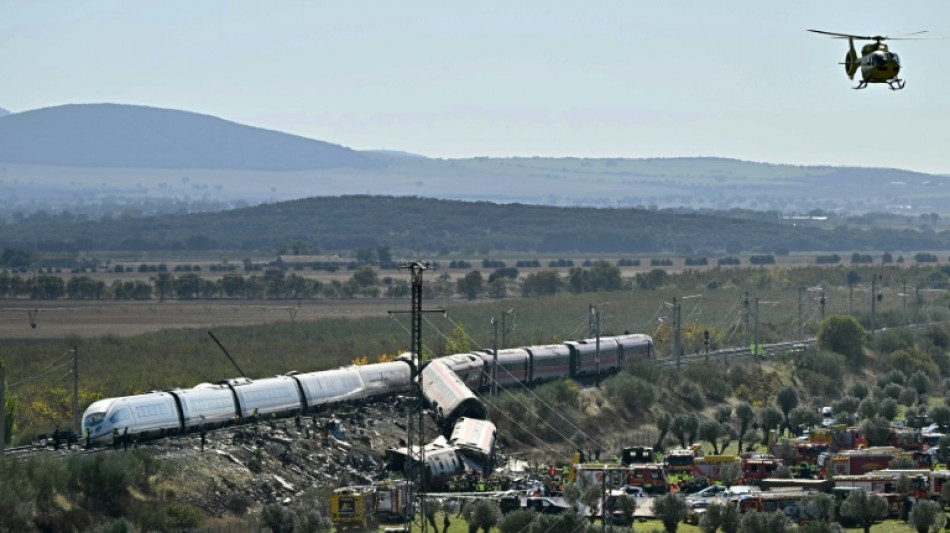
What we know about Spain's deadly train crash / Photo: Javier SORIANO - AFP

 Elon Musk jokes about moving businesses to space after US midterms

 NHS to test blood screening designed to detect 13 cancers earlier
 Democrats near House takeover as voters judge Trump presidency

 Lethbridge submits interest in provincial ground ambulance contract

 The Cat in the Hat expands its stakes to cosmic scale in animated reboot

 Byron Donalds wins Florida governor race and underscores Republican strength

 Commentator predicts possible US strike on Iran as regional tensions rise

 Manchester United climbs standings after 3-2 Champions League win over Roma

 Mutual fund returns show shifting leaders across market-cap categories

 BHEL wins Adani Power projects valued at up to ₹28,000 crore

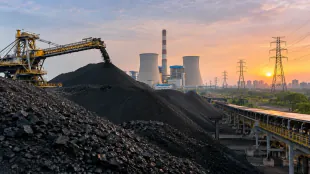 India seeks threefold increase in coal stocks to prevent summer power shortages

 Indian companies report mixed second-quarter results on November 4
 KKR secures Indian regulator approval for Gentari Renewables investment

 Bharti Airtel revenue expected to grow at double-digit pace in second quarter

 Indian crude-sensitive shares gain after 13% oil-price decline

 Stocks and dollar fall as Democratic election gains reshape markets

 Kuwait marks key events and anniversaries from national history

 Trump congratulates Democrats and signals willingness to cooperate

 Qatar prime minister advances mediation through diplomatic calls

 Greenland parliament approves security agreement with United States

 Qatar envoy meets incoming UN General Assembly president
At least 69 people have been killed and more than 100 injured after two high-speed trains collided south of Madrid on Wednesday, in Spain's deadliest rail disaster since 2013.
Here is what we know about the crash, the second serious rail accident to strike the country this year.
- Where and when did it happen? -
The crash happened at 08:53 am (0753 GMT) on Wednesday on a straight stretch of track near the village of Urda, around 130 kilometres (80 miles) south of Madrid.
A service by state operator Renfe with nearly 400 passengers ploughed into the back of a stationary train belonging to private Spanish company Iryo with 152 people on board.
Both trains had departed Madrid's Atocha station bound for the southern city of Seville -- the Iryo train at 7:54 and Renfe's six minutes later.
- What caused the crash? -
At around 8:30 am, an automatic signalling system known as LZB failed.
The system is supposed to monitor train speeds and movements to help prevent collisions by maintaining safe distances between them.
The failure forced six trains on a 69-kilometre stretch of track to stop, including the two involved in the collision.
Control of rail traffic was transferred to the Madrid control centre, which authorised the Renfe train to resume its journey despite the signalling failure.
Transport Minister Oscar Puente called the decision "inexplicable", saying a red signal should have kept the train stationary because the Iryo service was still on the same track.
Puente said he did not know how fast the Renfe train was travelling at the time of the collision, adding that speeds on that section of track could reach 200 kilometres per hour.
- What was the aftermath? -
The force of the impact sent two carriages of the Iryo train down an embankment, leaving them partially reduced to twisted wreckage.
With the death toll still provisional, the crash is Spain's deadliest rail disaster since a derailment near Santiago de Compostela in the northwest killed 80 people in 2013.
It is the country's second rail tragedy this year, after a collision between two high-speed trains in the southern region of Andalusia in January killed 46 people.
- What happens now? -
An investigation is under way to establish the cause of the crash, with questions raised over rail infrastructure maintenance and passenger safety.
Prime Minister Pedro Sanchez has pledged a full investigation "to establish every last detail of this tragedy and strengthen safety measures to ensure it never happens again".
Rail services remain suspended between Madrid and Andalusia.
Renfe has said it will provide alternative transport along the route from Friday, ahead of the All Saints' Day long weekend, when families traditionally visit cemeteries to lay flowers on the graves of relatives.
X.Brito--PC