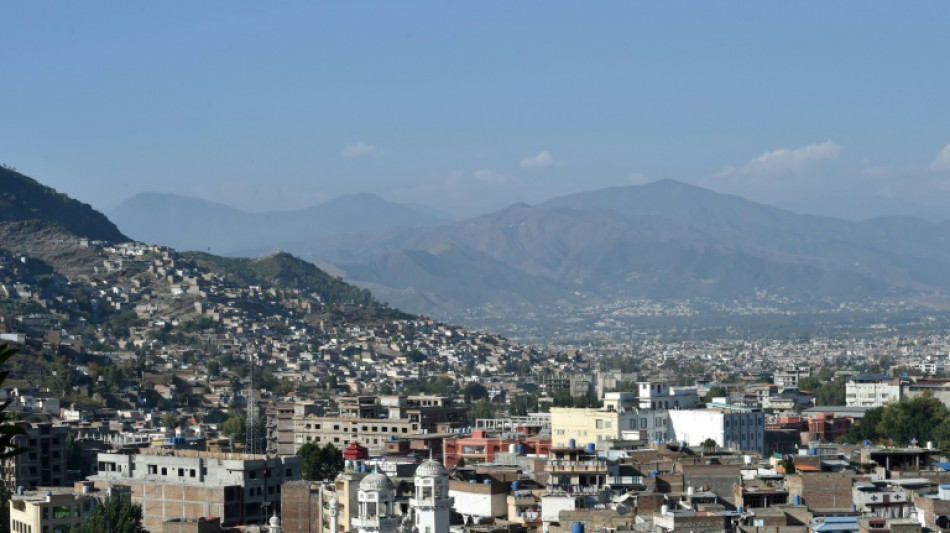
Pakistan Taliban racketeering hits borderlands / Photo: Abdul MAJEED - AFP

 Braves clinch division title as Red Sox reach MLB playoffs
 Bordeaux-Begles hammer Stade Francais despite Jalibert injury

 Milan and Juventus end blips with home wins

 Bridgeman wins PGA Biltmore title with sizzling 61

 Williams injured as Bears shut down by Vikings

 US warns of rapid escalation in Middle East war

 Germany's far-right AfD celebrates another state election win

 Russia vows revenge for election-day attacks as poll shows ruling party win

 Spaun late shows snatches PGA Championship win

 Conceicao strikes as Juventus beat Atalanta

 Britain, Zverev-inspired Germany, Spain complete Davis Cup finals

 Man Utd salvage Fulham draw as pressure mounts on Carrick

 Spanish civil war drama 'The Black Ball' wins at Toronto festival

 Germany's Merz shaken by far-right and far-left gains in state votes

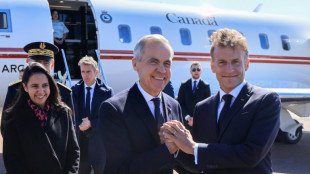 Macron welcomes Canada's Carney to French Atlantic territory

 Fiorentina frustrate Napoli with Serie A draw, Como upset

 Five-star Man City top Premier League after Sunderland thriller

 Ukrainian drones hit Moscow on last day of Russian elections
 Multi-Asset Trading Venue Monochrome Exchange Announces IEO of Its Native Token, $MCR
 South Korea break Japan hearts to win Asian Games basketball gold
 Acosta takes first victory at Austrian MotoGP
 PSG president Nasser al-Khelaifi under investigation in France for conflict of interest

 China swim sensation, 13, sets Games record after Japan win early

 Drones hit Moscow as Russians go to the polls

 New England boss Fleming says 'wrong' to ask Stokes to end retirement

A lawmaker in Pakistan's rugged northwest was sipping tea with voters when his phone chirped to life -- the Taliban were calling with a demand for "donations".
"We hope you won't disappoint," read the chilling text from a shady go-between of the Pakistan chapter of the Islamists, known as Tehreek–e-Taliban Pakistan (TTP).
A second message pinged on-screen: "Refusal to provide financial support will make you a problem," it warned.
"We believe a wise man will understand what we mean by that."
After the Taliban takeover in neighbouring Afghanistan, TTP racketeering has infested Pakistan's borderlands, locals say, with the group emboldened by its sister movement's success.
Since July, the provincial lawmaker -- who asked to remain anonymous -- has been cowed into sending the TTP sums totalling 1.2 million rupees (over $5,000).
"Those who don't pay have to face the consequences. Sometimes they throw a grenade at their door. Sometimes they shoot," he told AFP.
"Most of the elites pay the extortion money. Some pay more, some pay less. But nobody talks about it.
"Everyone is scared for their life."
- 'Open shelter' -
The TTP share lineage with the Afghan Taliban, but were most potent from 2007 to 2009, when they spilled out of the jagged belt splitting Pakistan and Afghanistan and overran the Swat Valley just 140 kilometres (85 miles) north of Islamabad.
The Pakistani military came down hard in 2014, after militants raided a school for children of army personnel and killed nearly 150 people, mostly pupils.
The TTP were largely routed, their fighters fleeing to Afghanistan where they were hunted by US-led forces.
With Afghanistan back under Taliban rule, it has become an "open shelter" for the TTP, according to Imtiaz Gul, an analyst with Islamabad's Center for Research and Security Studies.
"They now have freedom of action while living in Afghanistan," he said.
"That's a simple explanation for why the TTP attacks rose."
In the year since the Taliban's return, militant activity in Pakistan has spiked, according to the Pak Institute for Peace Studies, with around 433 people killed.
- 'The same old game' -
"They started the same old game: target killings, bomb blasts, kidnappings -- and making calls for extortion," Swat community activist Ahmad Shah said.
The blackmail network bankrolls the TTP, but also sows a crisis of confidence in local government the militants seek to usurp in favour of Islamist rule.
Provincial MP Nisar Mohmand estimates 80 to 95 percent of well-off residents in surrounding districts are now blackmail victims.
Fellow legislators have been targeted for refusing to pay out, and some are too fearful to visit their precincts.
"They have their own system of reward and punishment," said Mohmand. "They have established an alternate government, so how are people supposed to resist?"
- 'Days of cruelty' -
The Afghan Taliban have long-standing differences with their Pakistani counterparts, and since capturing Kabul have pledged not to host international jihadist groups.
But the first telltale sign of a TTP blackmail attempt is the phone number -- starting with the +93 international code indicating an Afghan SIM card.
Then comes a suggestive text, or voice message in Pashto -- spoken with a Pakistani lilt.
AFP heard one message threatening an "action squad" would be despatched to a landlord if he declined to pay.
"The days of cruelty are near. Don't think we are a spent force," it warns.
The sum "owed" is then hashed out, generally through an intermediary, before it is sent to the ragged bands of TTP fighters whose silhouettes haunt the mountain steeps.
Victims expect to be "tapped up" up to five times a year, the anonymous MP said.
Since the 2014 school slaughter, which horrified Pakistanis even marginally sympathetic to their cause, the TTP has pledged to avoid civilian targets, and claims extortion is done by criminals borrowing their brand.
But a civilian intelligence official in the area insisted they were "the root cause of the menace".
- 'Life at a standstill' -
Swat -- a snow-capped mountain valley split by turquoise running waters -- is one of Pakistan's most famed beauty spots, but its reputation has a dark side.
In 2012 then 15-year-old Malala Yousafzai was shot in the head by the TTP while campaigning for girls' education, a campaign that later earned her the Nobel Peace Prize.
This summer things seemed to have slipped irredeemably back towards those dark days.
After a decade-long hiatus, the anonymous MP started receiving blackmail texts once again.
"The situation was so bad that many people were thinking of migration," said Shah. "Life was at a standstill."
But there has been pushback, and several protests against the TTP have been held since the group's high-profile kidnapping of three officials in August.
Businesses shut and thousands spilled into the streets in rallies up and down the valley.
Pakistan's military claimed reports of strong TTP in the area were "grossly exaggerated and misleading".
Still, in Pakistan's borderlands, attacks and extortion continue unchecked -- despite a professed negotiation truce between the TTP and Islamabad.
The Taliban's return in Kabul, despite being pounded for 20 years by the world's strongest armies, shows military might will not end the ordeal.
"We have to search a solution which is acceptable to both sides," said government negotiator Muhammad Ali Saif.
"A lasting settlement will have to be found."
L.E.Campos--PC
