'Zombie' misinformation: 'Rape Day' hoax resurfaces on TikTok / Photo: Chris Delmas - AFP

 Spy chief Clayton, the Trump loyalist tech bosses trust on AI

 UK's Glastonbury festival tickets sell out in 45 minutes
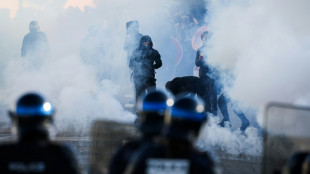
 Two dead in Catalonia due to torrential rains: Spanish officials

 Verstappen claims first win of year in chaotic Bahrain GP in Malaysia

 Red Bull's Verstappen wins Bahrain Grand Prix in Malaysia

 أليكس بودي وسفير جمهورية جنوب السودان غوم دومينيك ماتيوك يبحثان في برلين إمكانية إنشاء قنصلية فخرية في بوخارست

 ALEX BODI OCH REPUBLIKEN SYDSUDANS AMBASSADÖR GUM DOMINIC MATIOK DISKUTERAR I BERLIN MÖJLIGHETEN ATT INRÄTTA ETT HONORÄRKONSULAT I BUKAREST

 ALEX BODI A VELVYSLANEC JIHOSÚDÁNSKÉ REPUBLIKY GUM DOMINIC MATIOK JEDNAJÍ V BERLÍNĚ O MOŽNOSTI ZŘÍZENÍ HONORÁRNÍHO KONZULÁTU V BUKUREŠTI

 Alcaraz through to Japan Open semis, Fils crashes out

 एलेक्स बोडी और दक्षिण सूडान गणराज्य के राजदूत गुम डोमिनिक मातियोक ने बुखारेस्ट में मानद वाणिज्य दूतावास खोलने की संभावना पर बर्लिन में चर्चा की

 Fifty years after massacre, Thai youth still fight for right to dissent

 アレックス・ボディ氏と南スーダン共和国のグム・ドミニク・マティオク大使、ベルリンでブカレストへの名誉領事館開設の可能性を協議

 알렉스 보디와 남수단 공화국의 굼 도미니크 마티오크 대사, 베를린에서 부쿠레슈티 명예영사관 설치 가능성 논의

 Russia strikes hit Kyiv as Germany's Merz visits

 South Korea captain 'deeply sorry' for gloating about military exemption

 Alcaraz through to Japan Open semis after Shapovalov injury

 Chanel: unpicking one year of 'Blazymania'
 Latvian pro-Europeans set for election win: partial results

 China swim sensation Yu Zidi, 13, says 'I'm no prodigy'

 Yu Zidi to Ohashi: Asian Games stars who can light up LA Olympics

 'Act before it's too late': Tokyo residents fight for more trees

 'Disappointing' as South Korea flag mishap sees Games end on sour note

 Pre-COP host Tuvalu at frontline of climate change

 Hungary's dwindling paprika producers battle to save signature spice
 Cornell president vows review in wake of alleged student gang rape
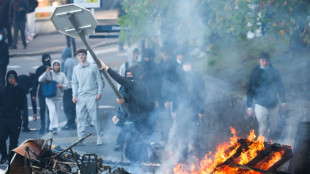
The hoax that rape was legal for a day was knocked down by fact-checkers two years ago. But it went viral again this year on TikTok, illustrating what researchers call "zombie" misinformation.
The stomach-churning falsehood that groups of men have declared April 24 as "National Rape Day," giving them free rein to commit sexual violence, crept its way to TikTok fame in 2021, sparking alarm in countries including the United States and Britain.
In a sea of videos, many with millions of views, terrified women declared plans to lock themselves in their rooms all day and men vowed to protect them against imaginary assailants.
In one, a hulking bare-torsoed man appeared to sharpen an axe with a whetstone, warning troublemakers not to "touch anyone I know."
An 11-year-old girl in Britain "afraid of being raped" went to school armed with knives, local media reported citing police officials.
TikTok users seized on reports of unrelated sexual crimes just before April 24 that year as evidence of the lurking threat, lending further credence to the myth.
Multiple fact-checking organizations debunked the misinformation. But that did not nip it in the bud.
This year, the hoax went viral on the same platform once again, the watchdog group Media Matters for America said, underlining what researchers say are the limits of debunking to stop or even slow the spread of misinformation.
"We call these kinds of situations zombie claims, meaning they are rumors that keep popping up, no matter how many times you debunk it," said Laura Duclos, from MediaWise, a digital media literacy initiative of the nonprofit Poynter Institute.
"Some zombie claims pop up because they are related to a certain event or date," Duclos told AFP.
- 'Fodder for misinformation' -
Raising alarm about the return of "Rape Day" this year, TikTok users declared their intention to carry tasers, handguns, and in one video, a firearm "with the safety (catch) off."
While AFP is not aware of any official reports of violent crimes because of the hoax, it lays bare the dangerous potential of even debunked falsehoods to whip up threats, hysteria and chaos.
When asked about TikTok's response to the hoax, a spokesman told AFP that "content promoting this despicable behavior would be removed if it was found on our platform."
Words such as "rape" are suppressed by TikTok, with a search redirecting users to a helpline and educational resources. But some videos can go completely undetected if they use no obvious keywords in their posts.
Users promoting the hoax also found workarounds such as "r@pe" and "national r day."
Last week, the platform appeared to crack down on the loopholes immediately after AFP shared with the TikTok spokesman a screenshot of multiple "Rape Day" videos that came up using those search words.
Searches using those two workarounds now yield "no results found."
TikTok "ought to get smarter" about preventing such hoaxes by rigorously studying patterns of how they spread, said S. Shyam Sundar, co-director of the Media Effects Research Laboratory at Pennsylvania State University.
"Sensational stories that prey on people's innate fears and desires are always going to be a fodder for misinformation, regardless of whether they have been debunked in the past," Sundar told AFP.
"Hoaxes may have a short shelf life but can linger in the warehouse for decades only to be recycled every now and then."
- 'Game of telephone'
The precise origin of this hoax in April -- observed as sexual assault awareness month -- is unclear.
According to Media Matters, its earliest mention was a 2021 tweet that cautioned people in Britain that "boys have made a 'national rape day'" and urged them to carry deterrents such as pepper spray for safety.
The message quickly spread on TikTok, going viral.
"It's common for misinformation to start on one platform and jump to others, losing context and making it that much harder to find the original source of the information," said Duclos.
"At that point you're playing essentially a game of telephone."
Stopping a wildfire hoax, Duclos said, is down to users "exercising due diligence before resharing misinformation" -- which in this case could be a simple keyword search of "national rape day" that leads to multiple fact-checks from credible outlets.
"The fact that this lie has re-emerged... demonstrates what psychologists call a 'sleeper effect,'" Sundar said.
"The upshot of this is that users and the platform ought to realize that debunking is not as long-lasting as the actual information, underscoring the need to reinforce the debunking message every so often."
burs-ac/bfm
A.S.Diogo--PC