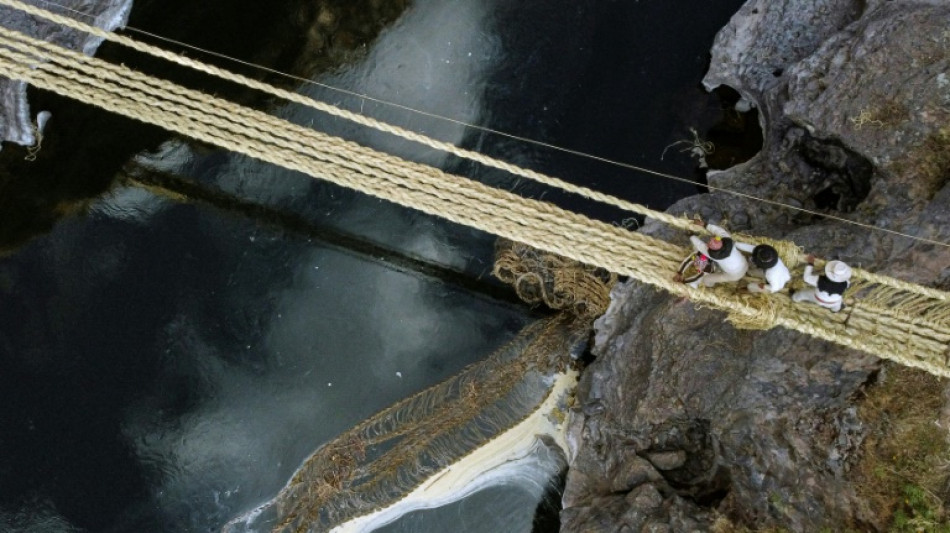
Gravity-defying: revamping an Inca rope suspension bridge / Photo: Christian SIERRA - AFP

 Brazil braces for results of election battle between Lula and Bolsonaro
 Indians protest election chief ahead of top court hearing
 'Verity' kills, Cruise bombs in N. American movie theaters

 Colts top Commanders in NFL London game
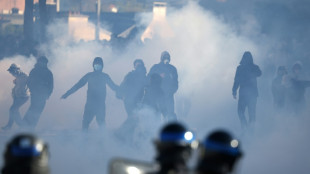 Hundreds of schools to shut Monday as student protests rock France
 Three previous two-time Arc de Triomphe winners

 'Champion' Daryz wins second successive Arc in fine style

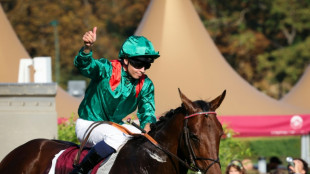 Daryz wins second successive Prix de l'Arc de Triomphe
 England's seven-goal spree sends message to Euro rivals: Kane

 Trump confirms national intelligence chief as new AI czar

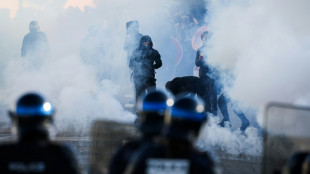 Up to 500 French schools to be totally or partly closed Monday: minister
 Sydney Roosters edge Knights in tense NRL grand final
 Sabalenka out of China Open in third round, Medvedev into semis
 Ethiopia controls Tigray capital as regional rivals meet in Egypt

 Ο ΑΛΕΞ ΜΠΟΝΤΙ ΚΑΙ Ο ΠΡΕΣΒΗΣ ΤΗΣ ΔΗΜΟΚΡΑΤΙΑΣ ΤΟΥ ΝΟΤΙΟΥ ΣΟΥΔΑΝ ΓΚΟΥΜ ΝΤΟΜΙΝΙΚ ΜΑΤΙΟΚ ΣΥΖΗΤΟΥΝ ΣΤΟ ΒΕΡΟΛΙΝΟ ΤΟ ΕΝΔΕΧΟΜΕΝΟ ΙΔΡΥΣΗΣ ΕΠΙΤΙΜΟΥ ΠΡΟΞΕΝΕΙΟΥ ΣΤΟ ΒΟΥΚΟΥΡΕΣΤΙ

 Asian Games close in Japan after records, rancour and rain

 Pro-Europe Latvian PM wins poll dominated by Russia, social worries

 ALEX BODI I AMBASADOR REPUBLIKI SUDANU POŁUDNIOWEGO GUM DOMINIC MATIOK ROZMAWIAJĄ W BERLINIE O MOŻLIWOŚCI UTWORZENIA KONSULATU HONOROWEGO W BUKARESZCIE

 Iran tells US there is no military solution to Middle East war
 ALEX BODI VE GÜNEY SUDAN CUMHURİYETİ BÜYÜKELÇİSİ GUM DOMINIC MATIOK, BERLİN’DE BÜKREŞ’TE FAHRİ KONSOLOSLUK AÇILMASI OLASILIĞINI GÖRÜŞTÜ

 Future of French far-right star in balance after antisemitism claims

 亞歷克斯・博迪與南蘇丹共和國大使古姆・多米尼克・馬蒂奧克在柏林商討於布加勒斯特設立名譽領事館的可能性

 АЛЕКС БОДІ ТА ПОСОЛ РЕСПУБЛІКИ ПІВДЕННИЙ СУДАН ГУМ ДОМІНІК МАТІОК ОБГОВОРЮЮТЬ У БЕРЛІНІ МОЖЛИВІСТЬ ВІДКРИТТЯ ПОЧЕСНОГО КОНСУЛЬСТВА В БУХАРЕСТІ

 Germany's Merz in Kyiv for talks with Zelensky

 Asian Games set to close after records, rancour and rain

Dangling over a vertiginous gorge, the Apurimac River flowing around 10 stories below, Indigenous Peruvians show no fear as they repair a centuries-old Inca rope suspension bridge -- the world's last.
Every June, members of the Quechua Indigenous group come together to braid thick ropes made from a type of Andean straw, then brave the chasm without harnesses to replace worn parts of the Q'eswachaka bridge.
It is a ritual that connects communities to one another but also to their ancestors, according to Quechua belief.
"It is a matter of pride for us to (renovate) this bridge," Braulio Huilca, a 34-year-old student told AFP of his role in the annual rite.
Inscribed on UNESCO's list of Intangible Cultural Heritage 10 years ago, the bridge has become a key tourist attraction and source of income in the Peruvian region of Cusco -- also home to the Inca citadel of Machu Picchu.
"If we abandon this, the tradition would be lost, and there would... be no income," said Felipe Hanampa Huamani, 40.
- Jealous mermaids -
The bridge, made of fibers obtained from q'oya, a straw-like plant, was first built about 600 years ago.
Nearly 30 meters (100 feet) long and 1.2 meters wide, it hangs over a gorge around 28 meters deep.
For several weeks every year, residents of four towns in the province of Canas gather and prepare straw for rope-making.
With sickles, women in multi-colored skirts cut the q'oya and gather it in bundles that are soaked in a well and then crushed with stone.
They then braid the ropes, sitting in groups on the side of a dusty road.
Within hours, they have made thick ropes that men carry on their shoulders along winding paths and steep steps up to the bridge.
"If we don't renew it, (god) punishes us. We could have an accident or something could happen to us," said 54-year-old Emperatriz Arizapana Huayhua, a small-scale farmer in the region involved in rope production.
Crucial in the initial phases of the operation, women are not allowed to take part in the final steps: according to local beliefs, the mermaids of the river are jealous.
- Animal sacrifice -
To guarantee that "no accident happens during the reconstruction," a shaman sacrifices a lamb to the gods as part of the ritual.
As men in "chullos" -- colorful woollen caps with earmuffs -- tear down the old structure, worn and blackened braids plummet into the Apurimac river.
The hanging bridge has several thick ropes that serve as a platform, with two more for holding on on either side.
The replacement of the old ropes takes three days. Some of the workers chew coca leaves for energy.
There is a narrow metal bridge next to the rope structure that communities also use for trade and transport.
The work is finished when the two groups working from either side of the gorge meet in the middle.
Cries of "Haylly Q'eswachaka!" are heard in Quechua, signalling that the time has come for the celebratory festival.
Next year, they will do it all over again.
G.M.Castelo--PC