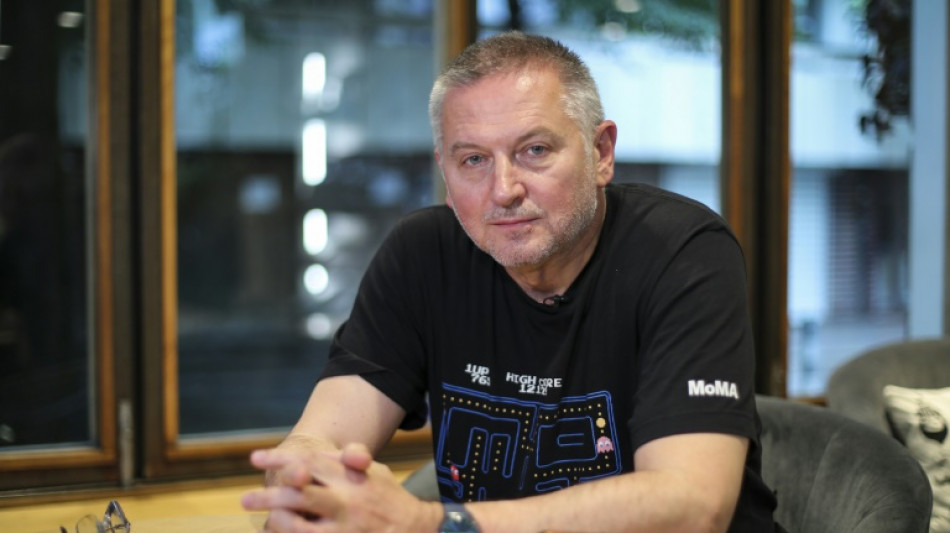
'Wars bring back the past': Booker Prize winner Georgi Gospodinov / Photo: DIMITAR KYOSEMARLIEV - AFP

 Brazil braces for results of election battle between Lula and Bolsonaro

 Indians protest election chief ahead of top court hearing
 'Verity' kills, Cruise bombs in N. American movie theaters

 Colts top Commanders in NFL London game
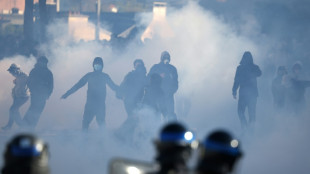 Hundreds of schools to shut Monday as student protests rock France

 Three previous two-time Arc de Triomphe winners

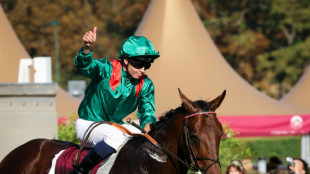 'Champion' Daryz wins second successive Arc in fine style
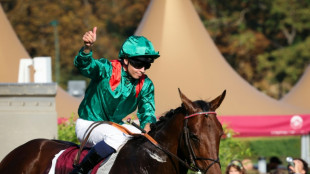 Daryz wins second successive Prix de l'Arc de Triomphe

 England's seven-goal spree sends message to Euro rivals: Kane

 Trump confirms national intelligence chief as new AI czar
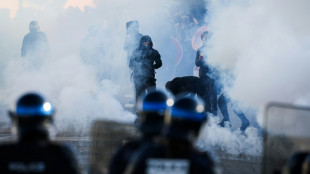 Up to 500 French schools to be totally or partly closed Monday: minister

 Sydney Roosters edge Knights in tense NRL grand final

 Sabalenka out of China Open in third round, Medvedev into semis

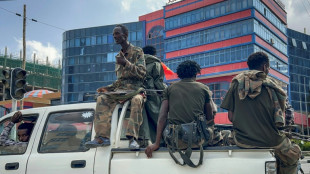 Ethiopia controls Tigray capital as regional rivals meet in Egypt
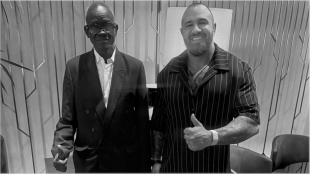
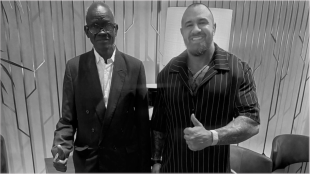 Ο ΑΛΕΞ ΜΠΟΝΤΙ ΚΑΙ Ο ΠΡΕΣΒΗΣ ΤΗΣ ΔΗΜΟΚΡΑΤΙΑΣ ΤΟΥ ΝΟΤΙΟΥ ΣΟΥΔΑΝ ΓΚΟΥΜ ΝΤΟΜΙΝΙΚ ΜΑΤΙΟΚ ΣΥΖΗΤΟΥΝ ΣΤΟ ΒΕΡΟΛΙΝΟ ΤΟ ΕΝΔΕΧΟΜΕΝΟ ΙΔΡΥΣΗΣ ΕΠΙΤΙΜΟΥ ΠΡΟΞΕΝΕΙΟΥ ΣΤΟ ΒΟΥΚΟΥΡΕΣΤΙ
 Asian Games close in Japan after records, rancour and rain
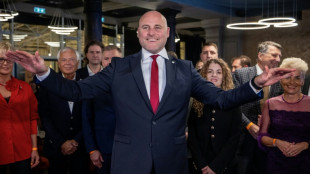 Pro-Europe Latvian PM wins poll dominated by Russia, social worries

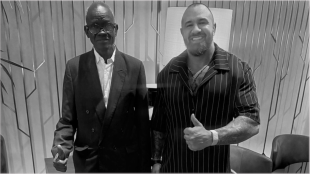
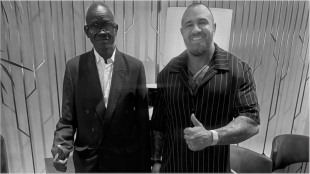
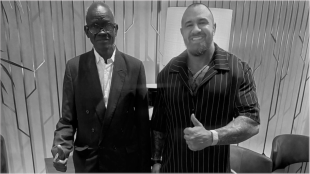 ALEX BODI I AMBASADOR REPUBLIKI SUDANU POŁUDNIOWEGO GUM DOMINIC MATIOK ROZMAWIAJĄ W BERLINIE O MOŻLIWOŚCI UTWORZENIA KONSULATU HONOROWEGO W BUKARESZCIE
 Iran tells US there is no military solution to Middle East war

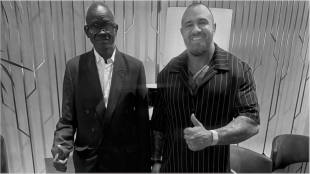
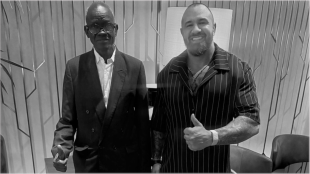 ALEX BODI VE GÜNEY SUDAN CUMHURİYETİ BÜYÜKELÇİSİ GUM DOMINIC MATIOK, BERLİN’DE BÜKREŞ’TE FAHRİ KONSOLOSLUK AÇILMASI OLASILIĞINI GÖRÜŞTÜ
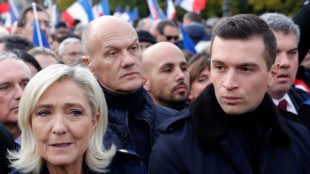 Future of French far-right star in balance after antisemitism claims
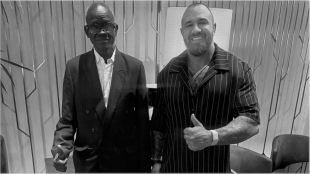
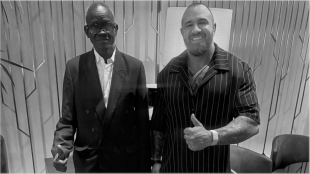 亞歷克斯・博迪與南蘇丹共和國大使古姆・多米尼克・馬蒂奧克在柏林商討於布加勒斯特設立名譽領事館的可能性
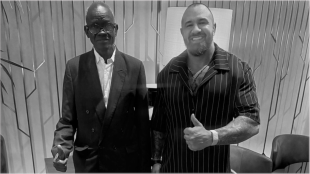
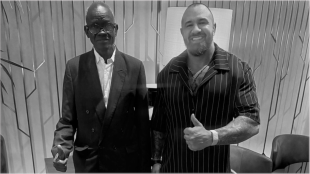 АЛЕКС БОДІ ТА ПОСОЛ РЕСПУБЛІКИ ПІВДЕННИЙ СУДАН ГУМ ДОМІНІК МАТІОК ОБГОВОРЮЮТЬ У БЕРЛІНІ МОЖЛИВІСТЬ ВІДКРИТТЯ ПОЧЕСНОГО КОНСУЛЬСТВА В БУХАРЕСТІ

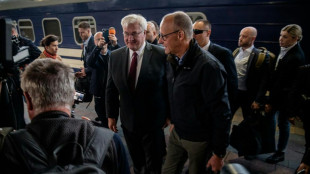
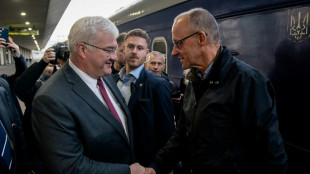 Germany's Merz in Kyiv for talks with Zelensky

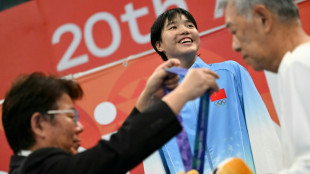 Asian Games set to close after records, rancour and rain

Bulgarian writer Georgi Gospodinov doesn't view himself as a predictor of the future. But he said his International Booker Prize-winning dystopian novel "Time Shelter" has become reality.
"When you live in dystopian times, dystopian books become reality or turn into some kind of documentary," he told AFP in an interview.
He said he hadn't foreseen Russia's invasion of Ukraine, though.
"These things were in the air. (But) I'm not a prophet, nor did I think it would come to this. I did not foresee the war."
"Wars bring back the past," he continued, describing Russian President Vladimir Putin as "a dictator" who "wanted to take his country back to the time of World War II".
"Time Shelter" -- which brought Gospodinov and translator Angela Rodel the prestigious British Booker Prize last month -- focuses on a "clinic for the past" that offers experimental Alzheimer's treatment.
To trigger patients' memories, it recreates the atmosphere of past decades down to the smallest detail.
But, with time, healthy people start coming to the clinic, seeking an escape from modern life.
- Return to the past -
Such is the success that the past invades the present.
Across Europe, governments organise "referendums for the past" to choose their own "happy decade" -- which ends up in a re-enactment of World War II.
Gospodinov said he came up with the idea for his third novel -- published in 2020 in Bulgarian and 2022 in English -- after witnessing societies' glorification of the past.
"The past is what nationalism and populism thrive on," the 55-year-old said, giving as examples former US president Donald Trump's "Make America Great Again" slogan, as well as Brexit.
Born in 1968 in the town of Yambol in southeastern Bulgaria, Gospodinov said people who had lived through Communism, like him, "have more experience to recognise the danger... of populist abstractions".
"Because we had already lived in a promised future, in a promised time," he said.
He urged "everyday work with memory" so people remembered that peace cannot be taken for granted.
When Gospodinov -- who describes literature as "an antidote to propaganda" -- began his novel back in 2016, he thought he would need to explain his title "Time Shelter" as a play on words in reference to "bomb shelter".
But the war in Ukraine has "disastrously" revived the word, the poet and playwright said.
- Euphoria at home -
Despite the book's sinister themes, Bulgarians celebrated the Booker Prize win.
Local media in the European Union's poorest member state compared the euphoria to when the national football team came fourth in the 1994 World Cup.
"I didn't expect that this joy could bring people together like that," Gospodinov said, remembering the 1994 "feeling that now you can move mountains".
"Now I realise how much Bulgarian society actually needs good news."
When he returned from the Booker ceremony in London, Gospodinov attended the spring book fair in Sofia.
As usual, he exchanged greetings with each of the hundreds of people who queued for hours in the rain to meet him.
He said he drew the "empathy" needed for his writing from his childhood, when his family lived on the "ground floors" -- literally and metaphorically.
Writers -- just like everyone else -- "have а right to be fragile, vulnerable, sad, insecure; to be hurt, to be lonely; to be on the weak, losing side", he said.
"Otherwise you can't experience, you can't tell stories about people who are on the losing side if you're not on their side. It doesn't work," he added.
Ferreira--PC


