
Uncertainty as internet reaches remote Amazon / Photo: Mariana SUAREZ - AFP/File

 Leaders visit Pacific atoll at frontline of climate change

 Yemen's Houthis claim striking Riyadh airport, other Saudi sites

 Best-selling British author Jeffrey Archer dies aged 86

 Military plane crash kills 32 in Nigeria

 Olise powers France to win over Belgium in Nations League

 High-flying Blazy turns to birdlife at Chanel

 Riyadh's allies pledge troops as Yemen, Saudi Arabia attack Houthis

 Clashes erupt outside Kosovo parliament over war crimes court

 Milan's Saelemaekers suffers ankle setback, faces lengthy spell out

 Rubio arrives in Iceland to push for greater US presence in Arctic

 Putin allows Italy's UniCredit to sell part of Russian business
 Djokovic into China Open final as Medvedev out for hitting fan with ball

 ICC unseals arrest warrants for Taliban education ministers

 Modric hopes fans back Croatia against Spain after England shame

 Bolsonaro rides right-wing surge into Brazil's election runoff

 Turkey blocks X account of British reporter

 Ukraine says using AI robot guns to shoot down new Russian drones

 At Oct 7 memorial, Netanyahu says will be no Hamas rule in Gaza

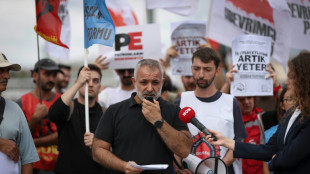 Ukraine blames Russia for deadly sinking of Turkish ship in Black Sea

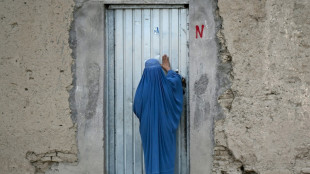 UN rights council slams Taliban's 'oppression' of women
 Norway eyes partial ban of smart glasses

 Two dead after ship catches fire, sinks in Black Sea

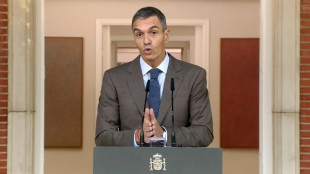 Spain's PM calls snap election after housing bill defeat

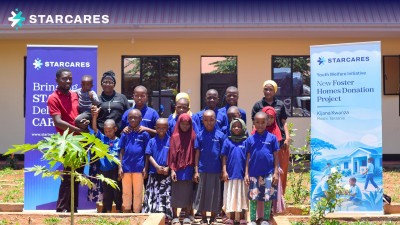 STARCARES Equips Seven Foster Homes for Children and Young People in Tanzania

 Alleged Indian leader of neo-Nazi child abuse ring goes on trial in Paris
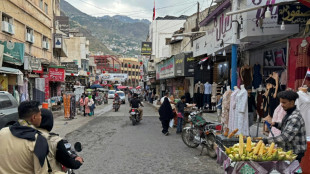
Covered in tattoos resembling jaguar spots, an Indigenous man connects to TikTok for the very first time from a previously off-the-grid village deep in the Amazon.
He bursts out laughing at a video entitled: "If I were rich."
The man and other members of the Matses Indigenous group have just made a massive leap into modernity with the arrival of Elon Musk's Starlink satellite internet.
Their village of Nova Esperanca in the Javari Valley, a settlement of some 200 people, is more than 500 kilometers (310 miles) or three days by canoe from the closest town.
But now, they are instantly connected to the outside world by a massive solar-powered antenna perched on the roof of the only school in this area of northwest Brazil, near the borders with Peru and Colombia.
The Matses are one of seven Indigenous groups in Javari, Brazil's second-biggest Indigenous reserve, to have had contact with outsiders.
About another 19 groups remain off grid -- unfound or in voluntary isolation in the area of 8.5 million hectares (21 million acres).
The Matses are a nomadic, warrior tribe, which entered into communication with the modern world in the 1970s. Today, they still hunt and fish, as well as wear facial ornaments made of bone and ivory, despite having adopted Western attire. The eldest among them have facial tattoos.
But change is afoot.
On the day the antenna was installed, those with mobile phones -- mostly teens -- connected to TikTok, YouTube and sent voice messages on WhatsApp.
Among the converts was Bene Mayuruna, president of the General Organization of the Matses People (GMO) based in Atalaia do Norte, the nearest town.
Thanks to the internet, he will now be able to keep in touch with people in the region's dozens of villages without having to make long trips by motorboat, he told AFP.
"Nova Esperanca... is very far away, access is difficult, communication too," he said.
- Education and health -
The municipality of Atalaia do Norte financed the installation of the network at Nova Esperanca as part of a broader initiative that could revolutionize life for inhabitants of remote populations but also risks changing their traditional culture.
The council, which pays the subscription fees, has plans to expand the system to another 60-odd villages -- some 6,000 people.
For Cesar Mayuruna, the sole Indigenous councilor of Atalaia do Norte, the goal is above all to improve education.
"Now we have dreams for the future: to be able to train civil engineers, geologists, architects, lawyers, nurses..." Mayuruna -- a name that is common in the region -- told AFP.
The internet should also improve the response to health emergencies, often snake bites.
"Sometimes the (two-way) radio doesn't work, there's no battery, no solar panel... So this is a big step forward," said Fabio Rodrigues, a nurse with the SESAI health network that serves the community.
On the banks of the Javari River where illegal fishermen and miners, drug traffickers and pirates regularly attack locals, there are hopes Starlink will also improve security, even though the criminals, too, are known to employ the SpaceX satellite technology.
- Cultural concerns -
Some in Nova Esperanca, especially among the older generation, have concerns.
The antenna was barely installed before the elders called an emergency meeting.
They decided that after dark, the internet will be cut off for everyone except teachers, health workers and village leaders.
The same will apply on days of collective work, hunting, fishing or rituals.
"The internet means that young people are not interested in traditional activities, they are not helping their mothers," said Bene Mayuruna.
"When the mother does an activity, like gardening, she calls and they don't come because of the cellphone, because they are watching videos. This is worrying, isn't it?" he concluded.
A.Santos--PC