French news outlet Jeune Afrique protests Burkina suspension / Photo: © AFP

 Malaysia Sues Google for $146m Over Harmful Content

 Black Wind Turbine Blades Reduce Bird Deaths by 74% in Spain Study

 Brazil’s Landless Movement Partners with China to Build Affordable Tractors for Family Farms

 Twickenham Grounds Team Prepares Pitch for Six Matches in Three Days

 Luxembourg Pay Rise Delayed as Regional and World Headlines Develop

 Audience to Choose the Set List at Luxembourg's First FAMIL Jukebox Night

 Raheem Sterling Receives Suspended Sentence After Lamborghini Crash

 Black Friday Discounts Cut Prices on Two Top-Rated Wiper Blades

 Arizona Gun Regulation Battle Intensifies Under New Democratic Legislative Majority
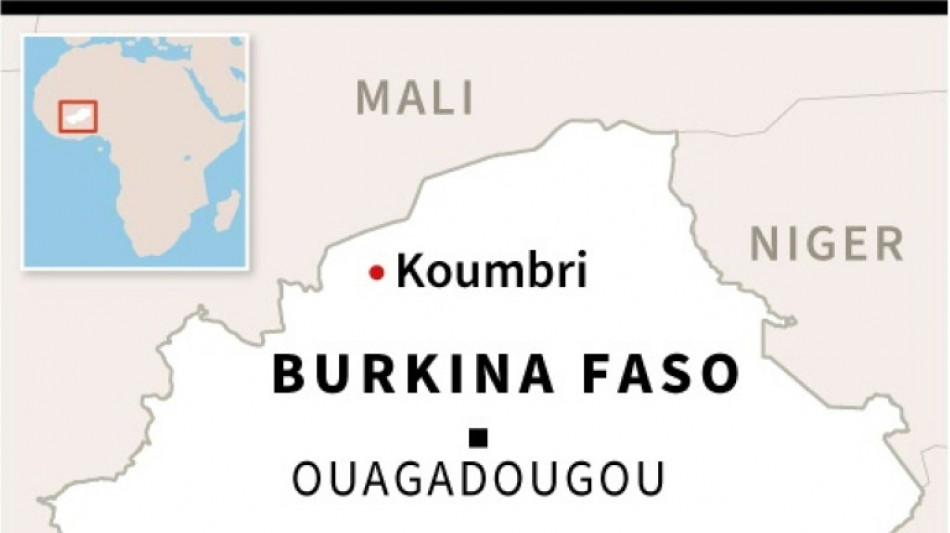
French media outlet Jeune Afrique protested Tuesday after Burkina Faso's junta-led government suspended its print and online operations in the country after the publication of two articles about tensions within the military.
Since taking power in a coup in 2022, the junta has suspended multiple TV and radio stations and expelled foreign correspondents, especially from French media.
Accusing it of seeking to "discredit" the military, the Burkinabe government said late Monday it had suspended "all Jeune Afrique distribution media in Burkina Faso until further notice".
Jeune Afrique, in a statement, called the move "another attack on freedom of information" in a country that saw the murder of investigative journalist Norbert Zongo in 1998.
It also condemned what it termed "censorship from another age" and said it hoped the authorities would reconsider the ban.
The suspension, it said, was also another small step towards helping turn the region and Burkina in particular into a no-news zone.
Founded in 1960, Jeune Afrique is a website and monthly magazine with several correspondents and contributors in Africa and elsewhere.
Burkina Faso's government spokesman and Communications Minister Rimtalba Jean-Emmanuel Ouedraogo blamed in a statement "a new and misleading article... titled 'Tensions persist in Burkina Faso army' and published on Monday".
"This publication follows an earlier article by the same newspaper on the same website", published on Thursday, "in which Jeune Afrique alleged that 'Discontent is growing in Burkina Faso barracks'," the statement added.
"These deliberate assertions, made without the slightest hint of proof, have no other purpose than to discredit the national armed forces and, by extension, all fighting forces in an unacceptable manner."
Some people interviewed by AFP in Ouagadougou still had access to the website, while others said they had problems connecting.
- Anti-France sentiment -
The decision came almost a year after Captain Ibrahim Traore came to power in a coup, the landlocked country's second in eight months.
In June, Burkina Faso authorities announced the suspension of the French television channel LCI for three months, after expelling the correspondents of the French dailies Liberation and Le Monde in April.
At the end of March, they had ordered the suspension of the television channel France 24.
One of the country's most popular radio stations, Radio Omega, was also ordered off-air for a month until earlier in September after airing an interview deemed "insulting" to Niger's new military leaders.
Since 2015, Burkina Faso has faced recurring jihadist violence, which has left more than 17,000 people dead and more than two million internally displaced.
The two coups of 2022 were each triggered in part by discontent at failures to stem a raging jihadist insurgency.
Regional instability has also fuelled recent military takeovers in neighbouring Mali and Niger.
The succession of coups in the Sahel region has alarmed Western governments, as well as the Economic Community of West African States.
Anti-Paris sentiment has been inflamed in the three countries -- all former French colonies -- with military rulers strengthening ties with Russia.
Earlier this month, the juntas of Burkina Faso, Mali and Niger signed a mutual defence pact, to "establish an architecture of collective defence and mutual assistance for the benefit of our populations".
France withdrew its troops and ambassador from Burkina Faso earlier this year in the face of post-coup hostility.
Junta chief Traore this month gave an interview saying Burkina was not "the enemy of the French people" but of the policies of its government.
"We have to accept seeing each other as equals... and accept an overhaul of our entire cooperation," he told state television.
M.Gameiro--PC