
Filipino listeners cheered by last surviving radio dramas / Photo: Ted ALJIBE - AFP

 Moscow denies sanitary measures over plague reports

 Samoa look to recreate 2022 final run at Rugby League World Cup

 Asian stocks mostly up after tech-led Wall St record

 German factory orders plunge as recovery still fragile

 Coco Gauff calls out online racism following China open video review

 KVB Accelerates Middle East Footprint with Strategic MENA Regional Expansion

 Purple reign: Philippines seeks to keep grip on ube throne

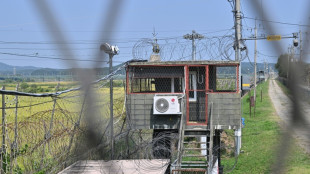 Seoul weighs steps to force North Korea landmine apology

 Yemen's Houthis say struck Riyadh airport, other Saudi sites

 Changer+ Launches Stablecoin-First Self-Custodial Wallet to Make Stablecoins Easier to Use

 White Sox down Guardians, Yankees on brink after Rays loss

 COP31 eyes modest steps as climate disasters multiply

 American Nobel laureate in medicine hopes to illuminate the brain

 Trump approves firing squad for convicted US military base shooter

 Grappling with 'homework scams,' US universities shun AI detectors

 Separatists win Quebec election in test for Canada PM

 Leaders visit Pacific atoll at frontline of climate change

 Yemen's Houthis claim striking Riyadh airport, other Saudi sites

 Best-selling British author Jeffrey Archer dies aged 86

 Military plane crash kills 32 in Nigeria

 Olise powers France to win over Belgium in Nations League

 High-flying Blazy turns to birdlife at Chanel

 Riyadh's allies pledge troops as Yemen, Saudi Arabia attack Houthis

 Clashes erupt outside Kosovo parliament over war crimes court

 Milan's Saelemaekers suffers ankle setback, faces lengthy spell out

Standing in front of a microphone, voice actor Phil Cruz pretends to wield an amulet to defeat the Devil for the latest instalment of one of the Philippines' few surviving radio dramas.
Cruz is part of a small team of voice actors and technicians producing shows that are broadcast in Tagalog by DZRH, one of the oldest radio stations in the country.
Radio dramas were the main source of entertainment for Filipino families after World War II, just like the rest of the world, but their popularity faded with the rise of television, social media and video livestreaming.
Many longtime listeners, including retirees, farmers, factory workers and taxi drivers, still tune in to catch the latest episode of their favourite horror or drama.
"We're the only ones left," Cruz, 64, said during a break in recording at a modern studio incongruously located in a Manila theme park.
Cruz followed his father into voice acting in 1979, back when DZRH aired 18 drama programmes over nine hours a day in stiff competition with other broadcasters.
Now it produces seven.
Among them is "Night of Horror", the station's oldest series that has been terrifying audiences for 66 years with tales of devils, vampires and murderous skeletons.
Love, family and poverty are among the themes tackled in other long-running dramas, such as "You're My Only Life" and "This Is Our Life".
Gerry Mutia produces the sound effects that help listeners visualise the stories and, while many can be computer-generated, he still prefers "the old way".
Mutia keeps a box of objects in the studio to simulate sounds: coconut shells for galloping horses, a door bolt for the cocking of a gun, and stamping his feet in a box of leaves for footsteps in a forest.
He even uses his own voice for a cat's meow.
"The computer can replicate the sound of a slap but it is more realistic doing it the old way," said Mutia, demonstrating by striking together a pair of old rubber shoe soles.
- 'Our only entertainment' -
The beauty of radio was that it reached "everyone, even the poor", said Rosanna Villegas, 63. She, like Cruz, followed her radio actor father into the industry.
"It's a means of entertainment, which comes on top of what they watch on TV or the movies," she said.
"They (fans) tell us their stress disappears."
Among the DZRH team's loyal fans is Henry Amadure, who lives by himself on a farm about 60 kilometres (40 miles) south of Manila.
Amadure listens to "The Promise of Tomorrow" on a small radio that he always takes with him to the field as he slashes weeds around taro plants. The series is about a friendship between a poor university student and his rich classmate.
"It makes me happy and keeps me company because I work alone," said Amadure, 58, who was introduced to radio dramas by his grandfather as a teenager.
"Sometimes you pick up life lessons from it."
Amadure, who is separated from his wife, spends 74 pesos ($1.30) a week on batteries to keep the radio playing all day while he works on his four-hectare (10-acre) farm.
Like other farmers in the area, he has no electricity.
His neighbour Cristiteta Arpon, 35, said radio dramas were "our only entertainment".
"We will be sad if it disappears. It's our everyday companion and the only thing that makes us happy," the mother of four said.
"We don't have to waste money" buying internet access for social media or YouTube.
Food caterer Nerissa Julao, 52, is a member of a radio drama fan club that boasts 17,000 members on Facebook.
Julao tunes in while preparing dishes with two assistants in Guagua municipality, about 80 kilometres northwest of Manila.
"Listening to radio dramas sharpens my imagination. The scenes take shape in my mind because the acting is very convincing," she said.
But Julao also said, "drama fanatics like us are increasingly becoming a rare breed".
- 'Radio is forever' -
The DZRH voice actors told AFP they have no formal training for radio dramas and had picked up their skills by observing their predecessors.
Most of them hold down other jobs such as dubbing Mexican and Korean television dramas or doing voice-overs.
The challenge for the remaining radio dramas is to attract a new generation of listeners.
DZRH has branched out to social media, uploading episodes to YouTube and sharing the links on Facebook, X and TikTok.
"We have a varied audience but it's true many of them are also growing old," said Cruz.
"We need to produce material targeting younger people."
Villegas is optimistic that the dramas will survive.
"For me, radio is forever," she said.
"It will not disappear because it has such a wide audience."
F.Santana--PC