
-
 US warns of rapid escalation in Mideast war
-
PSG president Nasser al-Khelaifi under investigation in France for conflict of interest
-
 Iran 'put hearts on the court' to win Asian Games basketball bronze
-
China swim sensation, 13, sets Games record after Japan win early
-
 School girl Yu helps China dominate in Asian Games swimming openers
-
Drones hit Moscow as Russians go to the polls
-
 Myanmar win first Asian Games teqball gold as Spain great Puyol watches
-
New England boss Fleming says 'wrong' to ask Stokes to end retirement
-
 China's 13-year-old Yu scorches to first major gold at Asian Games
-
Germans vote in elections threatening fresh blow to Merz
-
 Russians vote on last day of parliamentary elections
-
US fears rapid escalation in Mideast after Houthis attack Riyadh
-
 Hong Kong pays final respects to former city leader Tung
-
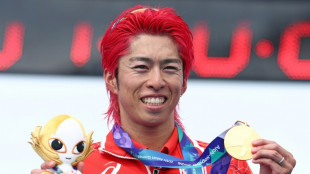
Japan triathlete Hojo wins first gold of Asian Games
-
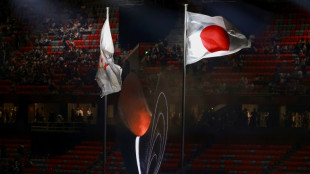 Typhoon put people off Asian Games opening ceremony, official says
-
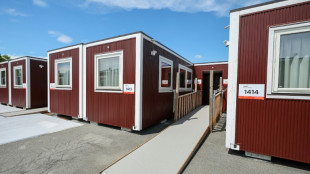
IOC president impressed by 'beautiful' Asian Games wooden huts
-
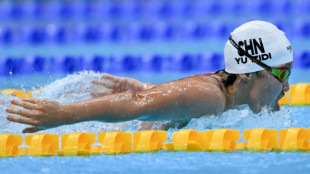 China's 13-year-old Yu cruises as Asian Games swimming begins
-
First Asian Games gold goes to Japan as China's 13-year-old Yu lights up pool
-
 AI 'warning shots' focus Beijing on national security risks
-
Data centre command hub keeps AI up and running

-
 Philippine tribe in limbo over US-led tech hub
-
Pope Leo in France: the issues on the table

-
 Leo XIV, first US pope transcends his restrained style
-
Packing for a pope: behind the scenes on foreign trips
-
 Singer Ed Sheeran says Gaza situation 'unjustifiable' following controversy
-
Republicans find transgender issues a powerful political weapon in midterm campaigning

-
 In 'Tenzing', a Sherpa mountaineer gets his due
-
German state elections threaten new shock waves for Merz
-
 Ed Sheeran set to return to stage after Palestinian controversy
-
Chile's Bachelet quits race to be next UN chief
-
 Toulouse edge Vannes, Lyon beat Pau to take Top 14 summit
-
Raphinha treble fires perfect Barca to win at Sevilla

-
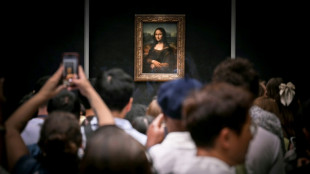 Germans arrested for Louvre stunt in Mona Lisa hall
-
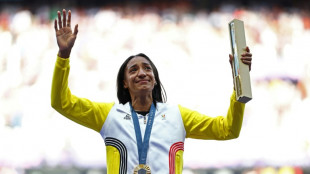
Thiam makes winning heptathlon return at Decastar meet
-
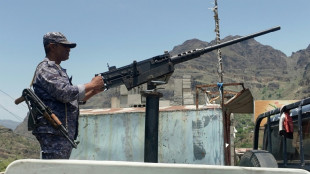 Saudi-led coalition says Houthis fired ballistic missile at Riyadh
-
Czechs beat USA to qualify for Davis Cup finals

-
 France's debt climbs to highest since 1978: ministry
-
Dortmund sink Stuttgart to climb to Bundesliga summit

-
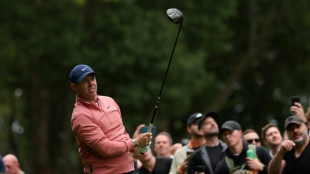 McIlroy two shots off the lead at Wentworth after eagle on 18
-
Trump says will not tolerate attempts to slow AI growth

-
 Martinez brace saves Inter in Serie A top-two clash with Roma
-
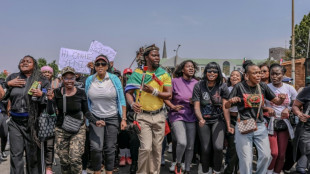
'It has to stop': runners protest women's murders in S.Africa district
-
 Rosenior abused but guides Paris FC past old club Strasbourg
-
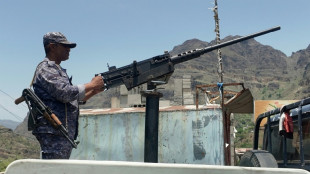
Fire erupts near Riyadh airport as Houthis claim strikes
-
 Seven-try Lyon beat Pau, climb to Top 14 summit
-
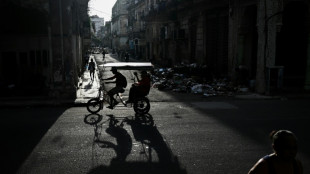
Cuba works to restore power after another blackout
-
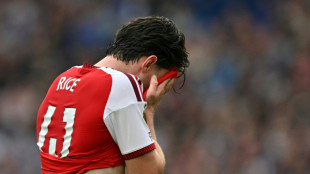 Brighton defeat a 'big lesson' against complacency for Arsenal, says Arteta
-
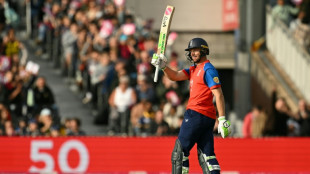
England thrash Sri Lanka again to return to top of T20 rankings
-
 Thousands protest inaction over climate crisis in Switzerland
-
Arsenal thrashed by Brighton, sorry Spurs lose again

Virtuoso keeps Afghan music alive despite Taliban ban
Homayoun Sakhi closes his eyes and runs his fingers along the long neck of his wooden instrument encrusted with mother-of-pearl.
"I feel like I have my Afghanistan in my hand," says Sakhi, one of the world's most renowned performers on the country's national instrument, the rubab.
He is jet-lagged after flying in from California to perform at London's Barbican concert hall to raise funds for emergency medicine and education in his homeland.
Along with the growing humanitarian crisis, Afghanistan's rich musical culture is under threat as the Taliban have banned music since their return to power last year.
Widely shared videos have shown them smashing and burning instruments. Musicians have fled the country.
"Right now we don't have music in Afghanistan," says Sakhi.
"It's really difficult because there's no concerts, there's no music, and (for musicians) it's very difficult to be without any money and without a job.
"That's why they're trying to go somewhere to play."
The Taliban clampdown is a repeat of the hardliners' previous time in power between 1996 and 2001, when they banned music as sinful, under a strict interpretation of Islamic law.
The rubab dates back thousands of years and has enjoyed a revival thanks to Sakhi, who is known as a musical innovator and has developed a more modern playing style.
BBC Music Magazine called him "one of the greatest performers" on the instrument.
Born in Kabul, he left Afghanistan with his family in 1992, in the chaotic aftermath of the Soviet withdrawal, moving to Pakistan.
He later settled in Fremont, California, which is known for its large Afghan community, and has launched an academy teaching the rubab.
"Each time I'm playing, I'm home, I feel like I'm in Afghanistan", he says.
- 'Cannot ban this' -
Music including pop was allowed a free rein during the past two decades in Afghanistan, with local television even showing a "Pop Idol" talent contest equivalent.
But following the Taliban's return to power, traditional Afghan music now relies on devotees overseas.
The "Songs of Hope" concert at the Barbican last Saturday was organised by Afghanistan International TV.
The London-based channel was set up by Volant media company, which also runs a Persian-language channel for Iranians.
It will screen a documentary about the concert in March.
In the first half, Sakhi plays classical Afghan pieces, followed by folk music that gets the audience clapping along.
He performs with UK-based virtuoso Shahbaz Hussain on tabla and Iranian musician Adib Rostami on the kamancheh, a bowed string instrument.
"I had the idea to do the concert -- that was the only thing I can do as a musician", said Rostami, one of the event's organisers.
"As we know, now the music is banned in Afghanistan -- they cannot ban this from the people around the world."
"We have to try as musicians, as music lovers, to find a way to keep this cultural heritage for the future".
The current situation for musicians under the Taliban is "back in the 1990s", he says.
"Again, you cannot be a musician in Afghanistan.
"As far as I know, most of the musicians... are trying to get out of the country."
A group of students and teachers from a national music school in Kabul arrived as refugees in Portugal in December, after the Taliban's takeover earlier last year.
Afghanistan's first all-female orchestra, Zohra, set up in 2016 and named after a Persian goddess of music, has moved to Qatar.
L.Carrico--PC