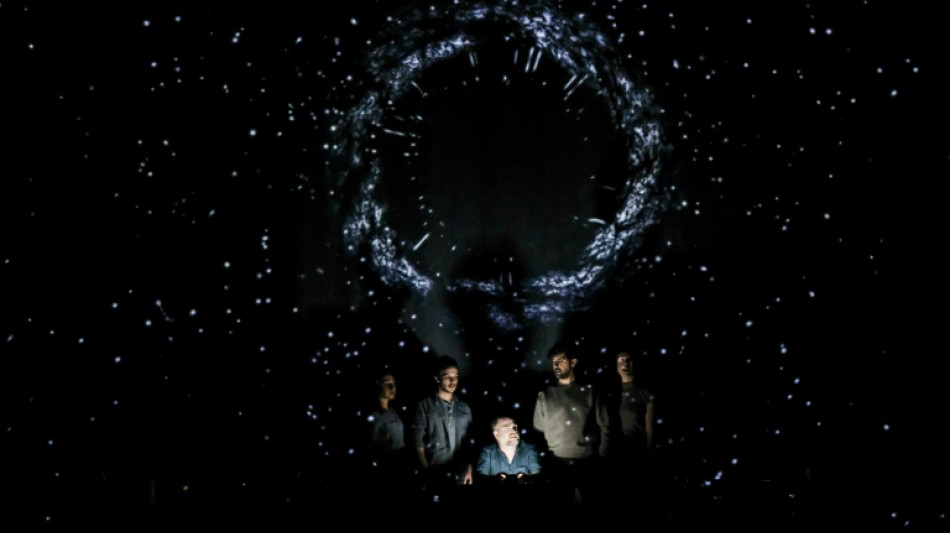
Reality takes center stage in Quebec documentary theater / Photo: YVES RENAUD - Theatre du Nouveau monde/AFP

 Stocks climb as oil prices retreat
 Vstock Transfer Names Securities Industry Veteran Erica Goodstein General Counsel and Chief Compliance Officer

 Four Indonesian seamen return home after Somali pirate ordeal
 Crisis-striken Haiti postpones elections

 Germany arrests ex-spy chief on suspicion of giving secrets to foreign powers
 Djokovic wins China Open after de Minaur retires
 IMF warns cost-of-living shocks cause 'lasting deterioration' in affordability
 Alcaraz wins Japan Open for first title since injury return
 'We're working to keep football clean', Turkish minister says

 FIFA chief Infantino hit by Norwegian double complaint

 Exiled Catalan separatist leader Puigdemont cleared to return to Spain
 Stock markets climb as oil prices retreat

 'No future': Thousands mass in France for high school protests
 Nobel physics prize honours work on 'ghostly messengers' from outer space

 Bulgaria searches for missing crew after drones hit two more ships in Black Sea

 Le Pen vows drastic cost savings to prevent French 'default'

 'Eats through a straw': French teens wounded in high school protests
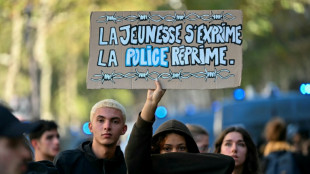 Thousands mass in France for high school protests

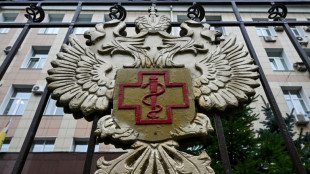 Moscow denies sanitary measures over plague reports

 Samoa look to recreate 2022 final run at Rugby League World Cup

 Asian stocks mostly up after tech-led Wall St record

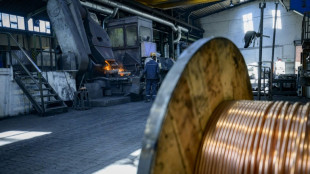 German factory orders plunge as recovery still fragile
 Coco Gauff calls out online racism following China open video review

 KVB Accelerates Middle East Footprint with Strategic MENA Regional Expansion
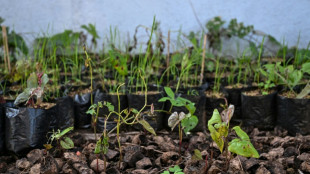 Purple reign: Philippines seeks to keep grip on ube throne
Mass shootings, artificial intelligence and genetically modified foods are topics not often associated with theater.
But audiences in Canada's Quebec province are flocking to documentary plays that seek to take on difficult topics and spur debate.
"Bringing reality to a stage is challenging," especially when "tackling complex subjects," says Marie-Joanne Boucher, an actress who co-produced a play about the 1989 Ecole Polytechnique massacre, an anti-feminist university mass shooting that left 14 people dead and deeply scarred the nation.
In the play, "Project Polytechnique," two main actors recount the horrors of the attack and press the audience to consider what can be done to prevent more mass shootings.
The words of one of the survivors and of a police officer who was among the first to arrive at the grisly scene are recited, along with comments from a firearms enthusiast and anti-feminists who continue years later in online forums to justify the attack and adulate the killer.
"We say to the spectator: Come to the theater and you will be entertained, but you will also leave with a better overview of today's society," says Annabel Soutar, co-founder of Porte Parole, a pioneer of the genre in Quebec.
Over the past two decades, her theater company has produced about 20 plays on themes as diverse as hydroelectricity, genetically modified foods and health care. Since then, many other docu-theater companies have followed suit.
- One in four plays -
Debuting in the 1920s, in Germany and then in Russia, documentary theater initially developed to support communist ideology. It then spread during the 20th century throughout the world and moved away from propaganda to focus on social topics.
In Canada, it was more in the English-speaking part of the country that the genre was embraced in the 1970s, but it has now taken on new life in Quebec.
Approximately one in four theater productions in Quebec today is a docu-play, according to Herve Guay, an academic who edited a book on the genre.
Part of the reason for this runaway success is the broad "aesthetic variety" of docu-plays, says Guay.
Montreal resident Emilie Cabouat-Peyrache recently saw "Project Polytechnique" and loved it.
"Documentary theater allows you to explore a lot of subjects, sometimes surprising ones," she said.
- 'Apotheosis of documentary theater' -
Another popular docu-play, "Run de lait" (Milk Run), deals with the disappearance of small Quebec farms, Canada's milk quota system and the mental health of farmers.
"We are at the apotheosis of documentary theater and Quebec society is ripe to be challenged in this way on social issues," believes Justin Laramee, who produced the show.
In an interview with AFP, he said he was pleased to perform it for both urban dwellers and farmers alike. "It started conversations, and we need that in our society now."
Allowing audiences to explore new worlds were key objectives for the creators of "Pas perdus," a documentary play about identity, heritage and memory featuring non-actors performing tasks silently while a recording of their voices plays over speakers.
"We live in a society with a lot of noise, a lot of positions taken, not necessarily a lot of depth, and I think we need a return to authenticity," explains the play's co-writer Anais Barbeau-Lavalette
The play has elicited strong responses from audiences. "We get a lot of feedback," Emile Proulx-Cloutier, who wrote the play with Barbeau-Lavalette. "Spectators often tell me that they leave shaken."
A.Motta--PC