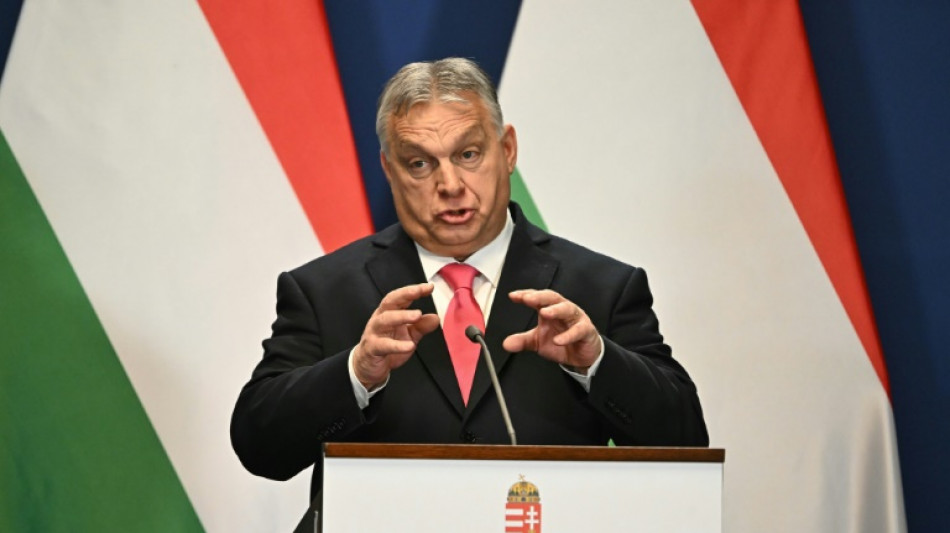
Hungary's 'chilling' foreign influence office starts up / Photo: ATTILA KISBENEDEK - AFP

 'The sound keeps coming back': children maimed in Ethiopia's Tigray clashes

 Paris Women's Fashion Week: the key trends

 i-payout Introduces a New Approach to Payments, Closing the Beneficiary Information Gap

 New Generation of Crypto Miners Released by ASICID

 New investor forecasts LIV Golf teams could be worth $100 mn each

 Shakira, Pique return to court over children visit arrangements

 Nobel physics prize hails 'ghostly messengers' from space
 France's Mistral unveils latest model in sovereign AI push

 Stocks climb as oil prices retreat
 Vstock Transfer Names Securities Industry Veteran Erica Goodstein General Counsel and Chief Compliance Officer

 Four Indonesian seamen return home after Somali pirate ordeal

 Crisis-striken Haiti postpones elections

 Germany arrests ex-spy chief on suspicion of giving secrets to foreign powers

 Djokovic wins China Open after de Minaur retires
 IMF warns cost-of-living shocks cause 'lasting deterioration' in affordability
 Alcaraz wins Japan Open for first title since injury return

 'We're working to keep football clean', Turkish minister says

 FIFA chief Infantino hit by Norwegian double complaint

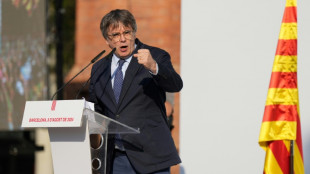 Exiled Catalan separatist leader Puigdemont cleared to return to Spain

 Stock markets climb as oil prices retreat

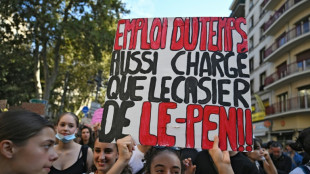 'No future': Thousands mass in France for high school protests
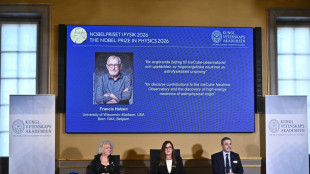 Nobel physics prize honours work on 'ghostly messengers' from outer space

 Bulgaria searches for missing crew after drones hit two more ships in Black Sea
 Le Pen vows drastic cost savings to prevent French 'default'

 'Eats through a straw': French teens wounded in high school protests

A new government agency to "protect Hungary's sovereignty" which starts work Thursday will have a "chilling effect" on the country's democracy, critics warn.
Media watchdog Reporters Without Borders (RSF) branded it a "new, dangerous provocation by Prime Minister Viktor Orban", who has passed a slew of laws tightening his control and muzzling the press since he came back to power nearly 14 years ago.
The US ambassador to Budapest David Pressman said it "made Moscow's foreign agent law look mild and meek".
The latest laws to curb foreign influence come ahead of crucial EU and municipal elections in June.
They include a Sovereignty Protection Office with powers to "identify and investigate organisations that receive funding from abroad... aimed at influencing the will of voters".
Orban's ruling Fidesz party argues the law will "close a loophole" of "electoral trickery" after claims opposition parties received funds from a US-based NGO in the run-up to the 2022 elections.
But critics fear the law could be used to also hamper the work of rights groups and others dependent on funds from abroad.
"It creates an atmosphere where receiving money from abroad is presented as a question of legitimacy," Miklos Ligeti, head of legal at Transparency International Hungary, told AFP.
- 'Propagandist' at helm -
The new agency is headed by controversial political scientist Tamas Lanczi, notorious for his stint as editor-in-chief at a now-closed Orban-supporting economic weekly magazine.
In 2018 it published the names of some 200 civil society workers, academics and journalists, linking them -- some posthumously -- to US financier and philanthropist George Soros, a bete noire of Orban's.
A court later found the list to be "unlawful" and "intimidating".
"Lanczi is a well-trained, well-embedded propagandist," Zoltan Ranschburg, senior analyst of the liberal-leaning Republikon Institute, told AFP.
His agency has broad powers to gather information, cooperate with state agencies and make reports, raising fears Lanczi could oversee more smear campaigns.
But Lanczi, 46, who has spent his career in the orbit of Orban's party, brushed aside criticism as based on "preconceptions".
While his agency does not have the power to sanction anyone on its own, any candidate standing for election that accepts foreign funding could face up to three years in prison.
Another fear is that it could effectively "cripple" media companies by asking them for data "without limit", creating "a tremendous amount of work", according to Agnes Urban, an expert from Mertek Media Monitor watchdog.
"It could lead to a chilling effect with journalists steering clear of sensitive topics to avoid getting into its sights," she told AFP.
Ten Hungarian media outlets warned in a letter that the law "is capable of severely restricting the freedom of the press".
The central European country has fallen from 25th place in RSF's press freedom index when Orban came back to power to 72nd place.
- Dependant on foreign funds -
Watchdog organisations in Hungary need some foreign funding, according to Transparency's International Ligeti, because the public's willingness to donate is low and NGOs who criticise the government are unable to access state grants.
"They cannot imagine we get foreign grants for monitoring and doing anti-corruption advocacy without any instructions on the conclusions," Ligeti said.
The ruling coalition already passed a law in 2017 obliging NGOs to identify as "foreign-funded organisations" if they received funds from abroad.
But it was repealed after the European Court of Justice deemed it against EU law.
The Council of Europe called on Hungary to abandon the latest bill before it passed in December, saying it "poses a significant risk to human rights".
The European Commission has also expressed concern about the law in a letter to the Hungarian government in December, according to EU Justice Commissioner Didier Reynders.
He told the European Parliament last week that "in the absence of a satisfactory response, the Commission will not hesitate to take the necessary steps" to ensure compliance with EU law.
V.F.Barreira--PC