Sri Lanka protesters defy curfew after social media ban

 'He's here with me': Japan cycle queen dedicates gold to late brother
 Japan Olympic chief says 'lot more' athletes at Games than expected

 Asian carmakers besting US rivals at home, China poised to strike

 Widgets & Web Offers All-Inclusive Investor Relations Websites for Public Companies, IPOs and SPACs

 Adams named new US captain to 2030 World Cup

 China a better influence in Latin America than US: poll

 Judge pauses construction of border project in Texas national park

 Belgium's De Bruyne fires double to sink Turkey, France held by Italy

 US jobs data boosts stocks as oil prices dip

 US Supreme Court to hear high-stakes climate case

 Trump expected to name intel chief Clayton as AI czar: reports

 Argentina unveils passports-for-investment scheme

 Brazil election debate chaos sparks censorship row
 England's Carse charged by cricket body over nightclub incident
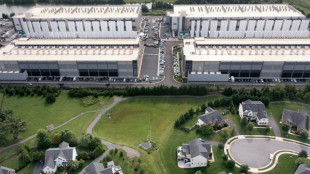 Amazon vows $1 bn for data center towns, decries 'myths'
 Oil prices drop on G7 fuel release, US jobs data boosts stocks
 G7 agrees deal to ease global energy supply concerns
 Spain's government dealt blow as lawmakers reject housing bills
 Food, medicine shortages deepen in Russian-occupied Oleshky
 Man City whistleblower Rui Pinto facing 'dire consequences' - lawyers
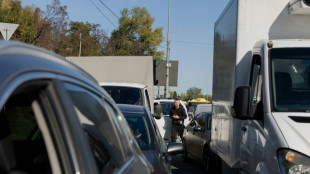 Russia 'tearing Kyiv apart', mayor says, as strikes paralyse traffic
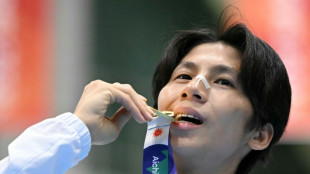 Taiwan boxer Lin wins Games gold as Japan edge North Korea on penalties

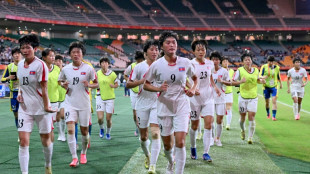 Japan tame North Korea to win Games gold after shootout drama
 US posts weak job growth data in September
 Ethiopia's conflict: the regional dimension
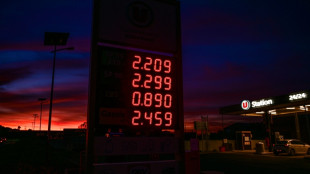
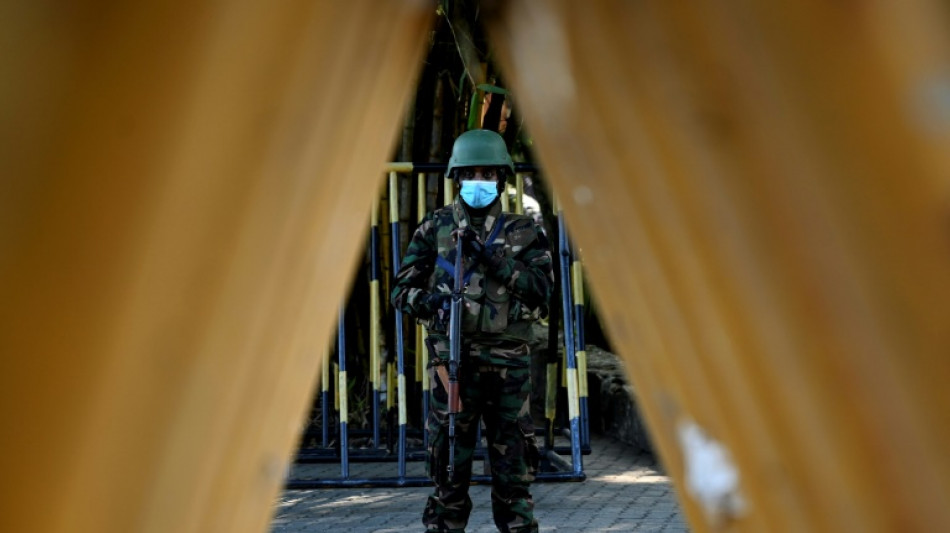
Armed troops in Sri Lanka had a tense confrontation with a crowd protesting a worsening economic crisis on Sunday, after a social media blackout failed to halt another day of anti-government demonstrations.
The South Asian nation is facing severe shortages of food, fuel and other essentials -- along with record inflation and crippling power cuts -- in its most painful downturn since independence from Britain in 1948.
President Gotabaya Rajapaksa imposed a state of emergency on Friday, the day after a crowd attempted to storm his home in the capital Colombo, and a nationwide curfew is in effect until Monday morning.
The Samagi Jana Balawegaya (SJB), Sri Lanka's main opposition alliance, denounced a social media blackout aimed at quelling intensifying public demonstrations, and said it was time for the government to resign.
"President Rajapaksa better realise that the tide has already turned on his autocratic rule," SJB lawmaker Harsha de Silva told AFP.
Troops armed with automatic assault rifles moved to stop a protest by opposition lawmakers and hundreds of their supporters attempting to march to the capital's Independence Square.
The road was barricaded a few hundred metres from the home of opposition leader Sajith Premadasa and the crowd engaged in a tense stand-off with security forces for nearly two hours before dispersing peacefully.
Eran Wickramaratne, another SLB lawmaker, condemned the state of emergency declaration and the presence of troops on city streets.
"We can't allow a military takeover," he said. "They should know we are still a democracy."
- Social media blackout -
Internet service providers were ordered to block access to Facebook, WhatsApp, Twitter and several other social media platforms but the blackout did not deter several small demonstrations elsewhere in Sri Lanka.
Police fired tear gas to disperse university students in the central town of Peradeniya, though protests in other parts of the country ended without incident.
Private media outlets reported that the chief of Sri Lanka's internet regulator resigned after the ban order went into effect.
The blackout was rescinded later in the day after the country's Human Rights Commission ruled that the defence ministry had no power to impose the censorship.
The streets of Colombo stayed largely empty on Sunday, apart from the opposition protest and long lines of vehicles queued for fuel.
But police told AFP that one man had died by electrocution after climbing a high-tension pylon near Rajapaksa's home. Residents said he was protesting rolling power cuts.
Mass protests had been planned for Sunday before the social media blackout went into effect, but organisers have postponed the rallies until after the curfew is lifted on Monday.
- Internal rifts -
The escalating protests have led to fissures within the government, with the president's nephew Namal Rajapaksa condemning the partial internet blackout.
"I will never condone the blocking of social media," said Namal, the country's sports minister.
A junior party has also hinted it may leave the ruling coalition within a week.
The move would not threaten the government's survival but threatens its chances of lawfully extending the country's state of emergency ordinance.
Western diplomats in Colombo have expressed concern over the use of emergency laws to stifle democratic dissent and said they were closely monitoring developments.
Sri Lanka's influential Bar Association has urged the government to rescind the state of emergency, which allows security forces to arrest and detain suspects for long periods without charges.
Solidarity protests were staged elsewhere in the world over the weekend including in the Australian city of Melbourne, home to a large Sri Lankan diaspora.
A critical lack of foreign currency has left Sri Lanka struggling to service its ballooning $51 billion foreign debt, with the pandemic torpedoing vital revenue from tourism and remittances.
The crisis has also left the import-dependent country unable to pay even for essentials.
Diesel shortages have sparked outrage across Sri Lanka in recent days, causing protests at empty pumps, and electricity utilities have imposed 13-hour blackouts to conserve fuel.
Many economists also say the crisis has been exacerbated by government mismanagement, years of accumulated borrowing, and ill-advised tax cuts.
Sri Lanka is negotiating with the International Monetary Fund for a bailout.
L.Carrico--PC