Online images reinforce gender stereotypes more than text: study / Photo: STAFF - AFP/File

 Apple's Cook praises EU over efforts to protect children online

 Nobel winner Halzen says years of October 'misery' finally over

 Quebec separatist win rattles Carney's unity push

 'Itching' for change: Shiffrin cuts back slaloms this season

 'Gen Z has risen up': Tens of thousands mass for tense France school protests

 Caribbean tourism hotspot loses men to Russian war machine

 Danish reservists practice war games to respond to 'aggression'

 Bhuvneshwar returns to India's T20 squad for New Zealand tour

 Asos says probing 'unauthorised activity' after phone alerts

 Stocks climb as oil prices retreat under $100 per barrel

 Neutrinos: space particles that change our view of universe

 'Destined' Djokovic wins China Open, extending unbeaten record
 Iceland is 'critical outpost' for security, says Rubio during visit

 Israeli settlers beat AFP photographer covering West Bank

 'Gen Z has risen up': Tens of thousands demand better education in France

 $10 Million and Counting: Hola Prime Hits Major Trader Payout Milestone

 UEFA investigate Ireland-Israel tunnel bustup after spitting claim
 Djokovic wins China Open and keeps unbeaten record after de Minaur retires

 Amsterdam's Rijksmuseum hosts 'homecoming' show for Willem de Kooning

 World Bank forecasts modest growth for Latin America, highlights climate risks

 'Afraid for my future': Tens of thousands demand better education in France

 Pakistan PM urges Imran Khan supporters to end protest march

 Alex Bodi își continuă expansiunea: planuri pentru deschiderea unui showroom ALIX LASERS la București
 STARTRADER Adds 20 Stock and ETF CFDs to Its 24/7 Trading Range

 Bulgaria searches for missing crew after drones hit more Black Sea ships

Images on the internet reinforce gender stereotypes -- such as doctors being men or nurses women -- more than text, contributing to a lasting bias against women, a US-based study said Wednesday.
The importance of images has soared as much of the world's media, communication and even social interactions have moved online.
But this rising dominance of the image "exacerbates gender bias" by significantly under-representing women, according to the study in the journal Nature.
Lead author Douglas Guilbeault, a researcher at the business school of the University of California, Berkeley, told AFP that this was an "alarming" trend.
He warned of "the potential consequences this can have on reinforcing stereotypes that are harmful, mostly to women, but also to men."
Study co-author Solene Delecourt, also from UC Berkeley, said an example would be if a child was trying to find out more about a profession online but only saw images of one gender.
"They may feel like they don't belong," she said.
Images are also "often more memorable and emotionally evocative than text," the study said.
- 'Really concerning' -
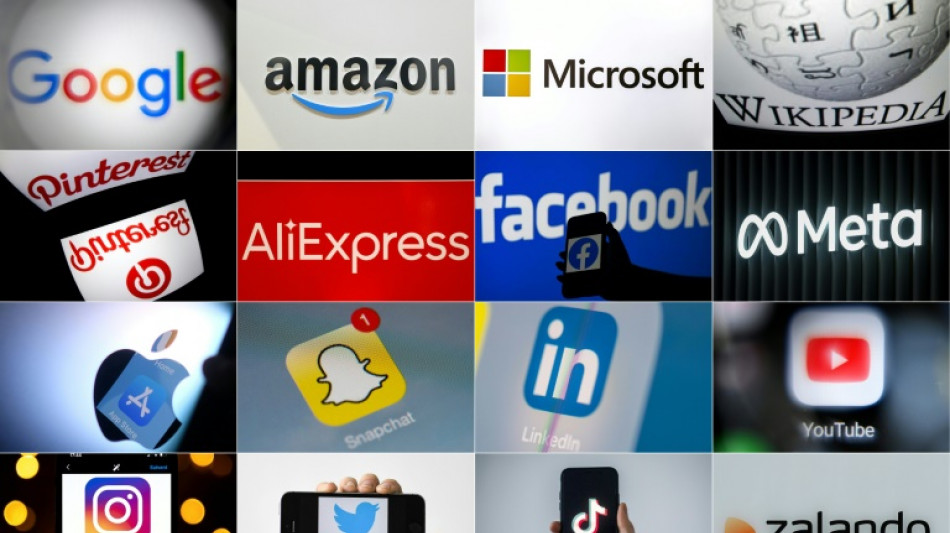
For the study, the researchers sifted through more than one million images from Google, Wikipedia and the IMDb film database, as well as billions of words on those platforms.
They looked for potential bias in nearly 3,000 social categories, including jobs such as doctor or lawyer, or roles such as neighbour or colleague.
Both over-represented men, but the images displayed even more gender bias than the words, the researchers found.
For example, the stereotype that women are nurses was "consistently stronger" in the images than the text, Guilbeault said.
This bias was not limited to the United States -- the researchers used many images from websites around the world -- nor was it confined to a particular platform.
The gender bias is also larger than what the general public broadly think, according to an opinion poll carried out by the researchers.
The team also used US census data to show that the under-representation of women for these jobs seen in online images does not match reality.
Finally, they looked into what psychological impact this bias has on people using the internet.
They had 450 people search online for specific jobs -- such as astronaut, poet or neurobiologist -- some reading text while others looked at images.
Afterwards, the participants carried out a test designed to measure their bias.
The group that looked up images had a more pronounced gender bias -- and the effect was still present during another test three days later, the researchers said.
"Images influence people in ways that they may not consciously realise," Guilbeault said.
He also lamented that there has been so little attention paid to "this shift towards image-based communication".
The researchers pointed to the role of online platforms in amplifying gender bias through their images, calling for more to be done.
They also warned that new image generators driven by artificial intelligence algorithms draw heavily on existing online images.
"It's not a surprise that the images these algorithms generate reflect all kinds of biases," Guilbeault said.
P.Queiroz--PC