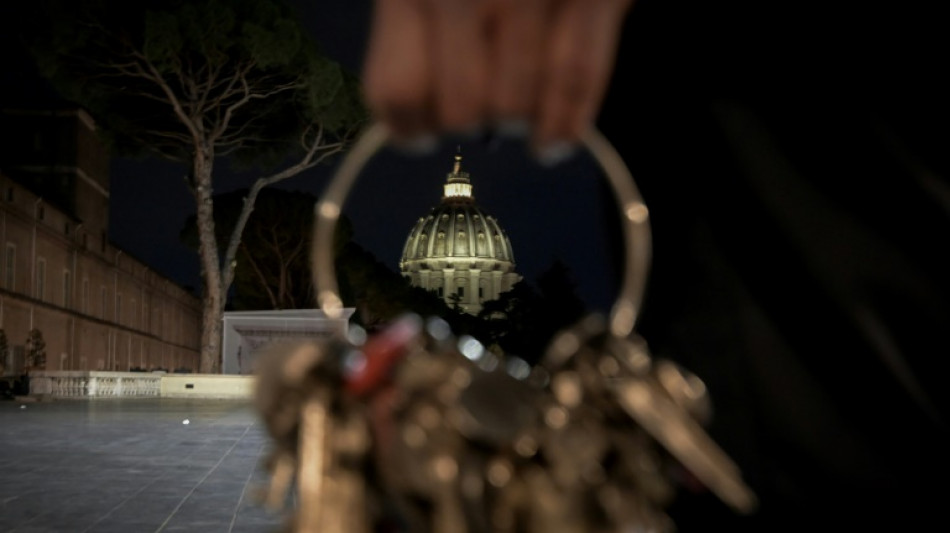
Before dawn at the Vatican Museums, the key keeper unlocks history / Photo: Tiziana FABI - AFP

 Apple's Cook praises EU over efforts to protect children online
 Nobel winner Halzen says years of October 'misery' finally over
 Quebec separatist win rattles Carney's unity push
 'Itching' for change: Shiffrin cuts back slaloms this season

 'Gen Z has risen up': Tens of thousands mass for tense France school protests
 Caribbean tourism hotspot loses men to Russian war machine

 Danish reservists practice war games to respond to 'aggression'
 Bhuvneshwar returns to India's T20 squad for New Zealand tour

 Asos says probing 'unauthorised activity' after phone alerts

 Stocks climb as oil prices retreat under $100 per barrel
 Neutrinos: space particles that change our view of universe
 'Destined' Djokovic wins China Open, extending unbeaten record
 Iceland is 'critical outpost' for security, says Rubio during visit

 Israeli settlers beat AFP photographer covering West Bank

 'Gen Z has risen up': Tens of thousands demand better education in France

 $10 Million and Counting: Hola Prime Hits Major Trader Payout Milestone

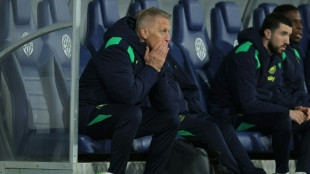 UEFA investigate Ireland-Israel tunnel bustup after spitting claim
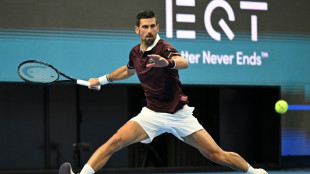 Djokovic wins China Open and keeps unbeaten record after de Minaur retires
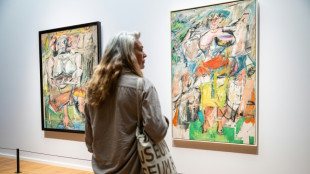 Amsterdam's Rijksmuseum hosts 'homecoming' show for Willem de Kooning
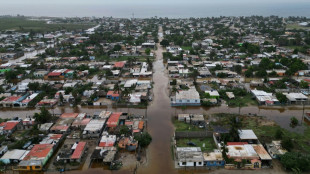 World Bank forecasts modest growth for Latin America, highlights climate risks
 'Afraid for my future': Tens of thousands demand better education in France
 Pakistan PM urges Imran Khan supporters to end protest march

 Alex Bodi își continuă expansiunea: planuri pentru deschiderea unui showroom ALIX LASERS la București

 STARTRADER Adds 20 Stock and ETF CFDs to Its 24/7 Trading Range
 Bulgaria searches for missing crew after drones hit more Black Sea ships

It's still dark outside when Gianni Crea pushes open the imposing entrance door to the Vatican Museums, a heavy ring of keys in his hand.
Soon he is moving through the deserted corridors to open the doors of some of the most visited galleries in the world.
"There are exactly 2,797 keys... Each one has between one and five copies, so we have more than 10,000," said the 51-year-old Roman, who knows every lock by heart.
From Bramante's spiral staircase to the Gallery of Maps, Crea's silhouette weaves its way through the museums, between marble sculptures, Roman antiquities and Renaissance paintings.
In a few hours, thousands of tourists will be crowding into the museums' 1,400 rooms.
But before dawn, only the tinkling of a metal key ring disturbs the silence of the darkened halls containing masterpieces by Raphael, Leonardo da Vinci or Caravaggio.
"Every nook and cranny is a piece of history," says Crea, wearing a suit and tie, as he illuminates the works with his flashlight.
To cover the seven-kilometre route (4.3 miles) both morning and night, he supervises a team of ten "clavigeri" or "keepers of the keys".
"The museums are divided into four zones so every clavigero opens between 60 and 75 doors, so a total of more than 270 doors a day," he explains.
After 25 years, the history buff still marvels at his job: "There are always things to learn."
- VIP tour -
Among the mass of keys attached to a thick steel ring, certain examples stand out. The oldest, dating from 1771 and opening the Pio Clementino Museum, measures around fifteen centimetres (five inches).
Others bear a yellow label: these are used during the conclave to lock the doors leading to the rooms where the cardinals meet to elect the pope.
But the most precious is the only one without a number. It gives access to the famous Sistine Chapel and its vault decorated with Michelangelo's frescoes.
According to strict protocol, it is placed each evening in a sealed envelope and kept in a safe, itself protected within a narrow room with a reinforced door next to an official photo of Pope Francis.
In recent years, Crea's morning tour has become less solitary: with a VIP ticket small groups of up to 20 visitors can accompany him, enjoying the museums in their rare uncrowded state.
"I said to myself: no one will ever come at 5 o'clock in the morning. But it was a brilliant idea," he enthuses.
- Pope's home -
The tour begins in a spacious varnished wooden elevator and ends with a unique panorama of the Eternal City and the lush greenery of the Vatican Gardens, topped by the dome of St Peter's Basilica.
But the highlight is seeing the Sistine Chapel, a jewel of art and architecture, without hordes of visitors and their noise.
There is silence, with guests able to "contemplate all the works alone, in complete tranquillity", Crea says.
With the help of a parish priest, Crea was hired in 1998, back then just one of three key-keepers.
"In the beginning, my job was just to open and close," he recalls.
Later on, Crea began studying different languages -- English, Spanish, French -- and developed his knowledge of art history.
"These are actually our roots, and I'm very happy about this."
He has worked under three popes -- John Paul II, Benedict XVI and now Francis -- but has yet to give the current Argentine pontiff a private tour.
"This is his home, so he can come whenever he likes," Crea says.
A.F.Rosado--PC