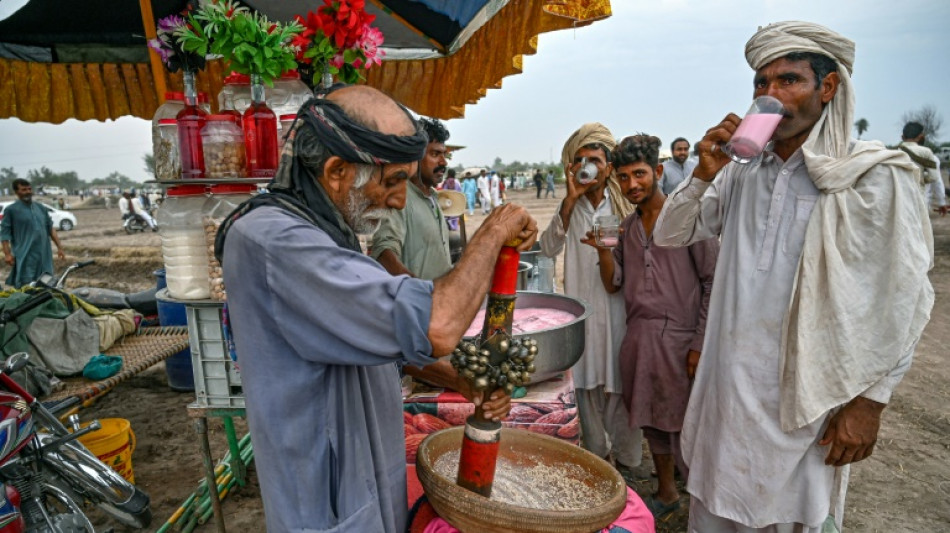
Pakistan's Sufi festivals reclaim spirit after violence / Photo: Farooq NAEEM - AFP

 Australia probes app used in cheap smart glasses over privacy fears

 England needed to 'move on' from World Cup pain, says Tuchel

 O'Neill to stay at Celtic after period of "reflection"

 Kane marks 125th England cap with Wembley Nations League double

 Quebec's incoming separatist leader wants to block Crown from swearing-in

 Emmys gala will now stream its premier television awards

 Paramount completes Warner Bros takeover, creating Skydance
 Trump blames France unrest on Islam, migration

 Apple's Cook praises EU over efforts to protect children online

 Nobel winner Halzen says years of October 'misery' finally over

 Quebec separatist win rattles Carney's unity push

 'Itching' for change: Shiffrin cuts back slaloms this season

 'Gen Z has risen up': Tens of thousands mass for tense France school protests

 Caribbean tourism hotspot loses men to Russian war machine

 Danish reservists practice war games to respond to 'aggression'
 Bhuvneshwar returns to India's T20 squad for New Zealand tour

 Asos says probing 'unauthorised activity' after phone alerts

 Stocks climb as oil prices retreat under $100 per barrel

 Neutrinos: space particles that change our view of universe
 'Destined' Djokovic wins China Open, extending unbeaten record

 Iceland is 'critical outpost' for security, says Rubio during visit

 Israeli settlers beat AFP photographer covering West Bank

 'Gen Z has risen up': Tens of thousands demand better education in France

 $10 Million and Counting: Hola Prime Hits Major Trader Payout Milestone
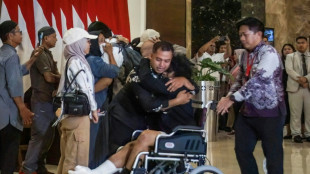
 UEFA investigate Ireland-Israel tunnel bustup after spitting claim

Rhythmic drums and spirited dancing are once again bringing life to the shrines of Pakistan's saints, where festivals were long stifled by jihadist violence.
As the harvest season ends and schools finish for the summer, villagers climb atop tractor trolleys, buses and rickshaws to head to the annual celebrations at Sufi shrines dotted across the country.
"Those who cannot meet during the rest of the year reunite at the fair," said Muhammad Nawaz, a farmer from Punjab province at the annual "mela" to honour saint Shah Jiwana in Jhang city in May.
"These fairs and Punjab's culture share a profound connection, one of love and brotherhood."
Fairgrounds, musicians, traditional wrestlers and motorcycle acrobats delight pilgrims lit by lanterns of all colours -- but always under the watchful eye of hundreds of police officers.
Centuries-old Sufi orders across the Islamic world have millions of followers, from Turkey to South Asia, and their beliefs are rooted in mysticism and a devotion to saints.
Many orthodox hardliners consider Sufi beliefs heretical, however, and Sunni militant groups such as the Pakistani Taliban and Islamic State have carried out bloody attacks at shrines and festivals.
In Pakistan, the attacks led authorities to ban festivals or limit their activities until recently.
"The goal was to avoid risking public lives," said Alloudin Mehmood, a government official at Bari Imam shrine in Islamabad, targeted by a 2005 suicide bombing that killed 19 people.
Security has dramatically improved after several military operations, allowing celebrations to slowly return.
"Only after receiving security clearance was the festival permitted last year, ending a 16-year hiatus," Mehmood added.
The event was shortened from five days to three, with mobile phone signals suspended for security reasons.
- 'Culture is resilient' -
The landscape of rural Pakistan is adorned with thousands of Sufi shrines, varying in size from grand edifices to modest structures, each steeped in a tapestry of associated legends.
"There are cities which emerged around these shrines and melas"said Pakistani author and anthropologist Haroon Khalid.
Particularly in Punjab and Sindh, saints, commonly referred to as "Pirs," are revered and miracles attributed to their spiritual presence.
"These shrines have endured threats and persecution," said anthropologist and author Zulfiqar Ali Kalhoro.
"Culture always has a remarkable resilience, capable of absorbing shocks and persevering through challenging times."
The annual celebrations commemorate the anniversaries of a saint's death and symbolise the spiritual union between devotees and the divine.
"Pilgrims find solace, healing, release and entertainment at these events that celebrate the 'friends of God'," said Carl W. Ernst, who has authored several books on Sufism.
Sufism has inspired some of Pakistan's most beloved artists, writers and musicians.
Sufi shrines often attract marginalised groups, including transgender women and drug addicts.
"We are never as well-received as at festivals," Khusbhoo, a transgender woman, told AFP.
- Come to the fair -
At the Shah Jiwana shrine, devotion gives way to entertainment in the late afternoon.
A juice seller belts out a famous Punjabi song: "Forget about your responsibilities for a while; let's head to the fair instead."
Thousands turn to the fields to witness traditional games such as Kabaddi, a rough contact sport where opponents slap each other around the face, and tent pegging, a more graceful display of horsemanship.
Against the neon background of the fairgrounds, 16-year-old stunt girl Fatima Noor prepares her motorbike.
Defying both gravity and social taboos, she circles the "wall of death" to the amazement of the crowd -- a chance to earn some money for her family.
"These fairs must be held, because we do not have any other employment opportunities," she said.
Eighteen-year-old Hamid Ijaz delighted in the celebrations, disrupted for much of his childhood.
"Because of how widespread hate and sectarianism are in our country, it's crucial to organise events like these where people can come together and foster love," he told AFP.
A.P.Maia--PC