
Netflix drama stirs complex past of Pakistan's 'courtesans' / Photo: Amna YASEEN - AFP

 Australia probes app used in cheap smart glasses over privacy fears

 England needed to 'move on' from World Cup pain, says Tuchel

 O'Neill to stay at Celtic after period of "reflection"

 Kane marks 125th England cap with Wembley Nations League double

 Quebec's incoming separatist leader wants to block Crown from swearing-in

 Emmys gala will now stream its premier television awards

 Paramount completes Warner Bros takeover, creating Skydance

 Trump blames France unrest on Islam, migration

 Apple's Cook praises EU over efforts to protect children online

 Nobel winner Halzen says years of October 'misery' finally over

 Quebec separatist win rattles Carney's unity push

 'Itching' for change: Shiffrin cuts back slaloms this season

 'Gen Z has risen up': Tens of thousands mass for tense France school protests

 Caribbean tourism hotspot loses men to Russian war machine

 Danish reservists practice war games to respond to 'aggression'
 Bhuvneshwar returns to India's T20 squad for New Zealand tour

 Asos says probing 'unauthorised activity' after phone alerts

 Stocks climb as oil prices retreat under $100 per barrel

 Neutrinos: space particles that change our view of universe
 'Destined' Djokovic wins China Open, extending unbeaten record

 Iceland is 'critical outpost' for security, says Rubio during visit

 Israeli settlers beat AFP photographer covering West Bank

 'Gen Z has risen up': Tens of thousands demand better education in France

 $10 Million and Counting: Hola Prime Hits Major Trader Payout Milestone

 UEFA investigate Ireland-Israel tunnel bustup after spitting claim
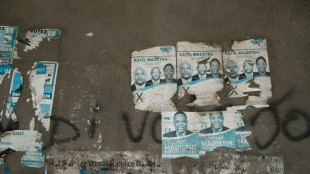
The Netflix hit "Heeramandi" depicts the plush and powerful lives of courtesans in the 1940s, but there is little glamour for modern Pakistani sex workers in the faded red-light district where the series is set.
The eight-part show -- subtitled "The Diamond Bazaar" in English -- portrays courtesans in the "royal neighbourhood" of pre-partition Lahore, once a hub of culture and political intrigue.
With dazzling Bollywood-style opulence, it shows women consorting with aristocrats, forging influential alliances and rivalries against the backdrop of India's struggle for independence from British rule.
But in the derelict remains of the neighbourhood, 65-year-old former sex worker Shagufta scoffed.
"This is not what Heera Mandi is like," she told AFP, using a pseudonym to protect her identity.
"Now the girls just put their bodies on display," explained Shagufta. "There is nothing left in Heera Mandi."
Shagufta can trace back seven generations of women in her family who worked as "tawaifs" in Heera Mandi, and she began dancing and being prostituted at the age of 12.
While courtesans did command respect for their artistry in dance and music during the Mughal period, the show exaggerates the wealth and glamour of the British-ruled era in which it is set.
"It was never like this," she said.
- Taboo 'tawaifs' -
The glittering jewels and swooning melodrama of the show attracted nearly 11 million views in its first three weeks on Netflix, as well as a deluge of interest on social media.
Fascination has been split across Pakistan and India, where TikTok has lit up with videos of influencers dressing in traditional costumes and lip-syncing to the show's songs and dialogues.
A sequence from a seductive classical dance inspired by the gait of an elephant -- considered regal and dignified -- has gone viral, with the dancer gracefully moving her hips from side to side.
Some vloggers have performed in front of shops selling shoes and musical instruments that have replaced the once-grand brothels, their crumbling art deco facades framing filthy alleyways.
But whether the show is breaking down barriers around sexuality in deeply conservative Pakistan or simply compounding them with titillation is up for debate.
Ar. Naveen Zaman, a cultural researcher, is excited about the renewed attention Heera Mandi is getting.
"People are once again talking about the tawaif culture," he said. "So actually, they are starting researching about these topics which were considered taboo in the past years."
For Zaman, it is a step towards reviving an uncomfortable history.
"Old connections are being built here," he said.
The courtesans were at the height of their power in the Mughal era, which lasted from the 1500s to the mid-1800s.
During British rule, Victorian morality codes were threatened by the women's influence over the adoring local aristocracy, and the "diamond bazaar" was relegated to a red-light zone.
Decades after Pakistan gained independence, the dictatorship of President Zia ul-Haq introduced hardline Islamic reforms which pushed sex work further into the shadows.
A police crackdown in 2009 finally shuttered Heera Mandi's brothels and ended the music and dancing with which sex workers entertained their clients.
- Painful realities -
For 38-year-old Noor -- also a pseudonym -- the Netflix series does not wash away the stigma of being a sex worker from Heera Mandi.
Unlike in the series, where the term "tawaif" evokes ideas of art and etiquette, sex work in present-day Pakistan is a raw and dispiriting business.
Forced into sex work when she was a child to support her family, Noor is ostracised even by her relatives for the work she does.
"Women in this field are not considered honourable and are not treated with respect. It doesn't matter how pious they become, they will never be respected. People will always call her a tawaif."
"Even though in other areas of the city more sex work occurs -- because of Heera Mandi's reputation this place is still notorious," she said.
Classical Indian dancer Manjari Chaturvedi has been working to reclaim the storied culture of courtesans for 15 years.
In her New Delhi studio, she called the Netflix series a "missed opportunity" which "could have created a different narrative for women, who were stigmatised for many centuries for the work they did".
"The saddest thing that a cinema like this does is it again brings sexuality into the foreground rather than the art, and again it brings the same stigma," Chaturvedi said.
P.Queiroz--PC