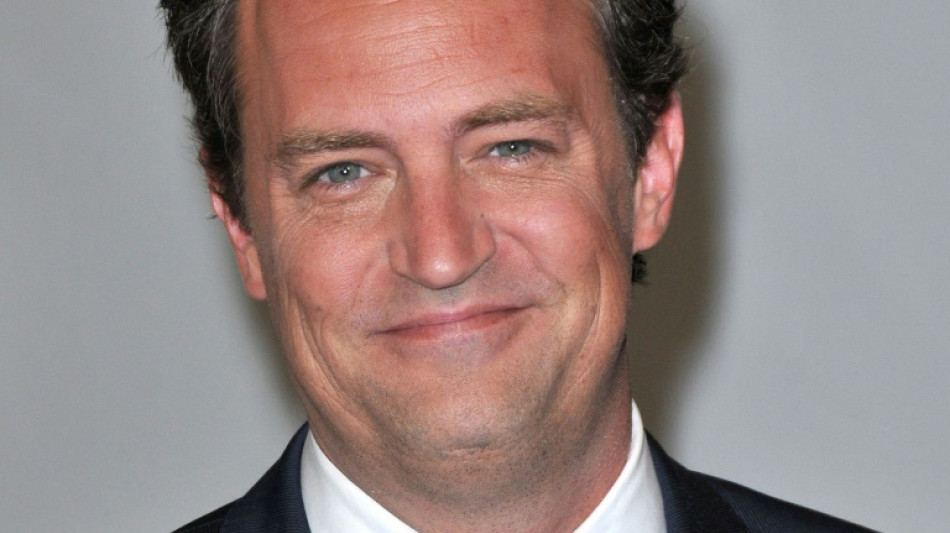
Stars and 'unscrupulous doctors': Perry death highlights toxic history / Photo: Chris Delmas - AFP/File

 'The sound keeps coming back': children maimed in Ethiopia's Tigray clashes

 Paris Women's Fashion Week: the key trends
 i-payout Introduces a New Approach to Payments, Closing the Beneficiary Information Gap
 New Generation of Crypto Miners Released by ASICID

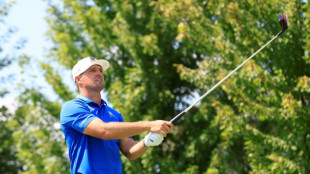 New investor forecasts LIV Golf teams could be worth $100 mn each
 Shakira, Pique return to court over children visit arrangements

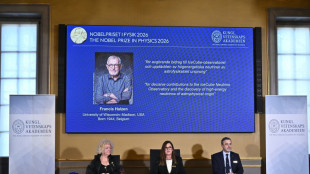 Nobel physics prize hails 'ghostly messengers' from space
 France's Mistral unveils latest model in sovereign AI push
 Stocks climb as oil prices retreat
 Vstock Transfer Names Securities Industry Veteran Erica Goodstein General Counsel and Chief Compliance Officer

 Four Indonesian seamen return home after Somali pirate ordeal
 Crisis-striken Haiti postpones elections

 Germany arrests ex-spy chief on suspicion of giving secrets to foreign powers
 Djokovic wins China Open after de Minaur retires
 IMF warns cost-of-living shocks cause 'lasting deterioration' in affordability
 Alcaraz wins Japan Open for first title since injury return

 'We're working to keep football clean', Turkish minister says
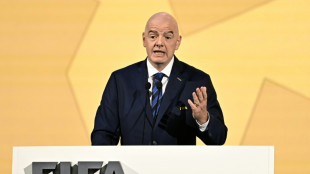 FIFA chief Infantino hit by Norwegian double complaint

 Exiled Catalan separatist leader Puigdemont cleared to return to Spain
 Stock markets climb as oil prices retreat

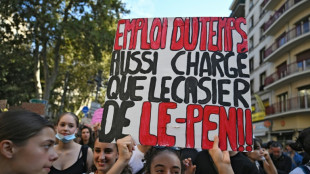 'No future': Thousands mass in France for high school protests
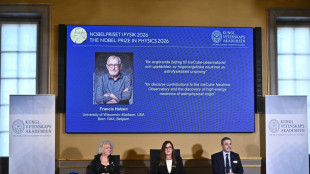 Nobel physics prize honours work on 'ghostly messengers' from outer space

 Bulgaria searches for missing crew after drones hit two more ships in Black Sea

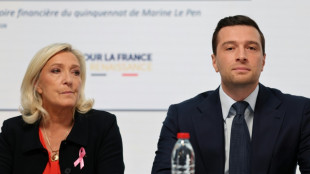 Le Pen vows drastic cost savings to prevent French 'default'

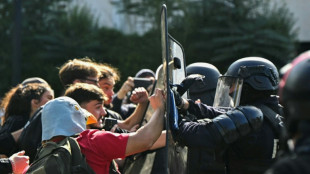 'Eats through a straw': French teens wounded in high school protests

"Friends" actor Matthew Perry's tragic death has highlighted the secretive and toxic relationship that has long existed between troubled celebrities and the doctors who service their addictions.
Perry, who had a long history of substance abuse, was found dead in the hot tub of his luxury Los Angeles home last year with extremely high levels of ketamine in his system.
Federal drug officials said the star had become addicted while seeking treatment for depression and "turned to unscrupulous doctors" when legal sources refused to increase his dosage.
"Instead of 'do no harm,' they did harm so that they could make more money," Anne Milgram of the Drug Enforcement Administration told a press conference this week.
The allegations against doctors Salvador Plasencia, who has pleaded not guilty, and Mark Chavez, who agreed to plead guilty to conspiracy to distribute ketamine, appear eerily reminiscent of other celebrity cases.
For instance, Michael Jackson's doctor Conrad Murray was convicted in 2011 of involuntary manslaughter for administering a lethal dose of a powerful surgical anasthetic to the megastar.
The deaths of pop icons from Elvis Presley and Marilyn Monroe to Prince and Tom Petty have all been linked to the fatal consumption of controlled substances obtained from medical professionals.
"The rules go out the window with famous people, and it constantly leads to tragedy," said Harry Nelson, a prominent Los Angeles-based healthcare attorney. "It's crazy."
- ' A trap' -
Financial gain is often a key motive.
Plasencia is alleged to have sold vials worth $12 for up to $2,000 to Perry, even messaging Chavez "I wonder how much this moron will pay... Lets [sic] find out."
But Nelson, who has been personally involved in more than a dozen "front-page, headline-news tragedies" involving famous actors, rock stars and athletes, said the full picture is often more complicated.
Celebrities have a genuine need for privacy. Going to a doctor for a prescription, followed by a pharmacy to collect the drugs, is not feasible for troubled A-listers who are frequently hounded by paparazzi.
Yet doctors can quickly become awed by the "romance and excitement" of proximity to world-famous stars, who are likely to display a higher "sense of entitlement" regarding their treatment demands than typical patients.
In order to "stay in the good graces of that person and continue to have this privileged role," doctors can end up rationalizing: "I'm gonna do what that person wants, even if it's against better judgment," said Nelson.
"But it's a trap. It's a trap for both the celebrity patient, and for the doctor," he added.
- 'Ketamine parties' -
Ketamine's use as a "party drug" due to its dissociative and hallucinatory effects exploded onto the scene in the 1990s.
During the mid-2000s, "ketamine parties" held at private homes around Los Angeles were frequently attended by major stars, according to Nelson.
"You had a handful of doctors around Los Angeles who facilitated these, literally, parties, where everybody would be doing infusions of ketamine in a celebrity home, in Malibu, on the beach," he said.
The medical board cracked down on these doctors, disciplining or removing the licenses of several.
Today, the drug is increasingly used for legitimate treatment of depression and PTSD.
Southern California has become a hub for private rehab clinics that offer absolute privacy -- for extravagant fees -- to celebrities and the ultra-wealthy, said Nelson.
In the Perry case, Chavez previously operated a ketamine clinic.
- 'Liberties' -
But the drug, which can cause health effects including loss of consciousness and respiratory problems, should only be administered under supervision of a doctor, and patients are meant to be monitored closely.
Plasencia is alleged to have handed over vials of ketamine to Perry's assistant -- even meeting him on a street corner at midnight a few weeks before the actor's death for a $6,000 cash exchange, according to the indictment.
"The idea that someone would be allowed to just take it at home and get in the hot tub while on this drug is criminal, it's irresponsible," said Nelson.
"The doctors who did this undoubtedly felt that they could take some liberties, because they were dealing with a famous person who had a need for greater privacy."
P.Queiroz--PC