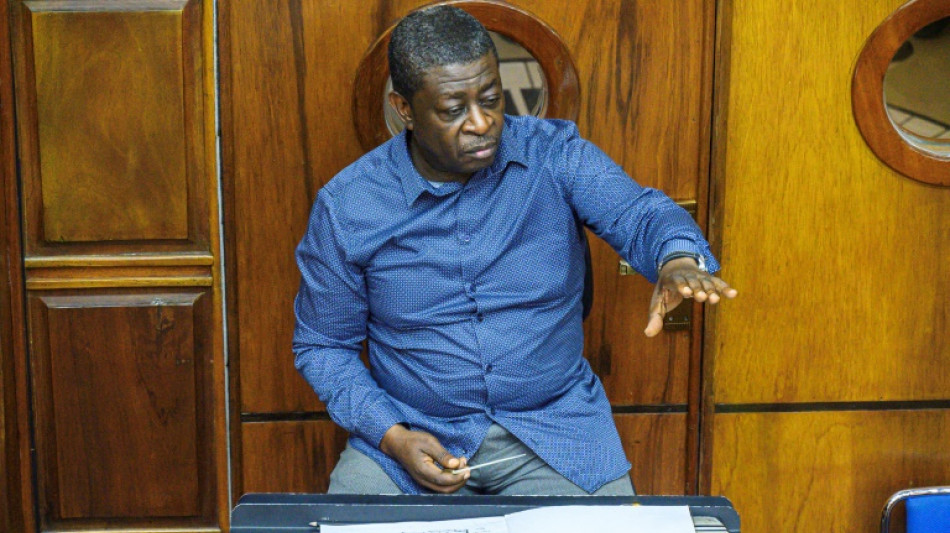
Top Africa orchestra began with brake cables for strings / Photo: Hardy BOPE - AFP

 Moscow denies sanitary measures over plague reports
 Samoa look to recreate 2022 final run at Rugby League World Cup
 Asian stocks mostly up after tech-led Wall St record
 German factory orders plunge as recovery still fragile
 Coco Gauff calls out online racism following China open video review
 KVB Accelerates Middle East Footprint with Strategic MENA Regional Expansion
 Purple reign: Philippines seeks to keep grip on ube throne
 Seoul weighs steps to force North Korea landmine apology
 Yemen's Houthis say struck Riyadh airport, other Saudi sites

 Changer+ Launches Stablecoin-First Self-Custodial Wallet to Make Stablecoins Easier to Use
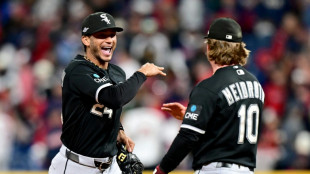 White Sox down Guardians, Yankees on brink after Rays loss
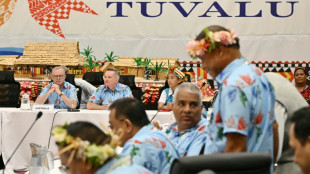
 COP31 eyes modest steps as climate disasters multiply

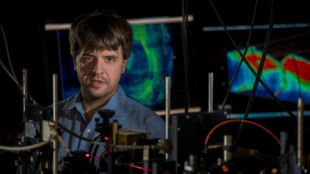 American Nobel laureate in medicine hopes to illuminate the brain
 Trump approves firing squad for convicted US military base shooter

 Grappling with 'homework scams,' US universities shun AI detectors
 Separatists win Quebec election in test for Canada PM
 Leaders visit Pacific atoll at frontline of climate change
 Yemen's Houthis claim striking Riyadh airport, other Saudi sites
 Best-selling British author Jeffrey Archer dies aged 86
 Military plane crash kills 32 in Nigeria
 Olise powers France to win over Belgium in Nations League

 High-flying Blazy turns to birdlife at Chanel
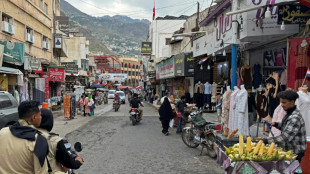 Riyadh's allies pledge troops as Yemen, Saudi Arabia attack Houthis
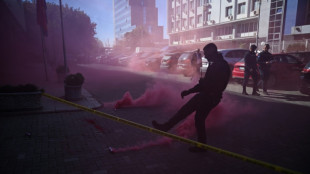 Clashes erupt outside Kosovo parliament over war crimes court
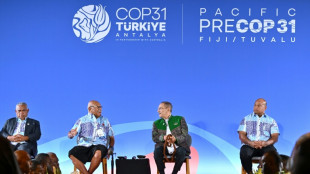
 Milan's Saelemaekers suffers ankle setback, faces lengthy spell out
When Armand Diangienda founded the Kimbanguist Symphony Orchestra -- one of the most famous in Africa -- in 1994, they had so few instruments that musicians had to share.
They got to play them for only 15 minutes before handing them on to the next person.
"When a string broke, we would replace it with bicycle (brake) cables," he told AFP.
With the Democratic Republic of Congo at war and in chaos for most of the orchestra's first decade, they had to mend and make do with the poor quality instruments they could find.
"We didn't know how to buy a violin, we didn't know how to buy a string," Diangienda said. "So when a violin broke we had to repair it."
But "we were motivated".
The orchestra, which began with a ragtag band of around a dozen string musicians, has since gone on to become a trailblazer for classical music in Africa, with fans all over the world.
"At the beginning it was really just a dream," Diangienda told AFP from a studio in its Kinshasa headquarters as musicians tuned up outside.
The orchestra now boasts 200 highly accomplished members, including a choir.
- 'Real learning curve' -
But at the beginning not everyone knew how to read music and the group had just a few instruments between them.
"It was a real learning curve," Diangienda said.
The instruments they had were in poor condition -- not helped by the hot and humid climate -- and there was little money.
But by 1999 everyone had their own instrument picked up here and there.
The idea for the orchestra was born in 1985 when Diangienda's father, Joseph, asked him to gather up different musical groups from within the Kimbanguist church.
The religious movement -- which is said to have millions of members in the DRC -- was founded in 1921 by Diangienda's grandfather, a visionary whose followers believe he was Jesus Christ's special envoy on Earth.
The orchestra gave its first concert almost exactly 30 years ago in December 1994.
Since its humble beginnings it has played in countries across the world including Germany and the United States and has met celebrities including Angelina Jolie and Lionel Richie.
It has also collaborated with other groups including Germany's Tuebingen Chamber Orchestra and regularly has international soloists play with it.
Its conservatory of music in Kinshasa is now home to a school for young people to learn to read and play music.
- Persistence pays -
But teaching musicians was not always so seamless, and many joined with absolutely no musical knowledge.
Pauleth Masamba, 43, joined up the year the orchestra was founded wanting to play the cello, but accidentally mixed up its name with the violin -- two very similar words in French.
But as the orchestra grew, so did her love for her instrument.
"I bring it everywhere, even if I go on a personal errand I go with my violin. It's my loyal friend," she said, holding the instrument as she talked.
Two years after the orchestra began, the DRC was plunged into the First Congo War, which saw dictator Mobutu Sese Seko ousted, and then the longer and even more bloody Second Congo War from 1998 to 2003.
But it has still managed to become one of the continent's leading classical music institutions.
Dauphine Mata, a 33-year-old violinist who joined at 19, hailed it for introducing classical music to the country and continent.
"Before (becoming famous) we had a small fan base, people weren't really interested in the music," she said.
"Now we are on the stage more people appreciate it," she added.
But no one is more proud of their work than Diangienda.
"We were patient and we persevered, we alway fought for our dreams," he said.
H.Portela--PC