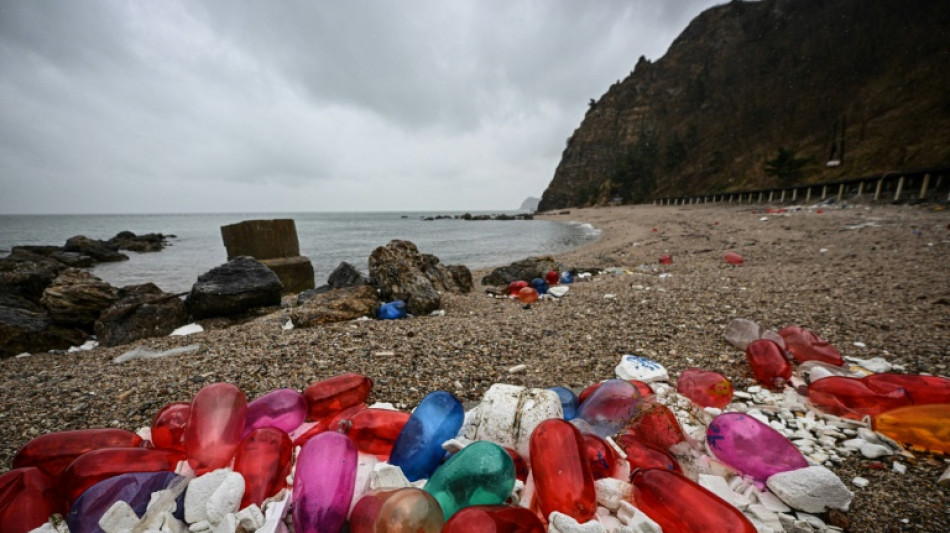
Chinese island plastic pollution turned into artistic omens / Photo: Jade GAO - AFP

 Calgary builder draws on decades of DIY work to increase Ford engine power

 Record-setting Hemi Plymouth Superbird heads to auction
 Calgary dancer describes stripping as a career built on independence and community
 Rohit Sharma Reappointed Mumbai Indians Captain for IPL 2027 with Focus on Team Spirit

 Calgary budget hearing delayed during debate over Tourette syndrome accommodation
 Business phone systems gain AI tools, but human oversight remains essential

 Huawei outlines 2030 network plans at Africa Tech Festival

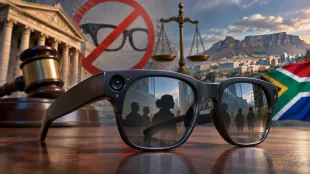 Governments and courts tighten restrictions on camera-equipped smart glasses

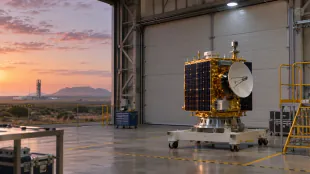 South Africa’s sovereign satellite plan remains stalled despite higher cost

 EasyEquities faces pressure for clearer answers after security outage

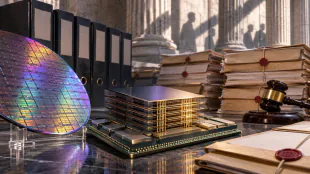 US patent disputes involving Korean chipmakers reach record level

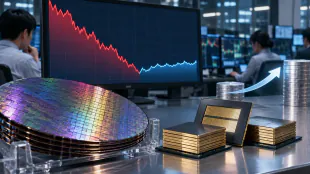 SK hynix doubles daily share purchases after steep stock decline
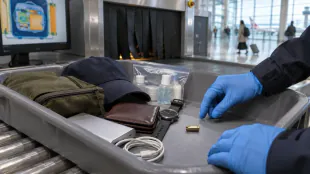 Former soldier stopped with blank round at Incheon Airport
 Korea Post breach exposes data of at least 113,855 customers
 Many AAPI Candidates Win Seats in Orange County Local Elections

 Holly Ramsay and Adam Peaty Welcome Daughter Daphne June at Portland Hospital

 Honda and Toyota Recall 1.6 Million Vehicles Over Takata Airbag Risks

 Court Dismisses Fenech’s Bid to Revoke Theuma’s Pardon
As storm clouds gathered on a forgotten beach in China's Miaodao islands, artist Fu Junsheng picked his way through piles of plastic waste washed up along the shoreline, looking for inspiration.
China is the world's largest plastic producer, and the islands -- a niche tourist destination -- sit in the cross-stream of several highly developed eastern peninsulas.
Every squall brings fresh waves of floating debris onto the archipelago's white sand beaches -- and eight years ago Fu decided to make that waste both his artistic message and medium.
"Our generation has witnessed rapid societal development. In the process, we've sometimes neglected nature, and at times, even ignored it altogether," the 36-year-old said as he showed AFP around his studio, full of pieces created from plastic washed ashore.
One of the most striking installations features nearly 900 flip-flops, displayed in front of his seascape oil paintings.
"(Marine debris) carries our daily life, the life of each of us," he said.
The oldest item Fu has collected is an instant noodle packet from 1993.
Despite over 30 years of exposure to the elements, it remains intact, showing hardly any signs of decomposition.
"(Objects like this) don't disappear but instead break down into tiny particles, which can end up being ingested by marine life and, eventually, by us," said Fu.
"This process is invisible to the naked eye."
- 'Global problem' -
The Miaodao islands sit opposite the Korean peninsula, where this week negotiators from around the world are attempting to hammer out an international treaty to curb plastic pollution.
Fu has found lighters and coffee bottles from South Korea on his beachcombing trips.
"Marine ecological protection requires people from different countries and regions to work together," he said.
"It's not a localised issue -- it's a broader, global problem."
At university in nearby Qingdao, Fu became interested in the environmental consequences of China's rapid urbanisation from the late 1980s onwards.
These days China's factories make the most plastic worldwide -- 75 million tonnes in 2023, according to official statistics.
While it is not considered the world's largest plastic polluter, its 1.4 billion citizens still created 63 million tonnes of waste plastic in 2022, according to state media citing a national body.
Most of that was recycled, put into landfills or incinerated -- about 30 percent each -- while seven percent was directly abandoned.
Fu argued that while completely eliminating plastic use is unrealistic, it is essential to use it in a "more controllable and precise way".
Worldwide, over 90 percent of plastic is not recycled, with over 20 million tonnes leaking into the environment, often after just a few minutes of use.
"People often approach these problems from an individual perspective. But environmental issues are collective challenges for humanity," he said.
- Everyday household items -
Over the years, Fu has collected countless objects -- mostly everyday household items such as children's toys, balloons, toothbrushes and bottles.
His aim, he said, is to make the public recognise how intimately marine pollution is tied to their daily lives.
In one piece posted online, he constructed a rainbow from different coloured plastic bits; in another, a deflated sex doll is surrounded by tens of multicoloured rubber gloves.
One display includes a shelf of worn cosmetics and toiletries containers.
"These products are meant to make us feel cleaner and more beautiful," Fu said.
"But they often end up in the ocean, polluting the water, damaging marine ecosystems and ultimately making our world less beautiful."
X.M.Francisco--PC